


Plantar fasciitis treatment may include using ice packs or anti-inflammatory medications to help reduce inflammation in the plantar fascia. These measures can relieve symptoms such as sharp pain on the bottom of the foot, a burning sensation, and heel discomfort, especially when getting out of bed.
Plantar fasciitis is inflammation of the tissue on the bottom of the foot that runs from the heel to the toes, called the plantar fascia. It is often triggered by repetitive strain or excessive tension, which can lead to symptoms.
Plantar fasciitis treatment should be guided by an orthopedist, based on the type and severity of symptoms. In some cases, orthotic insoles or even surgery may also be recommended.
Main types
Plantar fasciitis treatment may include:
1. Rest
Rest is recommended to reduce tension on the plantar fascia and should focus on limiting movement of the affected foot to help prevent the injury from getting worse.
Resting the affected foot can support recovery and ease pain and discomfort. However, rest should generally be limited to 3 to 5 days, or as directed by a healthcare provider, since prolonged rest may affect muscle strength.
Rest also includes avoiding activities such as running so the plantar fascia can heal. Low-impact exercise, such as swimming, may be recommended.
2. Cold compresses
Applying cold compresses to the sole of the affected foot can help reduce pain and inflammation in the plantar fascia, easing symptoms.
A cold compress can be made by placing ice in an ice pack, wrapping it in a clean, dry towel, and applying it to the affected foot for 15 to 20 minutes, 3 to 4 times per day.
Another option is to place the foot in a basin of cold water with ice cubes and keep it there for 15 minutes.
3. Medications
Medications for plantar fasciitis are mainly nonsteroidal anti-inflammatory drugs (NSAIDs), such as ibuprofen or naproxen taken as tablets, or topical diclofenac gel applied to the skin.
These medications help reduce inflammation in the plantar fascia and relieve pain and discomfort. They should be used only with medical guidance and for no more than 5 days of treatment.
In some cases, a healthcare provider may prescribe corticosteroids in tablet form or give a corticosteroid injection directly into the plantar fascia.
4. Massage
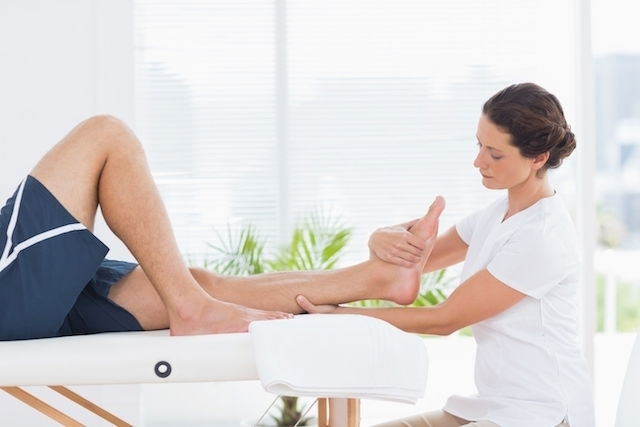
Massaging the feet and calf can also help as part of treatment, providing symptom relief. It is a simple way to feel better and can be done at home and sometimes at work.
To make the massage more comfortable and effective, use a moisturizing cream or oil so the hands glide more easily over the skin.
5. Physical therapy
Physical therapy may be recommended by a doctor and should be done under the guidance of a physical therapist. Stretching exercises for the plantar fascia can help reduce heel pain.
A physical therapist may also use pain-relieving and anti-inflammatory modalities such as ultrasound, extracorporeal shockwave therapy, laser, or iontophoresis, as these can help reduce inflammation, decrease pain, and promote blood flow to the plantar fascia.
6. Stretches
Stretching exercises can be done at home every day and can be very helpful for relieving discomfort. This is a simple technique that can be done several times throughout the day.
To stretch the fascia, hold the toes and pull them upward until the stretch is tolerable, holding for 30 seconds at a time and repeating 3 times.
7. Night splints
Night splints may be recommended by a healthcare provider because they provide prolonged stretching of the plantar fascia. They are used only at night while sleeping.
A night splint helps keep the ankle in a neutral position, which helps prevent the plantar fascia from tightening. It should be used for the period set by the doctor, which may be around 12 weeks.
8. Strengthening exercises
Because one factor linked to plantar fasciitis is weakness of the intrinsic muscles of the foot, exercises that specifically strengthen these muscles are important for recovery after pain improves.
One option is to sit with both feet together, with the soles touching, and hold this position for about 5 minutes.
9. Kinesiology tape
Kinesiology tape is a bandage or tape that may help improve local circulation, support healing, and reduce heel pain caused by plantar fasciitis.
It can also help support the arch of the foot without limiting movement of the foot and ankle.
10. Orthotic insoles
Orthotic insoles can help improve arch support, reducing pain and pressure on the plantar fascia and allowing it to heal.
11. Wearing comfortable shoes
During plantar fasciitis treatment, it is important to wear comfortable shoes with cushioning and adequate support to help prevent worsening inflammation and heel pain.
Avoid wearing flip-flops, sandals, or low shoes that do not provide adequate support.
12. Platelet-rich plasma
Platelet-rich plasma (PRP) is a portion of blood taken from the person and processed in a lab. It may be used as an injection applied by a doctor to the plantar fascia area to support healing, and it is done in a hospital setting.
13. Surgery
Surgery for plantar fasciitis may be recommended by a doctor when other treatments have not been effective and pain continues for more than 6 to 12 months.
It may be performed using different techniques, such as gastrocnemius recession in the calf to reduce pressure on the plantar fascia, or plantar fascia release surgery.
Prevention tips
To help prevent plantar fasciitis from returning, it is recommended to address factors that increase the risk of developing it.
Common causes include obesity, wearing very stiff shoes, and repetitive strain. In addition to treating foot pain, it is important to remove what is driving the condition so it does not return over time.
People with obesity should follow a balanced diet to reduce the load on the feet, and everyone should wear comfortable shoes, preferably orthopedic.
A helpful tip when buying shoes is to go to the store at the end of the day, after work, when the feet are more swollen. If the shoe still feels comfortable then, it is likely a good fit.
Returning to activities
After pain improves, it is still important to continue treatment until the injury heals. For this reason, it is recommended to avoid high heels during the full treatment period and choose soft, supportive sneakers instead.
People who run do not need to stop training completely, but they should avoid races and competitions to prevent the pain from getting worse.