


- Sudden loss of leg movement or sensation needs emergency evaluation, especially after a fall, crash, or other spinal injury.
- Loss of bladder or bowel control along with weakness in the legs can be a warning sign of a serious spinal cord problem.
- Ongoing pressure on the skin from sitting too long can lead to pressure ulcers, especially without regular repositioning or proper cushioning.
Paraplegia is the medical term for loss of movement in the legs. In some cases, it can also cause muscle weakness, absent reflexes, and reduced ability to feel pain, touch, and temperature in the lower limbs.
It is most often caused by a spinal cord injury that disrupts nerve signals traveling from the brain to the legs and feet. This can happen because of spinal trauma, fractures, or conditions such as multiple sclerosis and transverse myelitis.
If paraplegia is suspected, it is important to see a neurologist. If symptoms start suddenly, emergency care is recommended so the person can be evaluated and started on the most appropriate treatment as soon as possible.
Main symptoms
The main symptoms of paraplegia include:
-
Not being able to move the legs.
-
Changes in muscle tone and reflexes in the lower limbs.
-
Loss of pain, touch, and temperature sensation in the legs when the spinal cord injury is complete.
After a spinal cord injury, it is common for a person with paraplegia to have floppy (flaccid) muscles and lose leg reflexes, especially in the first few weeks. Over time, the muscles usually become stiffer (spastic), and reflexes may become more active.
Depending on how severe the spinal injury is, the person may also develop other problems, such as fecal and/or urinary incontinence, erectile dysfunction, and infertility.
Paraplegia vs quadriplegia
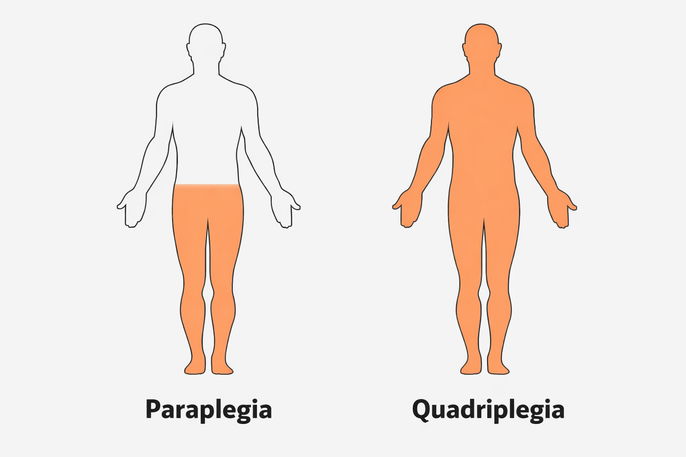
Paraplegia affects only the legs. Quadriplegia, also called tetraplegia, is diagnosed when the spinal cord injury affects movement in all four limbs, including the arms and legs, as well as the trunk.
Confirming a diagnosis
Paraplegia is diagnosed by a neurologist after confirming that the person has completely lost muscle strength in the legs and identifying spinal cord damage through imaging tests such as an MRI or a CT scan of the spine.
Main types
The main types of paraplegia include:
-
Spastic paraplegia: when there is an abnormal increase in muscle tone in the legs.
-
Flaccid paraplegia: when the leg muscles become very weak and floppy.
-
Complete paraplegia: when there is no sensation or movement in the legs.
-
Incomplete paraplegia: when some sensation is still present, even if the person is unable to move the legs.
The neurologist usually identifies the type of paraplegia during the neurological exam performed at the appointment, in which muscle strength and sensation in the legs are assessed.
Possible causes
The main causes of paraplegia include:
-
Spinal cord injuries from car accidents, falls, or gunshot wounds.
-
Infections that affect the spinal cord.
-
Blockage of the blood vessels that supply the spinal cord.
-
Fractures of the spinal vertebrae.
-
Spinal malformations, such as spina bifida or myelomeningocele.
-
Neurological diseases such as Guillain‑Barré syndrome, multiple sclerosis, or transverse myelitis.
-
Tumors in or around the spine.
Paraplegia is usually caused by an injury to the spinal cord, which is part of the nervous system that runs inside the spinal column.
According to the World Health Organization (WHO), a spinal cord injury can cause complete or partial loss of movement and sensation below the level of the injury, which may prevent nerve signals from reaching the legs and feet.
Treatment options
Treatment for paraplegia depends on the underlying cause and how severe the spinal cord injury is. It usually focuses on rehabilitation, especially physical therapy, particularly when there is no specific treatment for the cause.
The doctor may also recommend occupational therapy, depending on the challenges the person faces in daily life and in coping with the condition.
Physical therapy
Physical therapy for paraplegia includes exercises that improve blood circulation and help prevent deformities that usually happen when the muscles are not properly stimulated.
During rehabilitation, the person can swim or do other activities that fit their abilities and needs to help build self-esteem and support both physical and emotional well-being.
Some general recommendations include:
-
Performing passive movements within the comfortable range of motion in the hips and legs.
-
Doing movements that help preserve joint mobility in the shoulders, elbows, and wrists.
-
Wearing compression stockings.
-
Doing exercises that promote venous return.
-
Doing strength training to work the muscles of the arms, chest, shoulders, and back.
Because a person with paraplegia often remains seated for long periods, pressure injuries, also known as pressure ulcers, can develop.
According to the American Academy of Physical Medicine and Rehabilitation, regular repositioning, pressure relief, and proper wheelchair cushioning help prevent pressure injuries after spinal cord injury.
Can paraplegia be cured?
Paraplegia usually does not have a cure. However, when it is caused by spinal cord compression or by certain infectious or degenerative diseases, it can sometimes be reversible.
In cases of spinal cord compression, surgery may help restore nerve signal transmission. When paraplegia is caused by a disease that has a specific treatment, symptoms may improve or, in some cases, be reversed if treatment is started early and followed correctly.
In most situations, though, paraplegia cannot be cured, and physical therapy is recommended to improve blood circulation and help prevent pressure sores and joint deformities.