


Pain behind the knee can occur due to trauma, intense physical activity, or joint strain, leading to problems like tendonitis, bursitis, or ligament tears. It can also be related to conditions such as rheumatoid arthritis, arthrosis, varicose veins, or a Baker’s cyst.
This type of pain may come with symptoms like swelling, stiffness, and limited movement, which can make walking or bending the knee difficult. In some cases, the discomfort may worsen with physical activity or when standing for long periods.
Treatment for pain behind the knee depends on the cause and may include rest, cold compresses, anti-inflammatory medications, and physiotherapy. More serious cases, such as ligament tears or cysts, might require injections or surgical procedures guided by an orthopedic specialist.
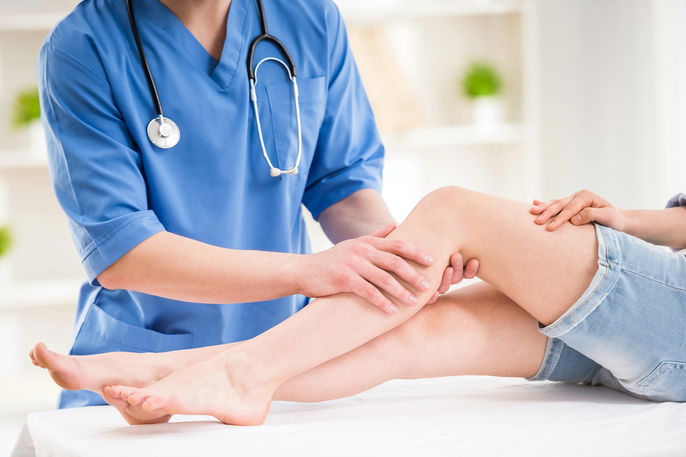
What causes pain behind the knee?
Pain behind the knee can be caused by conditions like:
1. Direct trauma
An injury from direct trauma to the knee can occur with a fall, blow, twist or fracture. In these cases, the pain can emerge from behind the knee or be felt in other areas of the knee.
What to do: You should see a doctor for an initial assessment, which will require a physical exam and imaging, like x-rays.
Injuries with no fracture can be treated with rest and with cold compresses, applied 2 to 3 times per day for 15 minutes at a time. More serious cases, like a fracture, will require immobilization and maybe even surgery. Physiotherapy may be recommended to aid in recovery and help relieve pain, even in more mild cases.
2. Tendinitis
Tendinitis is an inflammation that affects the tendons, which are located at the end of the muscle and connect it to bone. This inflammation can affect the biceps femoris tendon, which is found behind the knee, and can lead to pain in this area, as well as on the side of the knee, in addition to swelling and discomfort with movement.
Also recommended: Patellar Tendinitis: Symptoms, Diagnosis, Grades & Treatment tuasaude.com/en/patellar-tendinitisGenerally, tendonitis behind the knee is caused by intense physical activity, like running, soccer or cycling, and is typically seen in athletes.
What to do: You should rest this joint and avoid repetitive movements to reduce inflammation and relieve discomfort. In addition, you can apply a cold compress to the knee twice a day for 20 minutes. In some cases, the doctor may recommend physiotherapy, especially if the inflammation is frequent. Surgery may also be considered.
3. Bursitis
Pain behind the knee may also be bursitis, which is an inflammation of the bursa. A bursa is a small fluid-filled sac that acts as a cushion between bones, tendons and muscles. It reduces friction between these structures to prevent damage.
Knee bursitis is generally associated with bending the knee or bending down repeatedly, which is noted in sports like jiu-jitsu, soccer and volleyball. It can also happen from falls or blows that cause irritation or inflammation.
Obesity and arthrosis can cause a specific type of bursitis caused anserine bursitis. This bursitis is associated with knee pain immediately below the joint.
What to do: Treatment of knee bursitis should be guided by an orthopedic surgeon. It is aimed at reducing inflammation, which can be accomplished with prescription analgesics or anti-inflammatories, physiotherapy, injections or even surgery. To complement medical treatment, you can additionally apply a cold compress behind the knee 3 to 4 times per day for 20 minutes.
4. Ligament tear
Pain behind the knee can be a consequence of a torn ligament. The cruciate and collateral ligaments, which stability to the knee, can become injured from direct blows, falls, twisting or car accidents. Ligament tears can also cause symptoms like swelling, decreased range of motion and difficulty walking.
What to do: It is important to be assessed by an orthopedic treatment, who will advise treatment that is most appropriate for the affected ligament. The doctor may recommend cold compresses 3 to 4 times per day for 20 minutes, rest, offloading with crutches, elevating the leg to reduce swelling, and a compression knee band around the affected knee.
In more serious cases, the doctor may advise casting of the knee for 4 to 6 weeks to fully immobilize it, and, if necessary, surgical repair.
5. Baker’s cyst
A Baker’s cyst is a type of swelling that forms in the joint behind the knee. It occurs due to an accumulation of synovial fluid and causes pain behind the knee, swelling, decreased range of motion, and pain when bending the knee that worsens with activity. The cyst can often be palpated with your hands and feels like a movable lump. Not all Baker’s cysts present with symptoms, however, nor do they all require treatment.
This type of cyst, also called a popliteal cyst, is usually related with other conditions, like rheumatoid arthritis, osteoarthritis, a meniscus injury or cartilage breakdown. Many times, the symptoms of a Baker’s cyst can resolve when the other condition is treated.
What to do: As mentioned, Baker’s cysts do not always require intervention, as many times, they resolve on their own. Nonetheless, you should see an orthopedic surgeon to determine the cause of the cyst and treat the underlying condition. Larger cysts that cause severe pain may be treated with drainage of the cyst or steroid injections. If the cyst ruptures, the doctor will monitor recovery. Surgery may be required for specific cases.
6. Varicose veins
Varicose veins located on the legs and behind the knees can cause pain behind the knee when blood starts to accumulate in these vessels. Small varicose veins, or spider veins, can cause pain at the end of the pain and sensation of heavy legs.
Varicose veins are usually visible with the naked eye, however doctors can order testing for more serious vases to ensure a more thorough evaluation (e.g. for cases that require surgery).
What to do: You should see your doctor for assessment to determine the best treatment for varicose veins for you. Some cases are easily treated with sclerotherapy, which removes the veins and relieves knee pain. The doctor can also prescribe medications and recommended compression stockings.
Also recommended: How to Get Rid of Varicose Veins: 10 Natural Remedies tuasaude.com/en/how-to-get-rid-of-varicose-veins7. Rheumatoid arthritis
Rheumatoid arthritis is an autoimmune disease. It is inflammatory and chronic, and causes decreased range of motion, pain and swelling in the joints. Pain behind the knee upon waking may be a sign of rheumatoid arthritis. This pain is usually most intense in the first few minutes of the morning and improves with movement.
In addition, pain behind the knee or other parts of the knee can occur with swelling without any specific trauma.
What to do: Treatment of rheumatoid arthritis should be guided by an orthopedic surgeon or rheumatologist, and will depend on the severity of symptoms. The doctor may prescribe anti-inflammatory medications, steroids, immunosuppressants, biological agents, and/or physiotherapy.
8. Arthrosis
Knee arthrosis can cause pain behind the knee when certain areas of this joint start to breakdown or suffer too much friction.
Arthrosis is a consequence of cartilage breakdown, which leads to decreased joint spaces and eventual injuries. The pain is often chronic and affects people over the age of 50. It is also often associated with other conditions, being overweight or decreased quad strength.
What to do: It is important to consult an orthopedic surgeon, as this condition requires treatment with analgesics (like acetaminophen) or anti-inflammatories (like ibuprofen or diclofenac). Physiotherapy is often recommended, as well as injections with steroids or hyaluronic acid. These more conservative methods can often delay knee replacement surgery.
9. Meniscus injury
The meniscus is tissue that is found in the middle of the knee, between the femur and tibia. It acts as a cushion within the knee.
Meniscus injuries are often caused by physical activity, like judo or jiu-jitsu, or age-related degradation which can start at around 40 years of age. These injuries can cause pain behind the knee or on the sides, which becomes worse with bending, walking, going up or down stairs, or squatting.
What to do: A diagnosis should be confirmed by an orthopedic surgeon to identify the characteristics of the injury, which will guide a customized treatment plan. Most cases can be treated with physiotherapy, while others will require an arthroscopy.
10. Iliotibial band syndrome
Iliotibial band syndrome can cause pain behind the knee and on the sides. It is very common in runners, cyclists or athletes that repeatedly bend their knees.
Generally, this condition is related to muscle weakness, decreased flexibility or training errors with inappropriate intensity or loads. Other training conditions can affect the knee, like the type of terrain, the type of shoes or even incorrect posture.
What to do: You should see an orthopedic surgeon to determine a diagnosis and develop an appropriate treatment plan. It is important to incorporate stretching and strength training into any training program, ideally with the guidance of a personal trainer.
Nonetheless, if the knee pain emerges during physical activity, you should seek assessment and treatment with anti-inflammatories (like diclofenac or ibuprofen) and participate in physiotherapy to strengthen the muscles.
When to see the doctor
You should see your doctor or physiotherapist when:
- Pain lasts for over 3 days, even after resting and applying cold compresses
- Pain is very intense when doing activities of daily living, like ironing, carrying your child or going up steps
- The knee does not bend or produces sound with movement
- The knee is visible deformed
- When you have other symptoms, like fever or tingling
In these cases, the orthopedic surgeon can order imaging tests, like an x-ray or MRI, to reach a diagnosis and prescribe appropriate treatment