


Oral herpes, commonly known as cold sores, is an infection caused by the herpes simplex virus (HSV) that leads to blisters or sores in and around the mouth, most often on the lips. These sores typically last about 10 days and may cause tingling, pain, or itching in the affected area.
This condition is highly contagious and spreads through direct contact, such as kissing, or by sharing personal items like cups, utensils, or towels with someone who is infected.
In most cases, the body’s immune system helps the sores heal on their own. However, topical antiviral creams, such as prescription acyclovir, can be applied directly to the affected area to help relieve symptoms and promote faster healing.
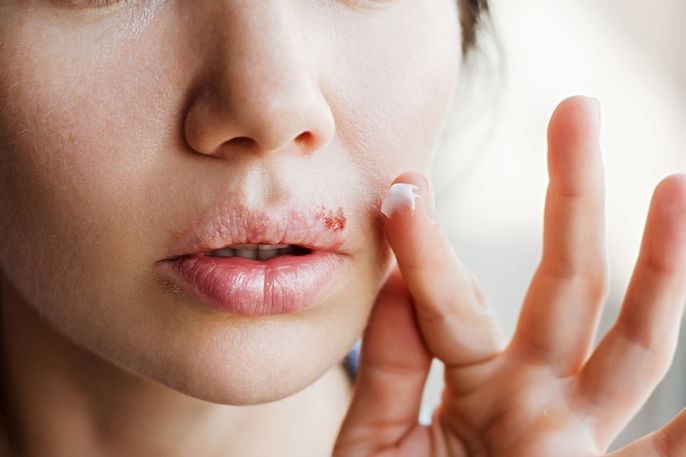
Oral herpes symptoms
The main symptoms of oral herpes include:
-
Burning, tingling, pain, or itching on or around the lips that occurs before the sore appears;
-
A red spot at the site where the sore will form;
-
Small, fluid-filled blisters that develop within 6 hours to 2 days after the first symptoms;
-
Formation of a yellowish crust as the sore begins to heal.
In many cases, the first herpes infection may not cause any noticeable symptoms. However, some people may experience fever, general malaise, or a burning and tingling sensation in the mouth.
In some cases, oral herpes may cause severe sore throat (pharyngitis) in adults or inflammation of the gums and mouth lining, which can result in the formation of painful mouth ulcers. This is more common in children or individuals with weakened immune systems.
Transmission and spread
Oral herpes spreads through direct contact with an infected person, especially when active sores are present on the lips or surrounding skin.
Transmission can occur through kissing (including kissing infants) or by touching a sore and then touching the mouth.
It is also possible to spread the virus even when there are no visible symptoms, as the herpes simplex virus can remain on the skin in a dormant but contagious state.
Confirming a diagnosis
Diagnosis of oral herpes is usually made by a primary care provider or dermatologist based on the person’s symptoms and medical history.
To confirm the infection, a healthcare provider may order lab tests to identify the herpes simplex virus.
What causes oral herpes
Once a person is infected, the herpes virus remains in the body for life, staying dormant most of the time.
However, certain factors can reactivate the virus and cause symptoms to reappear, such as:
-
Minor infections such as a cold or the flu;
-
Periods of intense stress;
-
Weakened immune system due to conditions such as HIV or lupus;
-
Excessive sun exposure.
Some people may become infected with the virus and never develop symptoms.
Cold sore treatment
Treatment is not always necessary, as the immune system can control the virus and heal the sores naturally within about 10 days.
However, antiviral medications such as topical acyclovir can be applied to the affected area to relieve symptoms and help the body fight the infection more effectively. Home remedies for cold sores may also help with healing.
In more severe cases, when oral herpes spreads to other parts of the body or takes longer to heal, a healthcare provider may prescribe oral antiviral medications to support the immune system’s response.
These cases are more common in people with weakened immune systems, such as those undergoing cancer treatment or living with autoimmune diseases.
Also recommended: Cold Sore Medicine: Medications & Home Remedies tuasaude.com/en/cold-sore-medicinePrevention measures
To reduce the risk of getting oral herpes, it is recommended to:
-
Avoid kissing people you don’t know or anyone with visible mouth sores;
-
Do not share personal items such as utensils, cups, or towels;
-
Avoid using someone else’s lipstick or lip balm;
-
Do not eat or taste food that others have already eaten, such as popsicles or ice cream;
-
Avoid using shared soaps or hygiene products in public spaces.
The most important step in preventing oral herpes is to avoid contact with anything that could have been exposed to the virus, including personal items or surfaces used by someone who is infected.