


Nitrites in urine usually mean that bacteria are present and have converted nitrate into nitrite, which often points to a urinary tract infection (UTI). This finding is often detected during a routine urinalysis and can help doctors determine whether a UTI may be present.
A urinalysis is more accurate when the urine sample comes from the second stream of the first morning urine. This method improves detection and reduces contamination that could affect the results.
Although nitrites in the urine may suggest an infection, a urine culture is usually needed to confirm the diagnosis and identify the specific bacteria. This test also determines which antibiotics are most effective, helping guide treatment, particularly in cases without symptoms or during pregnancy.
Indications for testing
The urine nitrite test is part of a routine urinalysis and is usually ordered by a primary care provider, gynecologist, or urologist when a urinary tract infection is suspected, particularly if symptoms are present. According to the Centers for Disease Control and Prevention (CDC), symptoms can include pain or burning with urination, needing to urinate often, fever, and changes in urine color.
Also recommended: Urine Color Chart: What Clear, Yellow, Green or Red Urine Means tuasaude.com/en/urine-color-chartSample collection
The urine nitrite test is performed using a first-morning urine sample. The sample should be collected in a container provided by the lab. After cleansing the genital area, begin urinating into the toilet, then stop midstream and collect the next portion of urine in the container provided by the lab.
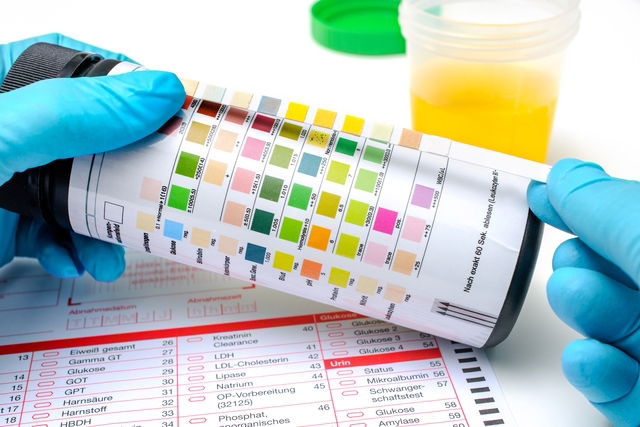
Some types of bacteria can convert the nitrates normally found in urine into nitrites, which can then be detected on the reagent strip used to measure nitrites and other urine markers. However, a negative nitrite result does not rule out a bacterial infection, since certain bacteria cannot convert nitrate to nitrite and may only be identified through microscopy or a urine culture, which provides a more specific diagnosis.
In general, a urinary tract infection is diagnosed when a urinalysis shows positive nitrites and the microscopic exam reveals numerous white blood cells, red blood cells, and bacteria.
Who to see
The most appropriate healthcare provider to evaluate a positive nitrite result is a primary care provider or a urologist, who can determine the underlying cause and recommend the most effective treatment..
Treatment options
Treatment for positive nitrites on a urinalysis is usually done with antibiotics such as amoxicillin or ciprofloxacin for 3, 7, 10, or 14 days. The duration depends on the medication used, the dose, and the severity of the infection.
However, if the urinalysis is abnormal but there are no symptoms, treatment may not be necessary, since the body may be able to fight the infection. In these cases, the provider may schedule a repeat urine test to monitor how the infection is progressing.
If nitrites are positive during pregnancy, the patient should see a gynecologist or obstetrician to begin an antibiotic that is safe for use in pregnancy, such as cephalexin or ampicillin. Based on guidance from the American College of Obstetricians and Gynecologists (ACOG), UTIs in pregnancy require appropriate treatment because there is a higher risk of developing a kidney infection.