


Natural flu remedies can help ease common symptoms like cough, congestion, and sore throat while supporting the body’s natural defenses. Many of these options, such as herbal syrups made with ginger, onion, garlic, or elderberry, are used alongside standard flu care.
Some natural flu remedies use honey to soothe irritation and loosen mucus, although these preparations should not be used in children under one year old. People with allergies, diabetes, or specific medical conditions may also need to avoid certain ingredients.
Homemade syrups prepared with plants like thyme, licorice, peppermint, or echinacea offer properties that may help relieve discomfort and support recovery. While these remedies do not replace medical treatment, they can complement care with options that are easy to prepare at home.
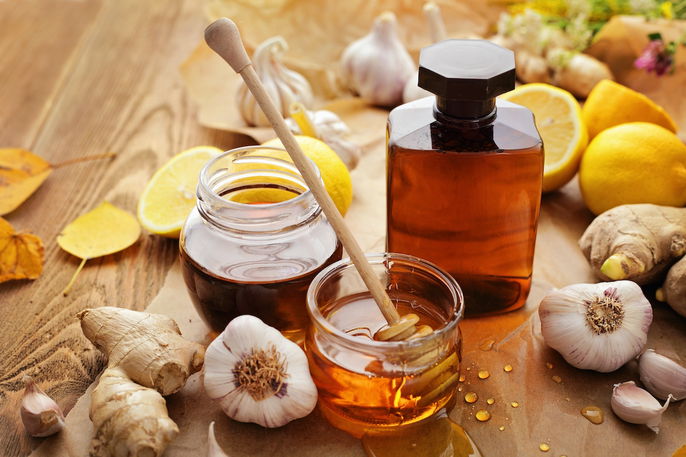
1. Onion and garlic syrup
Onion and garlic syrup has expectorant and antiseptic properties that can help loosen mucus, support immune defenses, and reduce airway inflammation. This combination may help ease symptoms such as coughing or nasal congestion.
Ingredients
-
1 medium grated onion
-
1 crushed garlic clove
-
Honey
How to make
Place the onion and garlic in a glass container and add enough honey to fully cover them. Stir and refrigerate overnight.
Children over 1 year old can take 2.5 mL (about half a teaspoon) up to 3 times a day. Adults can take 5 mL (1 teaspoon) up to 3 times a day.
Store this syrup in a clean, dry glass jar in the refrigerator and discard any unused amount after 1 week.
This syrup should not be used by people with stomach ulcers, colitis, low blood pressure, diabetes, or allergies to any of its ingredients.
Also recommended: 8 Types of Garlic Tea for the Flu (Plus Recipes) tuasaude.com/en/garlic-tea-for-the-flu2. Thyme, licorice, and star anise syrup
Thyme, licorice, and star anise syrup contains compounds such as carvacrol, γ-terpinene, glycyrrhizin, and phenolic acids, which have antioxidant, anti-inflammatory, antibacterial, and expectorant effects. This blend may help strengthen the immune system, loosen mucus, and relax the airways.
It can help relieve symptoms like malaise, cough, body aches, and nasal congestion. Star anise also contains shikimic acid, a natural substance studied for antiviral activity against flu viruses.
Ingredients
-
1 tablespoon star anise seeds
-
1 tablespoon dried licorice root
-
1 tablespoon wild cherry bark
-
1 tablespoon dried thyme
-
500 mL filtered water
-
250 mL honey
How to make
Boil the star anise, licorice root, and wild cherry bark in the water, covered, for 15 minutes. Remove from heat, add the thyme, cover again, and let steep until cool.
Strain, add the honey, and warm gently until the honey dissolves. Take 1 teaspoon up to 3 times a day to help ease cough and throat irritation.
Store in a glass jar in the refrigerator for up to 3 months.
This syrup should not be used by people with high blood pressure, heart or kidney disease, pregnant or breastfeeding women, or anyone taking anticoagulant medication or with allergies to its components.
3. Elderberry and peppermint syrup
Elderberry and peppermint syrup provides antibacterial, antiviral, and anti-inflammatory effects due to the presence of menthol, flavonoids, triterpenes, and phenolic acids. These ingredients may help relieve symptoms such as productive cough, runny or stuffy nose, and headaches.
This syrup also supports the body’s natural defenses during colds and flu.
Ingredients
-
1 teaspoon dried peppermint
-
1 teaspoon dried elderberry flowers
-
500 mL water
-
250 mL honey
How to make
Combine the peppermint, elderberry, and water in a pot and boil for 15 minutes. Remove from heat, strain, and add the honey until completely dissolved. Take 1 teaspoon up to 3 times a day.
Store in a glass jar in the refrigerator for up to 3 months, and discard any unused syrup afterward.
This syrup should not be used by people with acid reflux, pregnant or breastfeeding women, people with weakened immune systems, or those allergic to any of its ingredients.
4. Ginger syrup with lemon, honey, and propolis
Ginger syrup with lemon, honey, and propolis is often used as a homemade option for flu, colds, or sore throat. Gingerol and vitamin C contribute anti-inflammatory, analgesic, fever-reducing, and expectorant effects.
Its antioxidant activity may also help reduce cell damage and support immune function.
Ingredients
-
25 g fresh sliced ginger or 1 tablespoon ginger powder
-
1 cup honey
-
3 tablespoons water
-
3 tablespoons lemon juice
-
5 drops propolis extract
How to make
Boil the water and add the ginger. Cover and let steep for 10 minutes. Add the honey, lemon juice, and propolis, stirring until the mixture thickens into a syrup-like consistency.
Take 1 tablespoon 3 times a day until symptoms improve. Children over 1 year old may take 1 teaspoon up to 3 times a day.
This syrup should not be used by people with bleeding disorders or those taking anticoagulants, as it may increase bleeding risk. Pregnant women should use it only with medical guidance.
5. Beet and honey syrup
Beet and honey syrup may help with flu, colds, and cough due to the plant’s anti-inflammatory effects on the airways and its support of immune function. Honey also helps soothe and lubricate the throat.
Ingredients
-
1 raw beet
-
2 tablespoons honey
How to make
Wash and thinly slice the beet, then place it in a clean, dry glass container. Add the honey, mix, and let sit for 24 hours. Collect the liquid that forms and transfer it to a sterilized glass jar.
Take 1 tablespoon up to 3 times a day. Children over 1 year old may take 1 teaspoon up to 3 times a day.
This syrup should not be used by people with diabetes, pregnant women, or those with allergies to any of its ingredients.
6. Ginger and cinnamon syrup
Ginger and cinnamon syrup has a drying effect on mucous membranes and acts as a natural expectorant, which may help relieve productive cough from colds and flu.
Because it does not contain honey, it may be an option for people allergic to honey, propolis, or pollen, though people with diabetes should use it cautiously.
Ingredients
-
1 cinnamon stick or 1 teaspoon cinnamon powder
-
1 cup sliced fresh ginger
-
85 g brown sugar, demerara, or coconut sugar
-
100 mL water
How to make
Boil the water with the sugar, stirring until dissolved. Remove from heat, add the ginger and cinnamon, and stir. Store in a clean, dry glass jar. Take 1 teaspoon up to 3 times a day.
This syrup should not be used by people taking anticoagulants or with bleeding disorders. Pregnant women nearing delivery, or those with a history of miscarriage or bleeding disorders, should avoid using this syrup.
Also recommended: 8 Cinnamon Tea Benefits (plus How to Make & Side Effects) tuasaude.com/en/cinnamon-tea7. Guaco and mallow syrup
Guaco and mallow syrup has a calming effect on the bronchi and may help reduce mucus production. It can also make mucus thinner and easier to clear from the throat and lungs.
Ingredients
-
1 teaspoon dried mallow flowers or leaves
-
1 tablespoon fresh guaco leaves
-
1 cup boiling water
-
1 tablespoon honey
How to make
Place the mallow and guaco in the boiling water, cover for 10 minutes, then add the honey. Adults may take 1 cup up to 3 times a day.
This syrup should not be used by people with bleeding disorders, liver or kidney disease, diabetes, cancer, tuberculosis, or those taking anticoagulants or NSAIDs. It should also be avoided by people allergic to its ingredients or to pau d’arco, as well as pregnant or breastfeeding women and children under 1 year old.
8. Eucalyptus and propolis syrup
Eucalyptus and propolis syrup has antibacterial, anti-inflammatory, mucolytic, and expectorant properties. It may help relieve coughing, throat irritation, and nasal congestion during flu episodes.
Ingredients
-
1 tablespoon chopped eucalyptus leaves
-
1 cup water
-
5 drops propolis extract
How to make
Add the eucalyptus leaves to the water and boil for 1 minute. Remove from heat, cover, and let sit for 5 minutes. Strain, add the propolis, and drink 1 cup 2 to 3 times a day.
This syrup should not be used by children under 3 years old, pregnant or breastfeeding women, or people with digestive, gallbladder, or liver problems, or allergies to eucalyptus.
Also recommended: Eucalyptus Tea: 8 Health Benefits & How to Make It tuasaude.com/en/eucalyptus-tea9. Echinacea syrup
Echinacea syrup contains antioxidant, anti-inflammatory, and immune-stimulating compounds such as flavonoids, chicoric acid, and rosmarinic acid. These may help shorten the duration of colds and flu and support relief of productive cough.
Ingredients
-
1 teaspoon echinacea root or leaves
-
1 cup boiling water
-
1 tablespoon honey
How to make
Add the echinacea to the boiling water, steep for 15 minutes, strain, add the honey, and drink up to 2 times daily.
Echinacea syrup should not be used by children, pregnant or breastfeeding women, or people with asthma, tuberculosis, or autoimmune conditions such as rheumatoid arthritis, lupus, or psoriasis.
-
Natural flu remedies like ginger, onion, garlic, and elderberry syrups may help ease cough, congestion, and sore throat.
-
Many homemade herbal syrups offer anti-inflammatory and immune-supporting effects that can complement standard flu care.
-
Some ingredients are not suitable for young children, people with allergies, diabetes, or bleeding disorders, making proper use and precautions essential.