


Mpox, formerly known as monkeypox, is a rare viral infection caused by an Orthopoxvirus that is typically found in rodents but can also affect humans. It causes symptoms such as fever, chills, muscle and back pain, fatigue, and the appearance of blisters or lesions on the skin.
The disease was first identified in monkeys in 1958, with the first human case reported in 1970. Mpox spreads mainly through close contact with infected people or animals, as well as through respiratory droplets or contact with contaminated objects.
Although most cases are mild and resolve within a few weeks, it is important to seek medical care for diagnosis and to prevent transmission. Treatment usually focuses on symptom relief, and in certain cases, antivirals like tecovirimat or brincidofovir may be prescribed to help control the infection.
How it spreads
Mpox is transmitted from person to person through respiratory secretions that are released in the air from coughing or talking. However, for the virus to be transmitted to another person, two people must be close to each other for a prolonged period of time.
In addition, transmission can also occur through direct contact of the discharge released by the mpox lesions, or through contaminated objects. Lesions in the genital area can also increase the risk of transmission through sexual contact.
Mpox is contagious once the person presents with symptoms, and up until the lesions heal and new skin forms. It is also possible for pregnant women to transmit mpox to the baby through the placenta
Is it possible to catch mpox from animals?
Mpox can also be transmitted from animals to people, and is most commonly transmitted through bites from infected rodents. It can also be transmitted through contaminated, undercooked meat, or through contact with infected bodily fluids.
Common symptoms
The first symptoms of mpox are:
- Blisters and skin wounds
- Fever
- Chills
- Headache
- Muscular pain
- Fatigue
- Back pain
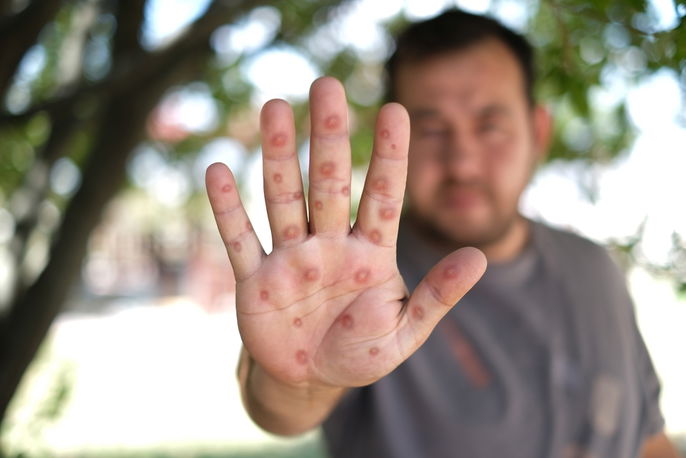
These symptoms usually appear around 5 to 21 days after initial contact with the virus, and can last for 14 to 21 days. The blisters usually appear first on the face and oral mucosa, then spread to the rest of the body and mainly affect the extremities, such as the palms of the hands. In some cases, blisters and sores may also appear in the genital area, and cause penile swelling of the penis and anal pain.
Also recommended: Anal Pain: 8 Possible Causes (& What to Do) tuasaude.com/en/anal-painIt is rare for mpox to develop into a more serious condition, however this may depend on the form of transmission, the person's immune status and the amount of virus that was inoculated. In these cases, there may be lung damage or inflammation of the brain.
Confirming a diagnosis
Mpox can be diagnosed by an infectious disease specialist or general practitioner based on the patient's health history and symptoms. However, confirmation of Monkeypox can only be done through an PCR test, which involves collecting a sample of discharge from a wound or scab using a swab, and sending it to a lab.
Mpox can be suspected when the patient presents with symptoms and has had close contact with another infected person infected with monkeypox.
If a person presents symptoms suggestive of monkeypox, but the test result is negative, other complementary tests can be ordered to rule out other possible causes.
What it looks like
The following table outlines some characteristics that help to differentiate mpox blisters and lesions from other skin problems:
Treatment options
Normally a specific treatment is not necessary to treat mpox, as the symptoms usually disappear within a few weeks. In some cases, however, the doctor may prescribe medications to treat symptoms more quickly.
Even though it is a rare disease, it is important to go to the hospital for monitoring and to prevent further transmission if you have symptoms of mpox.
Medications that have been approved for the treatment of smallpox may be prescribed for mpox. Some examples include Tecovirimat and Brincidofovir. Nonetheless, these medications have not been tested in infected patients, and therefore are only used to control a potential outbreak.
Is mpox curable?
Mpox can be cured and, in general, no specific treatment is necessary, since the virus is usually eliminated by the immune system itself after about 4 weeks.
However, to speed up the healing process, the doctor may prescribe specific medications to combat the virus.
How to prevent it
Some recommended prevention tips include:
- Avoiding close proximity with people diagnosed with monkey pox
- Avoid touching mpox lesions or coming in contact with the clothes or personal objects of those with signs and symptoms of mpox
- Thorough hand hygiene with soap and water
- Using masks
In addition, this illness can also be transmitted from animals to people, although this is rare. You are advised to consume meat that is well-cooked and to avoid contact with wild animals, particularly rodents, as they can be infected with mpox or other infectious agents.
Vaccine information
Vaccines are also a useful tool for protecting yourself against mpox. According to the World Health Organization, mass vaccination against mpox is not possible, as there are not enough vaccines for the total global population.
Currently, the vaccines that are approved for use in the USA, Canada, UK and/or Europe are:
- Jynneos/ Imvamune/ Imvanex, which is given in 2 doses, 4 weeks apart. This vaccine can also be administered up to 4 days after contact with the virus (in these cases, only 1 dose is recommended). Vaccines that are administered 5 to 14 days after initial que exposure can still reduce symptoms, but they may not stop the development of the disease in the body.
- ACAM2000, which is given as a single dose. It is not recommended for those with a history of a weakened immune system, atopic dermatitis, eczema, cardiac disease, or ocular diseases. It should also not be administered to pregnant women.
These vaccines are not recommended for all people, and instead, should be administered to those who are at higher risk for exposure to mpox, including healthcare workers and people who work in laboratories or are researching Orthopoxvirus.
The vaccine efficacy against the current outbreak is still not totally known, although it is still recommended as an important prevention measure.