


Lavender essential oil may help support the treatment of anxiety, insomnia, or psoriasis, because it has calming, anti-inflammatory, and skin-healing properties.
This essential oil is extracted from the flowers of the medicinal plant Lavandula angustifolia. It can be used for aromatherapy or applied to the skin, and it should not be taken by mouth due to the risk of side effects.
Lavender essential oil can be found in natural health stores, but it can also be made at home. In addition to the oil, lavender flowers can be used to make tea, which also has several benefits.
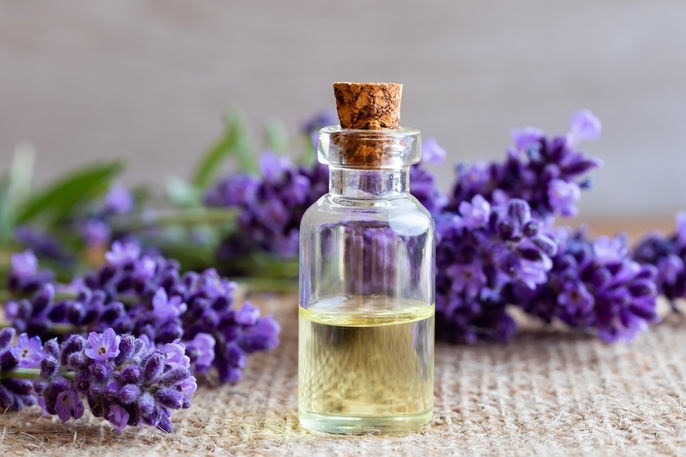
Main benefits
The main benefits of lavender essential oil include:
1. Reducing anxiety
Lavender essential oil is rich in monoterpenes, such as linalool and linalyl acetate. These compounds have sedative and calming properties that may help reduce anxiety when used alongside the treatment recommended by a doctor.
When inhaled, lavender essential oil appears to stimulate the brain to produce neurotransmitters such as serotonin, which can promote a calming and relaxing effect. Read more about essential oils for anxiety.
In addition, lavender essential oil may be recommended to help reduce anxiety before surgery or dental procedures, for example.
2. Reducing stress
Because of its calming, sedative, and relaxing properties, lavender essential oil may be used to help reduce stress.
3. Helping to manage depression
Lavender essential oil may also help in the treatment of depression due to its anxiolytic and antidepressant properties.
This oil does not replace treatment with medications, but it can be used to complement anxiety treatment by helping you relax, feel calmer, and improve sleep quality.
4. Improving sleep quality
Lavender essential oil may help reduce agitation, promote body relaxation, and create a calming effect, which can help with insomnia and improve sleep quality and duration.
In addition, aromatherapy with lavender essential oil appears to increase melatonin levels in the body. Melatonin is the hormone responsible for regulating the circadian rhythm and helping trigger sleep at the end of the day.
5. Healing canker sores
Lavender essential oil has skin-healing, anti-inflammatory, and pain-relieving properties that may help reduce pain, inflammation, irritation, and the size of canker sores.
6. Reducing migraine pain
Lavender essential oil may help reduce headache pain and migraine severity due to its pain-relieving properties, and it may help ease light sensitivity, nausea, and vomiting caused by migraines.
In addition, lavender essential oil also appears to help prevent migraine pain from spreading to other parts of the brain, and it may be used for acute migraine.
However, it should not be used as a migraine treatment, as it may increase the risk of migraine recurrence. Learn more about natural remedies for migraines.
7. Supporting skin healing
Lavender essential oil has skin-healing and anti-inflammatory properties that, when applied to the skin, may help reduce inflammation and speed up the healing process.
In this way, lavender essential oil may help support the treatment of skin wounds, insect bites, burns, psoriasis, or eczema, for example.
How to use
Lavender essential oil can be used for aromatherapy, massage, or direct application to the skin:
1. Aromatherapy
Aromatherapy with lavender essential oil may help relieve symptoms of anxiety, stress, depression, or insomnia, because it has calming and sedative properties.
To use lavender essential oil for aromatherapy, inhale the scent directly from the bottle. Hold the air in your lungs for about 2 to 3 seconds, then exhale. Repeat 3 to 7 times, several times per day.
Another way to do aromatherapy with lavender essential oil is to place 3 to 4 drops in a small amount of water inside an electric aromatizer or a room diffuser.
2. Massage
Lavender essential oil can also be used in relaxing massage because of its pleasant scent and its relaxing and calming properties.
To do the massage, use 10 drops of lavender essential oil mixed with 100 mL of a carrier oil, such as coconut oil or sweet almond oil, for example.
Apply to the skin and gently massage with your fingertips for about 10 minutes.
3. Applying to the skin
Applying lavender essential oil to the skin may help support skin healing.
To apply, mix 1 to 3 drops of lavender essential oil into 2 teaspoons of a carrier oil, such as coconut oil, castor oil, or sweet almond oil, and apply to the affected skin area.
Before using lavender essential oil on the skin, do an allergy test by mixing 1 drop of lavender essential oil into 1/2 teaspoon of carrier oil and applying it to the back of the hand or the inner elbow.
Wait 24 hours. If the skin becomes red or irritated during this period, using lavender essential oil is not recommended.
How to make at home
In addition to being found in natural health stores, lavender essential oil can also be prepared at home.
Ingredients
-
A handful of fresh or dried lavender flowers;
-
1 cup vegetable oil or olive oil.
How to prepare
Place the lavender flowers in a clean, dry glass jar with a lid. Add the vegetable oil or olive oil, mix well, and close the jar. Leave the jar for 3 days in a place with direct sunlight.
After this period, strain the oil using a fine sieve or a coffee filter. Store the lavender oil in a dark glass bottle with a lid. This oil should only be used on the skin and should not be consumed.
Using for sleep
Lavender essential oil to support sleep can be applied to the pillow.
It is recommended to apply 3 to 4 drops of lavender essential oil to the pillow. When inhaled, it helps you relax, feel calmer, and fall asleep faster.
Side effects
The most common side effects are skin irritation or an allergic reaction when applied to the skin.
In addition, frequent topical use of lavender essential oil in boys may cause prepubertal gynecomastia, which is breast growth before puberty.
Lavender essential oil may also cause excessive drowsiness, nausea, vomiting, and headache.
When taken by mouth, lavender essential oil can cause toxic effects such as difficulty breathing, confusion, diarrhea, stomach pain, blurred vision, and a burning sensation or pain in the throat. For this reason, lavender essential oil should not be used orally.
Contraindications for use
Lavender essential oil should not be used during the first trimester of pregnancy, as there are not enough studies to confirm its safety during this phase. Because safety data during pregnancy and breastfeeding are limited, use in the second or third trimester, or while breastfeeding, should only be considered with medical guidance.
In children, using lavender essential oil for aromatherapy appears to be safe, but it should only be used if recommended by a pediatrician. However, lavender essential oil should not be used for massage or applied to the skin in children, as it may cause gynecomastia, especially in boys.
Lavender essential oil should not be used by people who are allergic to lavender.
In addition, lavender essential oil should not be taken by mouth and should not be applied undiluted to the skin.