


- Kaposi sarcoma is a type of skin cancer caused by human herpesvirus 8 (HHV-8).
- It is more common in people with weakened immune systems, such as those with AIDS or who have had a transplant.
- Treatment may include surgery, HAART, radiation therapy, chemotherapy, immunotherapy, or targeted therapy.
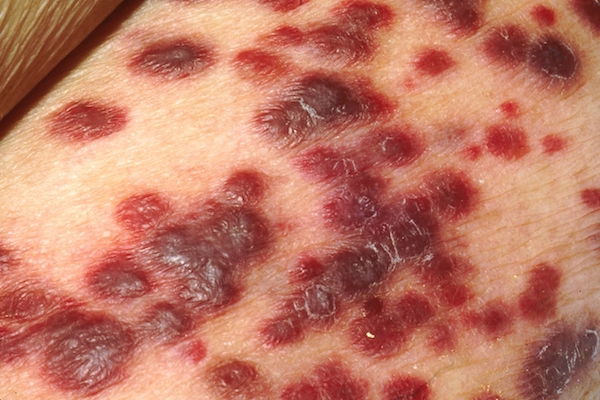
Kaposi sarcoma is a type of skin cancer that develops in the inner lining of blood vessels. It can cause red to purple skin patches or plaques that may appear anywhere on the body.
This type of skin cancer is caused by human herpesvirus 8 (HHV-8). The virus can be transmitted through sexual contact or saliva. Kaposi sarcoma mainly affects people with weakened immune systems. This includes people who have had an organ transplant or have AIDS.
Treatment for Kaposi sarcoma is managed by an oncologist. Treatment may include chemotherapy, radiation therapy, or immunotherapy, for example.
Main symptoms
The main symptoms of Kaposi sarcoma are:
-
Red, purple, brown, or black spots or plaques on the skin, spread throughout the body
-
Flat or raised skin lesions, which may be painful
-
Swelling in the lower limbs due to blocked lymph nodes
-
Swollen lymph nodes near the affected area, especially in the groin
-
Chest pain and/or coughing up blood, when it affects the lungs
-
Abdominal pain, blood in the stool, diarrhea, constipation, nausea, or vomiting, when it affects the gastrointestinal system
-
Mouth pain or difficulty eating, when it affects the lining of the mouth
Symptoms of Kaposi sarcoma can vary depending on which part of the body is affected. It can involve the skin (especially the face, legs, and feet), the lining of the mouth, gums, intestines, or anus, or internal organs such as the lungs or liver.
It is important to see an oncologist as soon as symptoms of Kaposi sarcoma appear, especially in people with weakened immune systems, so the diagnosis can be confirmed and treatment started.
Confirming a diagnosis
Kaposi sarcoma is usually diagnosed by an oncologist, dermatologist, or primary care provider after reviewing your symptoms and medical history.
To confirm the diagnosis, the provider typically orders a biopsy of the lesion so it can be examined in a lab, along with immunohistochemistry testing.
The doctor may also order additional tests based on your symptoms, such as an X-ray, endoscopy, bronchoscopy, CT scan, or PET-CT.
Possible causes
Kaposi sarcoma is caused by human herpesvirus type 8 (HHV-8), which infects the cells that line the inside of blood vessels. This virus can be transmitted through unprotected sex, saliva, blood transfusion, or injection drug use.
According to the National Cancer Institute, people infected with HHV-8 are more likely to develop Kaposi sarcoma when their immune system is weakened by disease or by medicines used after an organ transplant. Because of this, it is more common in older adults, people with AIDS, and people who have had a transplant.
Main types
Kaposi sarcoma can be classified into 4 main types according to its cause:
-
Classic Kaposi sarcoma: a rare type that progresses slowly and mainly affects men over age 60 of Mediterranean, Middle Eastern, or Eastern European descent, due to the natural weakening of the immune system with aging
-
Immunosuppression-associated or iatrogenic Kaposi sarcoma: can occur after a transplant, especially a solid organ transplant, due to the use of immunosuppressive medications to prevent organ rejection
-
AIDS-related Kaposi sarcoma: the most common form of Kaposi sarcoma, which is more aggressive and develops quickly
-
Endemic Kaposi sarcoma: a very aggressive type that affects young people in African regions
Kaposi sarcoma can be fatal when it affects the blood vessels of other organs, such as the lungs, liver, or gastrointestinal tract, causing bleeding that is difficult to control.
Treatment options
Treatment for Kaposi sarcoma should be guided by an oncologist, who may recommend:
1. Surgery
Surgery may be recommended by the oncologist to remove spots, plaques, or skin lesions, especially when there are only a few lesions or in cases of classic Kaposi sarcoma, as this type grows slowly.
This surgery can be done with electrocautery or cryosurgery, for example.
2. Creams or ointments
Creams or ointments containing imiquimod may be recommended by the doctor to apply directly to the skin lesions.
3. Highly active antiretroviral therapy
Highly active antiretroviral therapy (HAART) is usually recommended in cases of Kaposi sarcoma caused by HIV infection. This type of treatment helps prevent HIV from causing further damage to the immune system.
According to the NIH HIV Clinical Guidelines, antiretroviral therapy is recommended for all people with HIV and Kaposi sarcoma, and some cases may also require systemic chemotherapy.
4. Radiation therapy
Radiation therapy is used to destroy Kaposi sarcoma cells and may be recommended to complement surgical treatment for removing skin lesions.
Radiation therapy can be delivered externally through a machine that sends beams of radiation to the area with Kaposi sarcoma. It can also be done through brachytherapy, in which radioactive material is placed inside or near the cancer.
5. Chemotherapy
Chemotherapy uses medications such as vinblastine, liposomal doxorubicin, or paclitaxel, for example, which help destroy cancer cells.
This type of treatment may be applied directly to the lesion as an injection or ointment, or it may be given directly into a vein, for example.
6. Immunotherapy
Immunotherapy helps increase the immune system’s response against cancer cells, which may reduce the size of the cancer or slow its growth.
The main immunotherapy medication that may be recommended for Kaposi sarcoma is interferon alfa-2b.
7. Targeted therapy
Targeted therapy uses medications that help the immune system identify and attack Kaposi sarcoma cells more specifically, causing fewer effects on normal cells in the body.
Some medications used as targeted therapy for Kaposi sarcoma include bevacizumab or imatinib, for example.
In some cases, targeted therapy may be combined with radiation therapy or chemotherapy to increase the chances of cure.
Can Kaposi sarcoma be cured?
Kaposi sarcoma can be cured, but this depends on the stage of the disease, the person’s age, and the condition of their immune system.
