


Jicama is a nutrient-rich legume with antioxidant compounds that provide several health benefits. It helps reduce blood sugar levels, making it especially useful for people with diabetes, and also helps lower cholesterol to protect heart health.
Also known as the Mexican turnip, jicama (Pachyrhizus erosus) may support weight loss because it is low in calories, high in water, and rich in fiber. These factors help reduce appetite and increase energy expenditure, which can contribute to gradual weight management.
The edible part of the jicama plant is its root, which has a sweet, slightly starchy flavor. It is often eaten raw with lime, salt, and chili powder, or served in salads with fruits and vegetables. It can also be blended into juices or added to soups and stews.
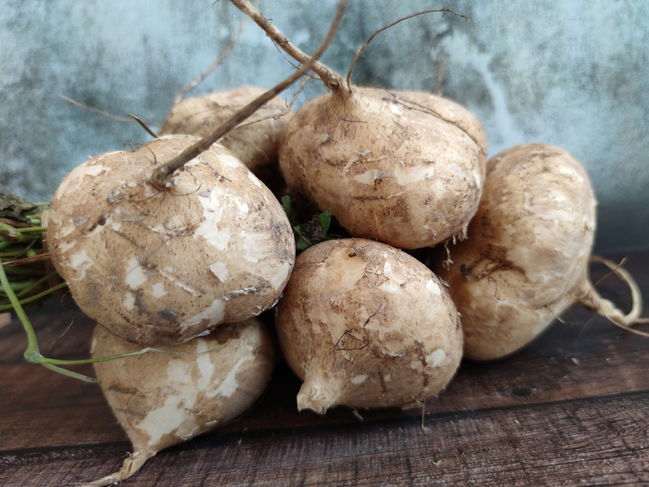
Health benefits
Jicama offers many health benefits, including the following:
1. Helps with weight loss
Jicama is very low in calories and high in fiber and water. Its soluble fiber forms a gel in the stomach that slows digestion and helps you feel full longer, which may reduce overall food intake. Because fiber takes longer to digest, the body also uses more energy during the process, supporting weight management.
In addition, jicama contains inulin, a natural prebiotic that ferments in the intestine to produce short-chain fatty acids. These compounds support digestive health, improve fat metabolism, and may help prevent fat buildup and obesity.
2. Regulates blood sugar
The fiber in jicama helps stabilize blood sugar levels by slowing the digestion and absorption of carbohydrates, which prevents sudden spikes in blood glucose after meals.
Jicama may also help improve insulin sensitivity, allowing glucose to move more efficiently from the bloodstream into cells for energy production. This effect can support diabetes management and overall metabolic health.
3. Helps lower cholesterol
Jicama contains soluble fiber that helps lower total and LDL (“bad”) cholesterol by preventing its reabsorption in the intestines and reducing its production in the liver. This contributes to heart health and reduces the risk of cardiovascular diseases such as atherosclerosis, stroke, and heart attack.
4. Protects against oxidative damage
Rich in vitamin C and polyphenols, jicama provides strong antioxidant protection that helps defend cells from damage caused by excess free radicals. Regular consumption may help slow premature aging, preserve cognitive function, and lower the risk of chronic conditions like diabetes, Alzheimer’s disease, and cancer.
5. Supports intestinal health
Jicama contains fructooligosaccharides (FOS), a form of prebiotic carbohydrate that feeds beneficial gut bacteria. Maintaining a balanced gut microbiome helps regulate digestion, strengthen the immune system, and reduce the risk of colon cancer.
6. Prevents constipation
Jicama is helpful for preventing and relieving constipation due to its high fiber and water content. These components add bulk to the stool and make bowel movements easier, reducing bloating and abdominal discomfort.
7. Promotes hydration
With about 90% water, jicama helps keep the body hydrated, especially in hot weather or during physical activity. It can be enjoyed raw or added to hydrating drinks and smoothies.
Jicama properties
Jicama has antioxidant, hypoglycemic, anti-obesity, prebiotic, digestive, lipid-lowering, anti-inflammatory, and hydrating properties. These benefits come from its natural compounds, including fructooligosaccharides, vitamin C, polyphenols, and water.
Nutritional information
The table below shows the nutritional composition of 100 grams of raw jicama:
To gain the most benefits from jicama, include it as part of a balanced, healthy diet and maintain regular physical activity.
How to eat jicama
Only the root of the jicama plant is safe to eat, as the rest of the plant contains natural toxins. The root can be eaten raw, seasoned with lime, salt, and chili powder, or added to salads and juices.
Jicama can also be cooked and used in stews, soups, stir-fries, or served with meat and seafood. It’s a great alternative to potatoes and can be sliced and baked into crunchy chips.
The recommended daily serving is about 1 cup (130 g), which provides around 49 kcal. The exact amount may vary depending on individual nutritional needs.
Healthy jicama recipes
Jicama can be enjoyed in a variety of ways:
1. Jicama salad
Ingredients
-
1 jicama
-
2 cucumbers
-
2 carrots
-
1 cup pineapple
-
Green chili and sesame seeds for garnish
For the vinaigrette
-
1 cup tangerine juice
-
¾ cup olive oil
-
¼ cup white vinegar
-
½ cup sesame seeds
Preparation
Peel and cut the jicama, cucumber, and carrots into thin strips. Dice the pineapple and mix everything in a large bowl. Blend the vinaigrette ingredients together and pour over the salad before serving.
2. Jicama chips
Ingredients
-
2 jicamas
-
Olive oil, as needed
-
Juice of ½ lime
-
Salt and chili powder to taste
Preparation
Preheat the oven to 250°F (120°C). Slice the jicama very thinly (a mandoline works best). Line a baking sheet with parchment paper, drizzle with olive oil, and arrange the slices in a single layer. Bake for about 1 hour, turning if needed, until crisp and golden. Serve with lime juice, salt, and chili powder.
3. Jicama lemonade
Ingredients
-
2 cups lemon soda
-
2 cups sparkling water
-
½ cucumber
-
½ cup chopped jicama
-
½ cup pineapple
-
Juice of 3 limes
-
Optional: chamoy sauce for serving
Preparation
Chop the pineapple, cucumber, and jicama into small pieces. Mix all ingredients in a pitcher and serve cold with ice.
Possible side effects
Other parts of the jicama plant, including the leaves, vines, and flowers, contain a naturally toxic substance called rotenone. These parts should not be eaten. The skin of the root should also be removed before consuming.
Because jicama is high in fiber, eating it in large amounts may cause digestive discomfort, gas, or stomach pain.