


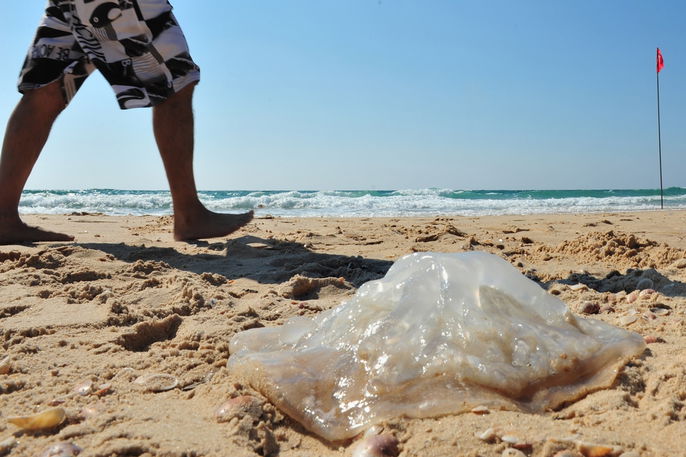
Jellyfish stings are common occurrences at the beach because these marine animals inhabit almost every type of body of water. Most people encounter them while swimming or walking along the shoreline during the summer months.
Symptoms typically begin immediately after your skin makes contact with the jellyfish's venomous tentacles. This contact triggers a painful burning sensation that can be quite distressing for the victim.
While most stings are not life-threatening and can be managed with basic first aid, some species carry highly potent venom. In these more serious cases, symptoms are severe and require immediate intervention by medical professionals.
Main symptoms
The most common symptoms that may appear after a jellyfish sting include:
-
Intense pain and a burning sensation in the affected area
-
Redness at the site of contact
-
Appearance of small raised patches or blisters on the skin
-
Swelling in the area that touched the jellyfish
-
Itchy skin
-
Appearance of brown or purple tracks or lines on the skin
In general, the pain and itching improve after a few days, though they can last between 1 and 2 weeks. However, dark spots on the skin may take longer to fade completely.
Depending on the specific type of jellyfish, symptoms can vary in intensity. In more severe cases, other symptoms may develop, such as difficulty breathing, heart palpitations, chest pain, muscle cramps, tingling sensations, or nausea, making it vital to seek emergency hospital care.
What to do after a sting
In most cases, a jellyfish sting can be treated immediately on-site or at home by following these steps:
1. Wash the area with seawater
Seawater helps to rinse away venom from the skin and can help dislodge some of the jellyfish tentacles. It is important to avoid using fresh water, as it can trigger the release of more venom and worsen your symptoms.
2. Remove the tentacles
The best way to remove any jellyfish tentacles that remain stuck to the skin is to use a pair of tweezers or a flat object like a popsicle stick.
Since these tentacles can be very sticky, it is helpful to continue pouring seawater over the area while you carefully remove them.
3. Apply white vinegar
After the tentacles are removed, a helpful strategy to relieve pain and neutralize remaining venom is to apply white household vinegar directly to the site for 30 seconds. Vinegar contains acetic acid, which helps deactivate the jellyfish's stinging cells.
Do not apply urine or alcohol to the area under any circumstances, as these substances can increase the irritation and cause more venom to release.
4. Soak the area in hot water
According to clinical studies, soaking the affected area in hot water for about 20 to 30 minutes helps reduce pain and inflammation. If you cannot submerge the area, you can take a warm shower and let the water run over the sting for several minutes.
This step should only be performed after the tentacles have been completely removed to prevent fresh water from causing a further release of venom.
5. Apply cold water compresses
Once you have completed the previous steps, if pain and discomfort persist, you can apply cold water compresses to the affected area.
The pain and discomfort usually improve within 20 minutes, though it may take up to a full day for the pain to vanish entirely. During this time, it is recommended to take over-the-counter pain relievers or anti-inflammatories, such as acetaminophen or ibuprofen.
When to go to the hospital
If the pain lasts more than one day or if you develop other symptoms like vomiting, nausea, muscle cramps, difficulty breathing, or the sensation of a lump in your throat, you should go to the hospital immediately. Medical staff will evaluate if you need specialized treatment, such as an antivenom or antibiotics.
How to care for the burn
The most important step in the days following a jellyfish sting is to apply cold compresses to the area to help soothe pain and reduce inflammation.
If small wounds or sores appear on the skin, you should wash the area 2 to 3 times a day with water and a pH-neutral soap, then cover it with a bandage or sterile gauze.
If the wounds are slow to heal, it may be necessary to consult a primary care physician or a dermatologist to start an antibiotic ointment, such as Neosporin, desoximetasone, or silver sulfadiazine.
