


Hypovolemic shock is a life-threatening emergency that happens when the body loses a large amount of blood and/or fluids. When this occurs, the heart can no longer pump enough blood to deliver oxygen to the organs and tissues.
This type of shock is most common after major trauma, such as a serious car crash or a fall from a significant height. It can also occur during surgery.
Prompt hospital treatment is crucial to lower the risk of serious complications. Care usually involves intravenous (IV) fluids and, if necessary, a blood transfusion, along with treatment to stop or manage the source of bleeding.
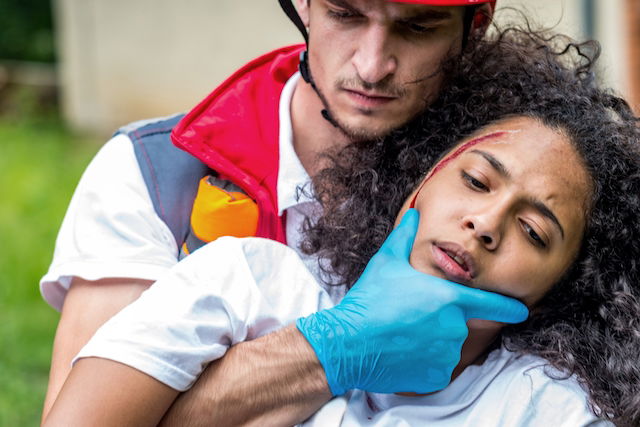
Main symptoms
The main symptoms of hypovolemic shock are:
-
Constant headache, which may worsen over several hours;
-
Swelling;
-
Extreme fatigue;
-
Dizziness;
-
Nausea and vomiting;
-
Very pale, cold skin;
-
Confusion;
-
Bluish fingers and lips;
-
Feeling faint.
In many cases, hypovolemic shock can be easier to recognize when bleeding is visible. However, when bleeding is internal, these signs can be harder to notice.
Confirming a diagnosis
A healthcare provider diagnoses hypovolemic shock based on signs and symptoms and the results of lab tests.
It is important for hypovolemic shock to be identified quickly so treatment can begin right away in order to prevent complications.
Possible causes
Hypovolemic shock most often occurs due to hemorrhage that leads to major blood loss. This can happen with very deep wounds or cuts, car crashes, falls from great heights, internal bleeding, active ulcers, and very heavy menstrual bleeding.
Other situations that cause significant fluid loss can also reduce overall blood volume and contribute to shock, such as prolonged diarrhea, severe burns, or excessive vomiting.
When blood and fluid levels drop, oxygen delivery to organs and tissues is disrupted, which can lead to cell death and, if not identified and treated, organ failure. Reduced oxygen delivery also increases lactate production, which can be harmful to the body when it accumulates at high levels.
Treatment options
Treatment for hypovolemic shock must be managed by a physician and usually includes intravenous (IV) fluids and blood transfusions to replace lost volume and prevent the condition from deteriorating.
It is also important to identify the cause of the shock so treatment can be targeted and further blood and fluid loss can be prevented.
Death from hypovolemic shock occurs only if the amount of blood and fluid lost is more than 1/5 of a person’s total blood volume, which is approximately 1 liter of blood.
First aid
Hypovolemic shock is an emergency and must be treated as quickly as possible. The American Red Cross recommends applying direct pressure to control life-threatening bleeding and seeking emergency help.
If hypovolemic shock is suspected, the following should be done:
-
Call emergency medical services immediately by dialing 911;
-
Lay the person down and raise the legs about 12 inches (30 cm), or enough to keep them above heart level;
-
Keep the person warm using blankets or clothing.
If there is an actively bleeding wound, try to slow the bleeding by using a clean cloth and applying firm pressure to the area. This can reduce blood loss and help buy time until the medical team arrives.