


HPV in the mouth is an infection caused by the human papillomavirus (HPV) that can lead to symptoms such as small whitish or reddish warts, frequent canker sores, or white and red patches inside the mouth.
This infection usually happens through direct contact with genital lesions during unprotected oral sex with someone who is infected with HPV.
HPV in the mouth can increase the risk of developing cancer in the mouth, neck, or throat. Therefore, if symptoms suggesting oral HPV appear, it’s important to see your primary care provider or an infectious disease specialist for diagnosis and proper treatment.
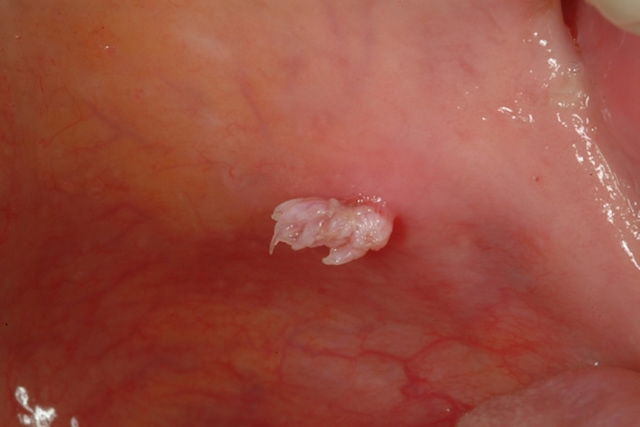
Common symptoms
The main symptoms of HPV in the mouth include:
-
Small red or flesh-colored warts inside the mouth;
-
Discomfort around the warts;
-
Itching in the area of the lesions or warts.
Although oral HPV lesions are uncommon, they are more frequently found along the edges of the tongue, lips, and roof of the mouth. However, any part of the mouth can be affected, including the throat and the base of the tongue.
Most people with HPV in the mouth do not experience symptoms and may only discover the infection when complications develop, such as oral cancer.
Confirming a diagnosis
The diagnosis of HPV in the mouth is made by a primary care provider or an infectious disease specialist based on symptom evaluation, medical history, and a physical exam of the mouth and throat.
To confirm the diagnosis, the doctor may perform a biopsy so the tissue can be analyzed in the lab. This test helps confirm the presence of HPV, identify the virus type, and determine whether the lesion is benign or malignant.
How it spreads
HPV in the mouth is mainly transmitted through unprotected oral sex or possibly kissing, especially when there are open sores or cuts in the mouth that make it easier for the virus to enter.
Certain factors can increase the risk of developing HPV in the mouth, such as smoking, excessive alcohol consumption, having multiple sexual partners, and a weakened immune system.
There are about 24 types of HPV that can infect the mouth, but not all are linked to the development of cancer.
Treatment options
In many cases, HPV goes away on its own without treatment.
However, if lesions develop in the mouth, a doctor may recommend one or more of the following treatments:
-
Cryotherapy: Freezing the warts with liquid nitrogen;
-
Medications: Application of trichloroacetic acid (70–90%) or injections of interferon alfa;
-
Surgery: Removal of warts that do not respond to standard treatments or increase the risk of cancer.
After treatment, follow-up exams are important to confirm that the lesions have completely disappeared.
Can it be cured?
HPV can clear up naturally when certain virus subtypes are eliminated by a healthy immune system.
However, in some people, the HPV virus can remain dormant in the body for many years, potentially causing cellular changes and increasing the risk of developing oral cancer over time.
Also recommended: HPV: Symptoms, Types, Transmission & Treatment tuasaude.com/en/hpv-symptoms-transmission-cure-and-treatment