


Fungal acne is a common name for Malassezia folliculitis, an inflammation of the hair follicles linked to an overgrowth of Malassezia yeast, which normally lives on the skin. Despite its name, fungal acne is not the same as acne vulgaris and is generally considered an overgrowth-related condition rather than a contagious infection.
It usually causes clusters of small, similar-looking red bumps or pus-filled bumps, often with itching. The chest, back, shoulders, upper arms, neck, and face can be affected, and the condition is sometimes mistaken for regular acne because the two can look similar.
Treatment mainly involves antifungal medicines, which may be applied to the skin or taken by mouth depending on the severity and extent of the condition. Because fungal acne can recur and other skin conditions can resemble it, persistent or itchy acne-like bumps that do not improve with usual acne treatment should be assessed by a dermatologist or another qualified health professional.
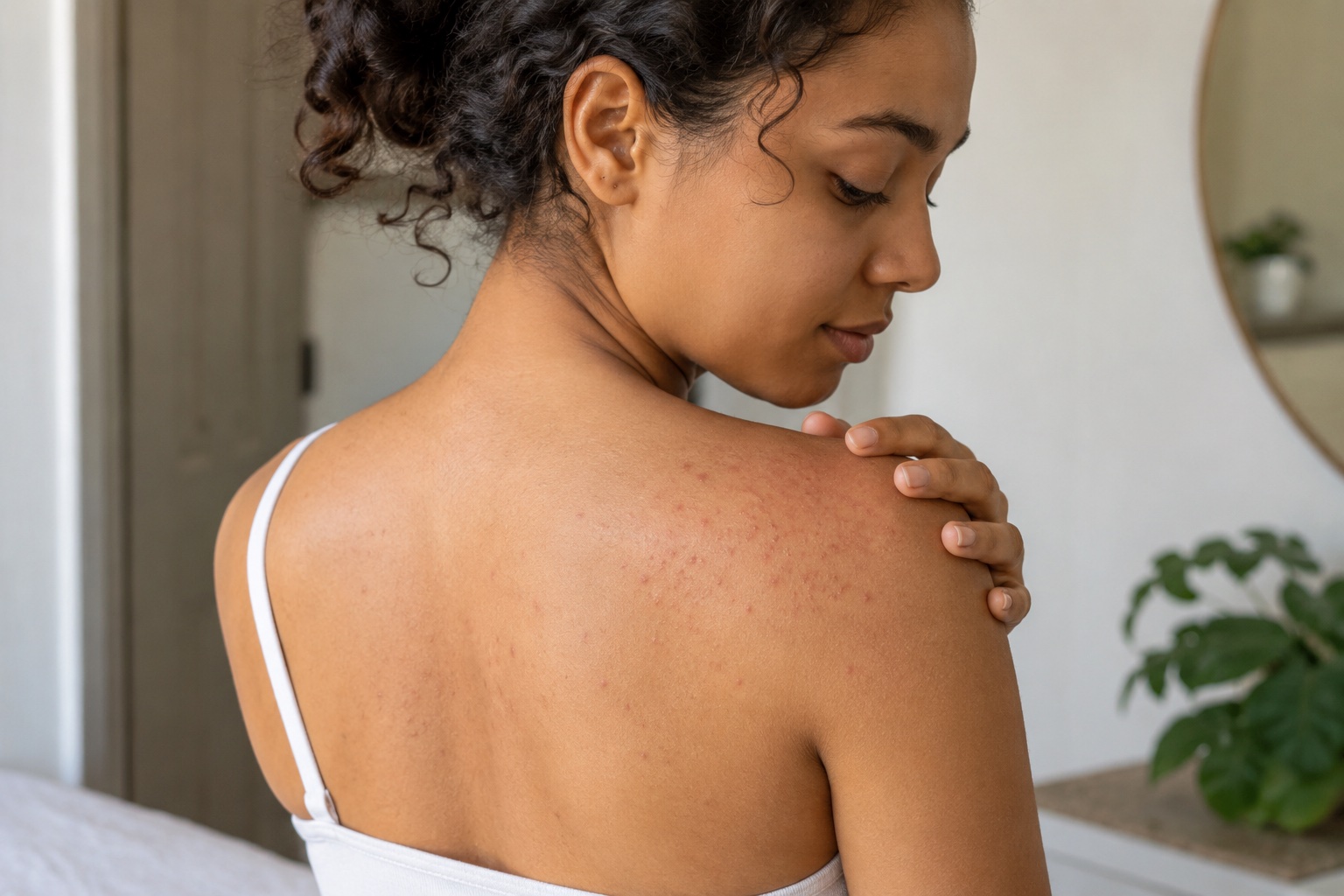
Main symptoms
Fungal acne usually causes a group of small bumps that are very similar in size and appearance.
The most common symptoms include:
-
Small red bumps on the skin
-
Small pus-filled bumps, also called pustules
-
Itching
-
Bumps that are usually about 2 to 4 mm in size
-
Clusters of bumps that look relatively uniform
-
Lesions on the chest, back, shoulders, upper arms, neck, or face
-
Acne-like bumps without blackheads or whiteheads
Unlike acne vulgaris, Malassezia folliculitis generally does not cause comedones, which are blackheads and whiteheads. Itching and many similarly sized bumps can also make fungal acne more likely, although these findings alone are not enough to confirm the diagnosis.
Causes
Fungal acne develops when Malassezia yeast, which is naturally present on healthy skin, becomes involved in the hair follicles and causes inflammation. Malassezia species depend on skin lipids for growth, and certain conditions can favor their overgrowth.
Several factors have been associated with Malassezia folliculitis such as:
- Heat and sweating: Hot and humid environments can favor the growth of Malassezia. Heavy sweating may also create conditions that make follicular overgrowth more likely, which helps explain why fungal acne often affects areas such as the chest and back.
- Skin occlusion: Occlusion occurs when clothing, skin products, or other materials trap heat and moisture against the skin. This environment may encourage Malassezia growth and contribute to inflammation around the hair follicles.
- Antibiotic use: Broad-spectrum antibiotics are an important risk factor for Malassezia folliculitis. Antibiotics can alter the balance of microorganisms on the skin, potentially allowing yeast to become more prominent, and fungal acne may sometimes appear or worsen after antibiotic treatment.
Malassezia folliculitis is also more likely in some people with weakened immune defenses. Reported risk factors include HIV infection, blood cancers, diabetes, and the use of immunosuppressive medicines.
Is fungal acne contagious?
Malassezia yeast is a normal part of the skin microbiome and commonly lives on healthy human skin. For this reason, fungal acne is generally viewed as a condition caused by overgrowth and inflammation within the follicles rather than an infection that is typically passed from one person to another through ordinary contact.
Confirming a diagnosis
Fungal acne is diagnosed by evaluating the appearance and location of the skin lesions and, when necessary, performing tests to look for Malassezia. Doctors may suspect the condition when there are many similarly sized itchy papules or pustules, especially on the trunk, shoulders, neck, or face, without the blackheads and whiteheads usually seen with acne vulgaris.
To help confirm the diagnosis, a dermatologist may collect material from a pustule or skin scraping and examine it under a microscope. Potassium hydroxide preparation, Gram staining, and other forms of direct microscopy can help identify yeast, while a skin biopsy may be used when the diagnosis remains uncertain.
Other conditions may resemble fungal acne, including acne vulgaris, bacterial folliculitis, medication-related acneiform eruptions, and eosinophilic folliculitis. Dermoscopy or a Wood lamp examination may sometimes provide additional information, but laboratory or histopathologic findings can be particularly useful when the clinical appearance is unclear.
Treatment options
Treatment for fungal acne aims to reduce Malassezia in the hair follicles and control inflammation. The choice of treatment depends on the severity and extent of the condition, whether it keeps returning, and the person's overall health.
1. Topical antifungal treatment
Antifungal medicines applied directly to the skin can be used for Malassezia folliculitis, particularly when the condition is limited. Options described in the literature include topical azole antifungals, such as ketoconazole, as well as selenium sulfide.
Topical treatment may require a longer course than oral treatment in some cases. It may also be used as maintenance therapy when the condition tends to return.
2. Oral antifungal treatment
Prescription oral antifungal medicines, including itraconazole and fluconazole, may be considered for more extensive, persistent, or recurrent fungal acne. Studies have reported good responses to systemic treatment, and some observational data suggest that oral therapy may work more quickly or successfully than topical treatment alone in certain patients.
These medicines should only be used under medical supervision because they can interact with other medicines and may affect the liver. Treatment decisions require additional care in people who have liver disease, are immunocompromised, or have other health considerations.
Prevention measures
Fungal acne can return even after successful treatment, so reducing factors that favor Malassezia overgrowth may help lower the risk of recurrence. Prevention strategies are less standardized than treatment recommendations, but commonly discussed measures focus on reducing heat, moisture, and skin occlusion.
Possible preventive measures include:
-
Managing heavy sweating when possible
-
Avoiding prolonged use of very occlusive clothing or skin products
-
Addressing unnecessary broad-spectrum antibiotic use with a health professional
-
Following prescribed maintenance antifungal treatment when recommended
-
Managing underlying medical conditions that may increase susceptibility
Some people with repeated episodes may be advised to use a topical antifungal product intermittently as maintenance treatment. The most appropriate prevention strategy depends on the cause and frequency of recurrence.
When to see a doctor
Medical assessment is recommended when acne-like bumps are persistent, very itchy, recurrent, or do not improve with usual acne treatment. Evaluation may be particularly important when the bumps develop or worsen after antibiotic treatment.
A dermatologist can distinguish fungal acne from ordinary acne and other types of folliculitis and determine whether testing is needed. Professional evaluation also helps avoid unnecessary acne treatments or self-treatment with prescription oral antifungal medicines.