


Eosinophilic folliculitis is a rare, noninfectious skin condition that causes inflammation around the hair follicles. It occurs when eosinophils, a type of white blood cell involved in immune and allergic reactions, collect in and around these follicles.
The condition usually causes very itchy, red or skin-colored bumps and small pus-filled lesions. These outbreaks often affect the face, scalp, neck, shoulders and upper trunk and may repeatedly improve and return.
Treatment depends on the form of eosinophilic folliculitis and any underlying health condition. Medical evaluation is important because the condition may be associated with HIV, immune suppression or certain blood disorders and usually requires a skin biopsy for confirmation.
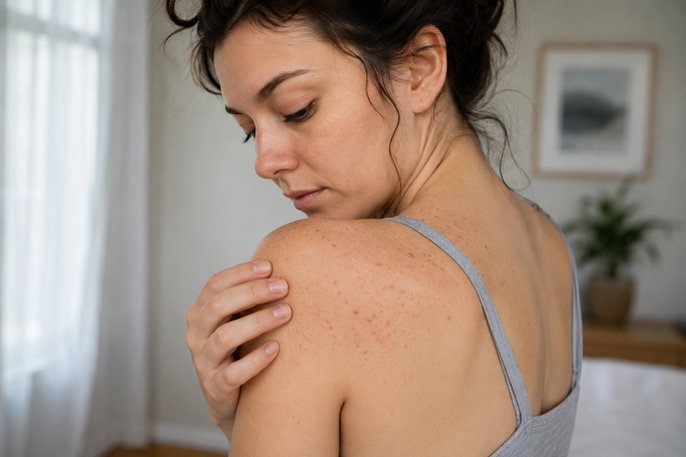
Main symptoms
The most common symptoms of eosinophilic folliculitis include
-
Intensely itchy skin
-
Small red or skin-colored bumps around hair follicles
-
Small pus-filled bumps that can resemble acne
-
Groups of bumps that form circular or ring-shaped patches
-
Patches with clearer skin in the center
-
Lesions on the face, scalp, neck, shoulders or upper trunk
-
Repeated outbreaks that improve and later return
Scratching may irritate the skin further and can leave darker areas after the lesions heal. The symptoms can resemble acne, bacterial folliculitis, scabies, insect bites or medication reactions, so a medical assessment is needed to identify the cause.
Is eosinophilic folliculitis contagious?
Eosinophilic folliculitis is not considered contagious. It is not caused by an infection that passes from one person to another.
The condition appears to result from abnormal immune activity that attracts eosinophils to the hair follicles. Therefore, physical contact with affected skin does not transmit the condition.
This structure separates the possible underlying causes from the recognized clinical types.
Possible causes
The exact cause of eosinophilic folliculitis is not fully understood, but it appears to involve abnormal immune activity around the hair follicles. Certain inflammatory substances may attract eosinophils into the follicles and surrounding skin, leading to itching, bumps and pustules.
The condition may be associated with HIV, other forms of immune suppression, blood disorders or certain medications, although it can also occur without a known underlying illness.
Types of eosinophilic folliculitis
Eosinophilic folliculitis is divided into different types based on the age and health of the affected person and the circumstances in which the condition develops.
1. Classic eosinophilic pustular folliculitis
The classic form is also known as Ofuji disease. It often causes very itchy bumps and pustules that gradually spread outward and form ring-shaped patches.
This form can occur in people without a known immune disorder. The lesions commonly appear on the face and upper body and may repeatedly disappear and return.
2. HIV-associated eosinophilic folliculitis
Eosinophilic folliculitis can occur in people with HIV, particularly when the immune system is severely weakened. It may cause persistent and intense itching, along with follicular bumps on the face, shoulders and trunk.
This form is linked to immune system dysfunction rather than direct infection of the follicles. Improvement of immune function with antiretroviral treatment may help control the condition.
3. Infantile eosinophilic folliculitis
The infantile form occurs in babies and young children. It commonly causes very itchy bumps or pustules, often on the scalp, although other areas may also be affected.
Because the rash can resemble eczema or other childhood skin conditions, a skin biopsy may be needed to confirm the diagnosis.
4. Immune suppression and associated conditions
Eosinophilic folliculitis may also occur in people with other forms of immune suppression. Reported associations include lymphoma, myelodysplastic syndromes and other blood or immune system disorders.
Some cases may also appear after the use of certain medications. These forms are thought to involve an abnormal immune reaction around the hair follicles.
The type of eosinophilic folliculitis can help guide the medical evaluation and treatment plan. Identifying an associated condition, such as HIV or another immune disorder, may also be important for controlling future outbreaks.
Confirming a diagnosis
A dermatologist usually considers the appearance and location of the lesions, the severity of itching and whether the outbreaks repeatedly return. Medical history is also reviewed to identify HIV, medication use, immune suppression or blood disorders that may be associated with the condition.
A skin biopsy is commonly needed to confirm eosinophilic folliculitis. The tissue sample typically shows many eosinophils collecting in and around the hair follicle, sometimes with small areas of pus-like inflammation.
Blood tests may show an increased eosinophil count or higher immunoglobulin E levels, although these findings are not present in every case. Additional testing may be performed to check for HIV or another underlying condition when clinically appropriate.
Treatment options
Treatment is chosen according to the type of eosinophilic folliculitis, the severity of symptoms and the presence of an underlying medical condition. Because the condition can return, more than one treatment may be required.
1. Medications
Medicines used to treat eosinophilic folliculitis may include:
- Indomethacin is often used as a first-line treatment for the classic form and may reduce inflammation, itching and skin lesions,
- Topical or oral corticosteroids can help control mild to severe outbreaks
- Tacrolimus and similar topical medicines may be useful on sensitive areas such as the face
- Antihistamines can help relieve itching, although they usually do not treat the underlying inflammation when used alone.
These medicines can cause side effects, including stomach, kidney or cardiovascular problems with indomethacin, skin thinning with long-term corticosteroid use and temporary burning with topical calcineurin inhibitors. Treatment should be selected and monitored by a doctor, and more than one medication may be used when needed.
2. Phototherapy
Narrowband ultraviolet B phototherapy may be considered for persistent or widespread eosinophilic folliculitis. This treatment exposes the affected skin to controlled ultraviolet light during scheduled medical sessions.
Several sessions may be needed, and the condition can return after treatment is stopped.
3. Treatment of HIV-associated disease
For HIV-associated eosinophilic folliculitis, effective antiretroviral therapy is an important part of treatment. Restoring immune function may reduce or resolve the skin lesions over time.
Additional treatments, such as topical corticosteroids, antihistamines or phototherapy, may be used to control symptoms while immune recovery occurs.
4. Other treatment options
Cases that do not improve with initial treatment may require other topical or systemic medicines. Treatment choices should be made by a dermatologist because evidence for many second-line therapies is based mainly on individual cases or small clinical reports.
When to see a doctor
Medical evaluation is recommended when itchy bumps or pustules persist, repeatedly return or do not improve with usual acne or folliculitis treatment. An assessment is also important when the rash is widespread, severely itchy or associated with sleep problems or significant discomfort.
Prompt evaluation is particularly important for people with HIV, a weakened immune system, a blood disorder or unexplained symptoms such as fever, weight loss or swollen lymph nodes. These findings do not confirm eosinophilic folliculitis, but they may indicate an underlying condition that requires investigation.