


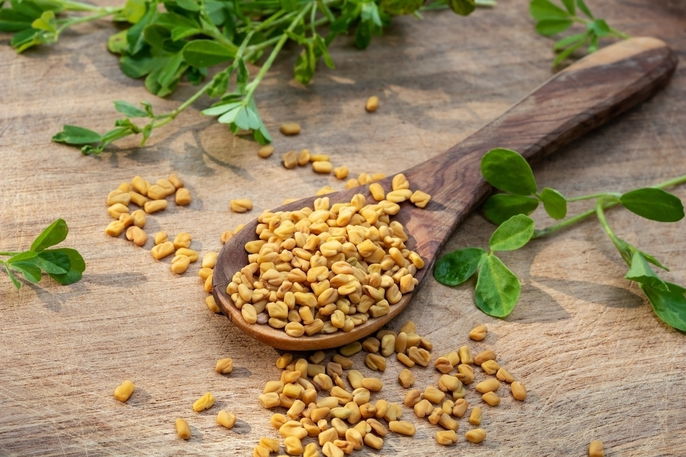
Fenugreek is a medicinal plant from the species Trigonella foenum-graecum that has traditionally been used for its anti-inflammatory, antioxidant, and blood sugar-supporting properties. Fenugreek seeds are the most commonly used part because they contain compounds that may help support metabolic and hormonal health.
Fenugreek may help regulate blood sugar, support digestion, reduce inflammation, and promote skin health due to its high fiber content and natural bioactive compounds. Some studies also suggest that fenugreek may help relieve menstrual cramps, support testosterone levels, and increase breast milk production.
Fenugreek can be used in several ways, including teas, capsules, and topical preparations made from its seeds. The leaves are also commonly used in cooking as a seasoning in savory dishes and breads.
Health benefits
Fenugreek may be indicated for:
1. Regulating blood sugar
Some studies suggest that the soluble fiber in fenugreek seeds is rich in galactomannan, a substance that may reduce the absorption of sugar from food and help regulate blood sugar levels.
In addition, the seeds may help improve insulin resistance because they contain an amino acid called 4-hydroxyisoleucine, which stimulates insulin production by the beta cells of the pancreas.
2. Helping with weight loss
Fenugreek may support weight loss because it is rich in fiber, which can help reduce hunger and increase fullness.
It also contains antioxidant and anti-inflammatory compounds, such as flavonoids and caffeic acid, which may reduce the absorption of fats and sugar in the intestines and support weight loss.
3. Protecting against cardiovascular disease
Because fenugreek seeds are high in fiber, they may help reduce the absorption of fats from food, which can help regulate LDL (“bad”) cholesterol levels and support blood pressure control.
These potential effects are in line with current recommendations to increase dietary fiber intake to help improve blood lipids and lower cardiovascular risk, according to the American Heart Association.
4. Relieving period cramps
Some studies suggest that fenugreek powder made from the seeds of this plant, when used during the menstrual period, may help relieve cramp symptoms as well as fatigue, headache, low energy, and dizziness.
This may be because the seeds contain anti-inflammatory compounds such as alkaloids, saponins, and apigenins, which can help reduce inflammation caused by the uterus during menstruation.
In addition, fenugreek extract may help relieve symptoms associated with polycystic ovary syndrome by helping regulate LH and FSH hormone levels, which may reduce cyst size, normalize the menstrual cycle, and improve fertility.
5. Improving digestive system function
Because fenugreek seeds are rich in fiber, they may help your digestive system work better and soften stools, which may help relieve constipation.
Fresh fenugreek leaves may also be used to help with problems such as indigestion, excess gas, or sluggish liver function.
6. Stimulating testosterone production
Some studies suggest that fenugreek extract may help regulate GnRH and LH hormone levels, increase testicular sensitivity to these hormones, and stimulate testosterone production.
Also recommended: Foods That Increase Testosterone: Food List, Meal Plan & Recipes tuasaude.com/en/foods-that-boost-testosteroneIn addition, the plant may increase sperm count and improve mental alertness, mood, and sexual desire.
7. Fighting inflammation
Fenugreek seeds are rich in anti-inflammatory compounds such as alkaloids, flavonoids, the amino acid 4-hydroxyisoleucine, and furostanol. These compounds may help reduce the production of inflammatory substances such as prostaglandins and cytokines, which may support the treatment of throat inflammation, arthritis, or muscle pain.
8. Improving skin quality
The antioxidants and anti-inflammatory compounds in fenugreek may help tone and cleanse the skin because they have antiseptic and exfoliating properties. This may improve skin quality and help manage problems such as allergies, acne, eczema, or psoriasis.
In addition, the antioxidant compounds in fenugreek help prevent the formation of free radicals that damage cells, which may help slow skin aging.
Fenugreek also has antifungal and antibacterial properties and may help support the treatment of dandruff on the scalp, boils, or skin wounds.
9. Supporting cancer treatment
Some laboratory studies using pancreatic cancer, lung cancer, and lymphoma cells suggest that certain compounds found in fenugreek water or alcohol extracts, such as diosgenin, squalene, and naringenin, may help reduce the growth of these cancer cells and increase cell death.
However, human studies are still needed to confirm this benefit.
10. Stimulating breast milk production
Fenugreek may help stimulate breast milk production in some women, according to scientific studies, but overall the evidence for herbal galactagogues is still limited and inconsistent. Therefore, no specific herbal product can be routinely recommended to increase milk supply, based on guidance from the Academy of Breastfeeding Medicine.
How to use
Fenugreek leaves are popular in Indian cooking and may be used to season dishes or in recipes for homemade bread.
For medicinal purposes, the seeds are preferred and can be used in the following ways:
1. Fenugreek tea
Fenugreek tea is prepared with the seeds and may be used to help control blood sugar and cholesterol levels.
Ingredients
-
2 teaspoons of fenugreek seeds.
-
1 cup cold water.
Directions
Add the fenugreek seeds to a cup of cold water and let them soak for 3 hours. Then boil the mixture, strain it, and drink it while warm, up to 3 times a day.
2. Fenugreek compresses
Fenugreek compresses may be used to help treat skin conditions, especially dandruff.
Ingredients
-
2 teaspoons of fenugreek seeds.
-
1 cup filtered water.
Directions
Combine the ingredients in a saucepan and boil for 10 minutes. Then strain and use the infusion as a compress on the scalp to help treat dandruff.
3. Fenugreek poultice
A fenugreek poultice may be used to help treat boils or skin wounds that are not open or bleeding.
Ingredients
-
110 g fenugreek seeds.
-
Water or apple cider vinegar.
Directions
Add the fenugreek seeds and the water or apple cider vinegar to a blender and blend until a paste forms. Use only enough water or apple cider vinegar to create the paste.
Then heat the mixture until it starts to boil. Spread the warm paste onto a clean, dry cloth or sterile gauze, let it cool slightly until warm, and apply it to the boil or skin wound until it cools completely. Repeat this process 3 to 4 times a day.
4. Fenugreek capsules
Fenugreek capsules should be taken by mouth with a glass of water. The usual adult dose is 1 capsule containing 500 mg or 600 mg, taken 1 to 2 times a day, as directed by a healthcare professional.
To help support diabetes treatment, fenugreek capsules are generally taken before or during a meal.
The use of fenugreek seeds and the length of treatment should be guided by a doctor or healthcare professional with experience in medicinal plants.