


Fava beans (Vicia faba) are a type of legume from the Fabaceae family that provide several health benefits. They can help improve memory, support muscle growth, promote weight loss, and help regulate blood sugar levels.
These effects are mainly due to their bioactive compounds, such as proteins, flavonoids, lignans, terpenoids, and vitamin C, which give them strong antioxidant and anti-inflammatory properties.
Because fava beans are rich in plant-based protein, they are used in a wide variety of dishes and can also be found in processed forms such as flours, protein concentrates, or protein isolates.
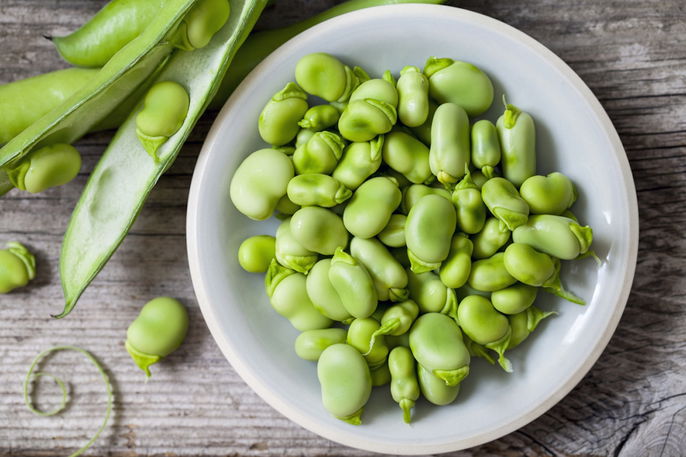
Health benefits
Fava benas can offer health benefits:
1. Promote muscle growth
Fava beans are rich in plant-based protein, providing about 4.6 g per 100 g of cooked beans. When included in a healthy diet and combined with regular exercise, they can help increase muscle mass.
They also contain magnesium, a mineral that plays a key role in muscle contraction and relaxation. Research has linked magnesium to better muscle performance, including improved grip strength, leg power, ankle extension, rotation, and jump performance.
2. Replace animal proteins
Thanks to their high protein content, fava beans are an excellent alternative to meat and other animal-based proteins, making them ideal for people following vegetarian or vegan diets.
Eating fava beans and other legumes also benefits the environment, since plant-based protein production releases fewer greenhouse gases and requires less land than animal farming.
3. Help regulate blood sugar
Fava beans help control blood sugar levels because they are rich in antioxidants and fiber. These components slow the absorption of carbohydrates in the intestine, helping maintain stable blood glucose levels.
Legumes, including fava beans, have a low glycemic index and can be safely included in the diet of people with prediabetes or diabetes.
4. Prevent muscle cramps
Due to their potassium content, fava beans can help prevent muscle cramps and improve recovery after physical activity.
5. Support weight loss
Fava beans are low in calories and high in fiber. Their soluble fiber forms a gel-like substance in the stomach that slows digestion, helping control hunger and keep you feeling full longer.
For effective weight loss, fava beans should be part of a balanced diet combined with regular exercise.
6. Support heart health
Fava beans can help lower LDL (“bad”) cholesterol because their fiber reduces fat absorption in the intestine. Their antioxidants and amino acids also help regulate cholesterol production in the liver, lowering the risk of conditions such as atherosclerosis, heart attack, and stroke.
Additionally, the potassium in fava beans may help lower high blood pressure by promoting the elimination of sodium through urine.
7. Help prevent cancer
Fava beans contain peptides, phenolic compounds, vitamins, and minerals that provide antioxidant and anti-inflammatory effects. These compounds protect cells from free radical damage and may help prevent certain types of cancer, such as colon cancer.
8. Prevent birth defects
Fava beans are rich in folate (vitamin B9), which helps reduce the risk of neural tube defects like spina bifida, anencephaly, cleft lip, and some heart conditions. For this reason, they are recommended for women who are pregnant or planning to become pregnant.
9. Support brain health
The folate and magnesium in fava beans may help prevent depression, dementia, and Alzheimer’s disease because they play a role in producing neurotransmitters such as dopamine and norepinephrine, which are essential for memory, focus, and motivation.
Fava beans also provide choline, an essential nutrient that supports brain function. Choline is a precursor to acetylcholine, a neurotransmitter that helps improve memory and learning.
Properties of fava beans
Fava beans have antioxidant, anti-inflammatory, anticancer, antidiabetic, anti-obesity, muscle-building, cholesterol-lowering, and neuroprotective properties. These benefits come from compounds such as proteins, flavonoids, lignans, terpenoids, vitamins A and C, magnesium, and potassium.
Nutrition facts
The table below shows the nutritional composition of 100 g of cooked fava beans:
To get the most benefits from fava beans, it’s important to maintain a healthy, balanced diet and engage in regular physical activity.
How to cook and eat
Fava beans can be eaten raw or cooked, but they contain phytates and saponins—substances that can reduce the absorption of minerals like iron and calcium when consumed in excess.
To minimize these effects, soak the beans, discard the soaking water, and cook them before eating. Sprouting or fermenting fava beans can also help reduce these compounds.
The recommended serving of legumes, including fava beans, is about ½ cup (approximately 170 g) per meal.
Fava beans can be added to salads, soups, and stews, or used in dishes with chicken and meat. Fava bean flour can also be used to make breads, pastas, crepes, and pancakes, making them a versatile ingredient.
Fava beans and favism
Favism is a condition that causes acute hemolytic anemia after eating fava beans. Symptoms usually appear within a few hours of eating them and can include nausea, vomiting, general malaise, and dizziness.
Later symptoms may include fever, abdominal pain, dark urine, fatigue, paleness, rapid heartbeat, shortness of breath, and yellowing of the skin.
This reaction only occurs in people with a deficiency of the enzyme G6PD (glucose-6-phosphate dehydrogenase). These individuals are sensitive to certain proteins found in fava beans—vicine, divicine, and convicine. The lack of this enzyme causes red blood cells to break down more easily when exposed to these compounds.
Healthy recipes
Fava beans can be used in recipes like:
1. Fava bean soup
Ingredients
-
250 g dried fava beans
-
½ whole onion
-
10 g cilantro
-
1 cup chopped onion
-
2 garlic cloves, chopped
-
1 jalapeño, chopped
-
2 tablespoons olive oil
-
3 tomatoes
-
Salt and pepper to taste
Preparation
Place the fava beans, cilantro, and half of the onion in a large pot with enough water to cover them. Simmer for 45–60 minutes or until the beans are tender.
In a separate pan, heat olive oil and sauté the chopped onion, garlic, and jalapeño. Add ¼ cup of water and the tomatoes, and cook for 5–10 minutes until softened. Add this mixture to the pot with the fava beans and cook for another 10 minutes over low heat. Season with salt and pepper to taste.
2. Fava bean salad with cilantro
Ingredients
-
1 cup cooked fava beans
-
½ red onion, chopped
-
¼ bell pepper, chopped
-
¼ avocado, diced
-
Chopped cilantro leaves
-
Olive oil, balsamic vinegar, salt, and pepper to taste
Preparation
Sauté the onion and bell pepper in olive oil, then add the cooked fava beans and mix well. Remove from heat, combine with the remaining ingredients in a bowl, toss well, and serve.