


- Itching, burning, or a rash after self-tanner may signal an allergic reaction and needs medical evaluation if it does not improve.
- A mole or spot that changes in color, size, or shape after tanning may be a warning sign of skin cancer.
- Blurred vision or eye pain after tanning bed use without goggles may indicate UV-related eye damage.
A fake tan is a cosmetic procedure used to darken the skin without direct sun exposure. It can be done with self-tanning products at home or with professional spray tanning.
This method offers a sun-kissed look while helping to reduce the risks linked to ultraviolet (UV) radiation. When applied correctly, it provides a temporary and more controlled result.
Although a fake tan is generally simple to achieve, proper application is essential to prevent streaks or uneven patches. Following the right before-and-after care steps also helps improve results and reduce skin irritation.
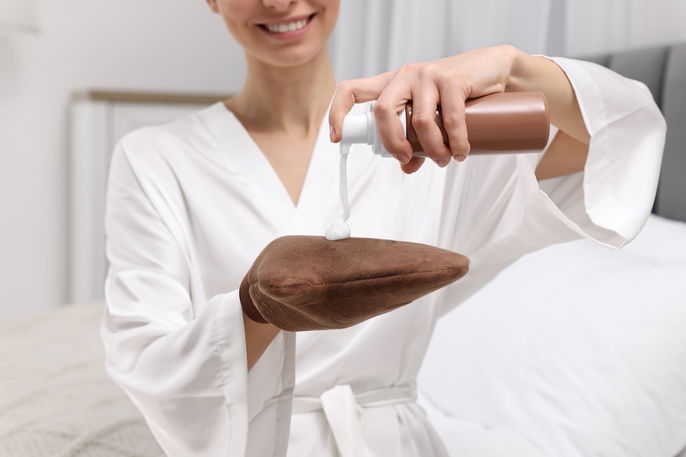
How to apply self-tanner
A fake tan is a straightforward procedure that can be done at home using cosmetic products or in aesthetic clinics through spray tanning.
In general, the step-by-step process includes:
-
Wearing a swimsuit or remaining nude, depending on how you want the tan and tan lines to appear;
-
Applying the self tanner evenly over the skin using a special applicator mitt designed for this type of product. In spray tanning, the product is misted onto the skin by a trained professional;
-
Leaving the product on the skin for 6 to 8 hours, according to the manufacturer’s instructions and/or the professional’s guidance;
-
Showering afterward to remove any excess product.
When applying self-tanner at home, there is a higher risk of streaking or patchiness. Spreading the product carefully and evenly is essential for a uniform finish.
How long does it last?
Both at-home self-tanning and professional spray tanning can provide results that last up to 7 days. To maintain the desired color, the procedure needs to be repeated regularly.
Different methods
Fake tans can be categorized according to the method of application:
1. Spray tanning
Spray tanning is a technique that uses a substance called dihydroxyacetone (DHA).
When applied to the skin, DHA reacts with proteins and amino acids in the outermost layer, forming compounds called melanoidins. These compounds temporarily darken the skin and create a tanned appearance.
This type of fake tan is performed in aesthetic clinics, where the solution is applied using a spray device operated by a professional.
A fake tan is not permanent, and the skin gradually returns to its natural color after several days as skin cells naturally shed.
2. Self-tanning cosmetic products
Self-tanning products can be applied at home and are available in different forms, such as creams, gels, sprays, and lotions.
These products also contain dihydroxyacetone (DHA), which provides a temporary darkening effect on the skin without increasing melanin production.
3. Tanning beds
Tanning beds are enclosed devices fitted with lamps that emit ultraviolet (UV) radiation, similar to the radiation produced by the sun. This UV exposure stimulates melanocytes, the cells responsible for producing melanin, the pigment that gives skin its color.
Tanning beds carry significant health warnings due to their association with an increased risk of skin cancer. According to the American Academy of Dermatology, indoor tanning increases the risk of melanoma, squamous cell carcinoma, and basal cell carcinoma.
Also recommended: What Melanoma Looks Like (with Pictures): 5 Signs tuasaude.com/en/what-melanoma-looks-likeOrganizations like the American Academy of Dermatology (AAD) strongly discourage the use of tanning beds due to these health risks, and the FDA regulates tanning devices accordingly.
Care instructions
To maintain fake tan results and support skin health, sunscreen should still be used, and excessive sun exposure should be avoided in the days following tanning to reduce irritation.
Moisturizers should not be applied immediately before self-tanning, as they may interfere with how evenly the product develops. Exfoliation should also be avoided after tanning because it can speed up fading and increase skin sensitivity.
However, moisturizing the skin after the fake tan has fully developed is recommended to help maintain hydration and prolong results.
Before applying a self-tanning product to the entire body, it is advisable to test a small area of skin first to check for any signs of an allergic reaction.
How to tan safely
Using self-tanning creams that contain dihydroxyacetone (DHA) is considered a safer option for achieving a tanned appearance year-round without UV exposure.
These products do not stimulate melanin production. Instead, they react with proteins in the outer layer of the skin to create a bronze or brown tone, which makes them less harmful than UV-based tanning methods when used as directed.
This type of tanning leaves the skin with a golden appearance rather than the redness or burning that can result from prolonged sun exposure or tanning bed use.
How to tan in the sun
Sun exposure during cooler parts of the day, while avoiding peak hours between 10 a.m. and 4 p.m., may help achieve a tan with lower risk. However, sunscreen with at least SPF 30 should always be used.
Diet may also influence skin tone. Foods rich in carotenoids, such as carrots, oranges, mangoes, and strawberries, may contribute to a more enhanced skin glow over time.
Possible risks
The main risks associated with fake tan methods include:
1. Allergic reactions
Allergic reactions are typically caused by ingredients found in self-tanning products used at home or in aesthetic clinics.
After application, some people may develop allergic contact dermatitis, with symptoms such as itching, burning, and localized redness.
2. Skin cancer
Skin cancer is one of the primary risks associated with tanning beds due to the ultraviolet (UV) radiation they emit.
According to the Centers for Disease Control and Prevention (CDC), exposure to ultraviolet radiation from indoor tanning devices damages skin cells and increases the risk of developing skin cancer. The longer and more frequently tanning beds are used, the greater the risk.
Signs of skin cancer may take years to appear and can include spots that change in color, size, or shape. If any suspicious skin changes are noticed, a dermatologist should evaluate the area and may recommend a biopsy if necessary.
3. Skin aging
Tanning beds emit UVA rays that penetrate deeper layers of the skin, affecting collagen and elastin fibers.
This can lead to premature skin aging, with more visible wrinkles, fine lines, and an increased tendency to develop dark spots.
4. Vision problems
Vision problems may occur if tanning bed sessions are done without proper protective eyewear.
Ultraviolet (UV) rays can penetrate the pupil and reach the retina, potentially contributing to conditions such as cataracts, even if the eyes are closed but not protected with goggles.