


- Exanthem is a skin rash with red spots or patches that may itch or burn and can be linked to infections, allergies, or reactions to medications.
- Symptoms vary by cause and may include fever, headache, blisters, tiredness, or cold-like symptoms alongside the skin changes.
- Seek medical care urgently if the rash appears suddenly with high fever, spreads quickly, does not fade when pressed, or is accompanied by severe illness or trouble breathing.
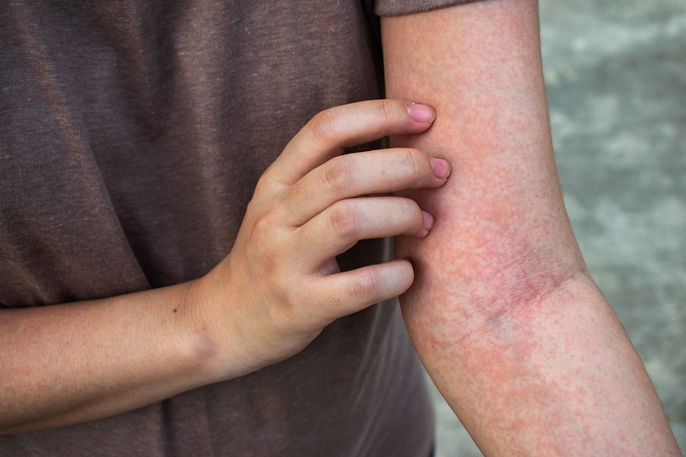
Exanthem (a skin rash) is a condition marked by red spots or patches on the skin. These spots can come with symptoms like itching, fever, headache, feeling unwell, and a burning sensation where the rash appears.
It can develop after an allergic reaction, the use of certain medications, or infections caused by viruses, parasites, or bacteria. Examples include measles, hand-foot-and-mouth disease, rubella, and chickenpox.
If you think you may have exanthem, it’s important to see a primary care provider or a dermatologist. They can help identify the cause and recommend the right treatment, which may include antihistamines, pain relievers, or corticosteroids taken by mouth or applied to the skin.
Main symptoms
The main symptoms of exanthem include:
-
Red spots on the body;
-
Itching or burning in the affected areas;
-
Blisters or bumps on the skin;
-
Fever;
-
Malaise;
-
Headache.
Depending on the cause, a person with exanthem may also have muscle aches, dry skin, fatigue (tiredness), loss of appetite, sore throat, belly pain, cough, and a runny nose.
Symptoms can vary depending on what’s causing the condition. For example, according to the Centers for Disease Control and Prevention (CDC), measles typically starts with high fever, cough, runny nose, and red, watery eyes, and a rash appears a few days after symptoms begin.
Confirming a diagnosis
A primary care provider or dermatologist can diagnose an exanthem by reviewing your symptoms, examining your skin, and considering your personal health history.
To confirm the diagnosis, the doctor may order blood and urine tests, as well as a swab test. The swab test uses a cotton-tipped stick to collect a sample from the nose or throat to check for viruses.
Different types
Different types of exanthem include:
1. Maculopapular exanthem
Maculopapular exanthem is usually caused by drug reactions or infections.
The main types of maculopapular exanthem are:
-
Morbilliform exanthem: raised red spots on the skin that are common in conditions such as measles, rubella, roseola infantum, dengue, leptospirosis, viral hepatitis, mononucleosis, and drug reactions;
-
Urticarial exanthem (hives): red, inflamed raised welts that can vary in size and cause intense itching, and may occur with allergic reactions to foods or medications, mononucleosis, and malaria;
-
Rubeoliform exanthem: similar to morbilliform exanthem, but with slightly smaller, pinkish lesions, seen in situations such as rubella, enterovirus infections, and respiratory viral infections.
Another type of maculopapular exanthem is scarlatiniform exanthem, which causes bright red spots and tiny pinpoint bumps that make the skin feel rough. This type is common in scarlet fever, rubella, Kawasaki syndrome, drug reactions, miliaria, and sunburn.
2. Papulovesicular exanthem
Papulovesicular exanthem appears as raised red lesions that contain fluid and cause itching.
This type of exanthem can show up anywhere on the body and is common in conditions such as herpes simplex, herpes zoster, chickenpox, smallpox, impetigo, dermatitis herpetiformis, molluscum contagiosum, tuberculosis, or systemic candidiasis.
3. Petechial or purpuric exanthem
Petechial (or purpuric) exanthem appears as small reddish spots on the skin that often start on the chest area and do not cause itching.
This type may occur with serious infections such as meningococcemia, bacterial sepsis, Brazilian purpuric fever, and Rocky Mountain spotted fever. It can also be present with other infections such as cytomegalovirus, rubella, enterovirus infections, syphilis, and dengue.
Possible causes
The most common causes of exanthem include:
-
Hand-foot-and-mouth disease;
-
Measles;
-
Chickenpox;
-
Dengue;
-
Rubella;
-
Roseola infantum;
-
Mononucleosis;
-
Scarlet fever.
Exanthem can happen due to a reaction to a toxin produced by the body, skin damage, or an immune system response.
It may result from infections caused by viruses, bacteria, parasites, or mycoplasmas, or from allergic reactions to foods or medications.
Based on the CDC, hand-foot-and-mouth disease can cause fever, mouth sores, and a skin rash on the hands and feet, which is one reason it may appear among the possible causes of exanthem-like rashes.
Treatment options
Treatment for exanthem depends on the cause and may include:
-
Fragrance-free, unscented moisturizing creams, applied to help hydrate the skin and reduce itching, irritation, and redness;
-
Antihistamines, such as dexchlorpheniramine or loratadine, to help relieve skin itching in cases of chickenpox, dengue, and hand-foot-and-mouth disease;
-
Antibiotics, such as tetracycline, erythromycin, or azithromycin, which may be prescribed by a healthcare provider for measles, typhus, scarlet fever, and dermatitis herpetiformis;
-
Anti-inflammatory medications, such as ibuprofen, which may be recommended in cases of hand-foot-and-mouth disease and mononucleosis;
-
Pain relievers and fever reducers, such as acetaminophen, which may be prescribed to help relieve muscle pain, headache, and fever in cases of dengue, roseola infantum, rubella, mononucleosis, and measles.
Other measures that may help relieve exanthem include drinking plenty of fluids, resting, washing the skin with mild soap and water, and applying cold compresses to the skin.