


A DIY humidifier is a simple way to humidify the air at home. Examples include placing a bucket in the bedroom, keeping indoor plants, or taking a shower with the bathroom door open. These methods release water vapor into the environment, increasing indoor humidity.
Low humidity can cause eye irritation, nosebleeds, dry skin, and allergy flare-ups, especially in people with asthma or bronchitis.
Using a DIY humidifier, along with other simple measures to add moisture to the air, can make breathing easier and keep the airways hydrated, even for people without respiratory problems.
Main types
The main ways to humidify the air are:
1. Keeping a wet towel in the room
Leaving a wet towel draped over the back of a chair is a simple method for increasing indoor humidity. It can also be placed near the head of the bed or at the foot of the bed.
Just avoid leaving it tightly rolled up, since it can develop an unpleasant odor.
2. Placing a bucket of water in the room
Placing a bucket or basin of hot (boiled) water in the room is an effective option to increase humidity and help hydrate, moisten, and relax the airways.
You do not need to use a lot of water. Half a bucket or basin is enough, and it should be placed in the bedroom. The closer it is to the head of the bed, the better.
Be careful not to use this technique in a child’s bedroom, since hot water can cause burns, especially if there is no adult supervision.
To take advantage of the bucket already in the room, add 2 drops of lavender essential oil, which may help promote calm and relaxation.
3. Keeping indoor plants
Plants are a great way to make the environment less dry. The best options are aquatic plants, but snake plants and ferns are also excellent alternatives for adding moisture to the air.
However, it is important to water the plant whenever the soil is not very moist and to follow its sunlight requirements. In general, plants need sun, but some prefer to stay in the shade.
4. Taking a shower with the door open
Taking a shower with the bathroom door open allows steam from the shower water to spread into the air, naturally humidifying the environment.
While this can also happen with a cold shower, it is more effective with warm water.
For this reason, in summer, when it can be harder to take a hot shower, a good technique is to leave the shower running for a few minutes while drying off or getting dressed.
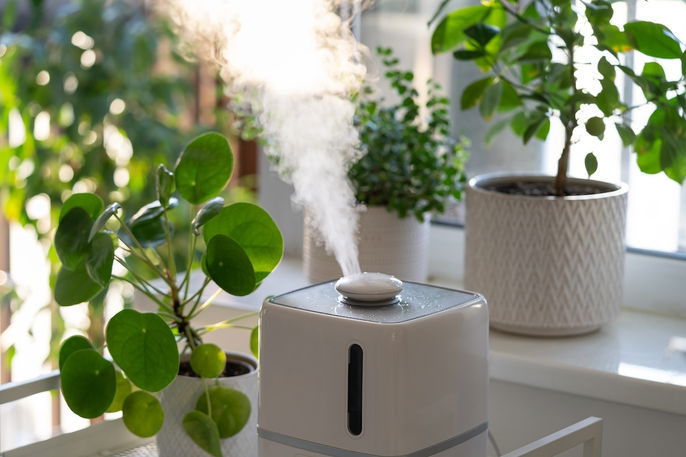
5. Using an electric humidifier
If you live in a place where the climate is very dry for most of the year, it may be an option to buy an electric humidifier.
However, these devices have an upfront cost and also require electricity to run, which can be a disadvantage.
To reduce the buildup of minerals and microorganisms, the device should be used and cleaned according to the manufacturer’s instructions, and the water should be changed regularly.
6. Drying clothes indoors
Drying clothes indoors on a drying rack is another simple DIY humidifier that can be used to increase indoor humidity.
As the clothes dry, they release water vapor into the environment, making the air more humid.
When to humidify
Humidifying the air is recommended in the following situations:
-
Frequent allergy flare-ups;
-
During asthma attacks;
-
Dry throat or frequent cough.
In addition, people who constantly have a runny nose may also benefit from humidifying the air to try to improve symptoms, since it may be the body’s way of keeping the airways moist and less irritated.
However, humidity should not be excessive, since very humid environments can contribute to mold and other allergens, which may worsen symptoms in sensitive people.
Additional care measures
In addition to using strategies to reduce dry air, other precautions are needed during dry seasons, such as drinking more water, avoiding sun exposure, and not exercising during the hottest hours of the day.