


Cyclosporiasis is an intestinal infection caused by the parasite Cyclospora cayetanensis. It is usually acquired by consuming food or water contaminated with human feces and commonly causes watery diarrhea, stomach cramps, nausea, fatigue and loss of appetite.
Fresh fruits, vegetables and herbs have been involved in many outbreaks, particularly when they are eaten raw. Washing produce can reduce contamination, but it may not remove every Cyclospora parasite, which is why recalled foods and foods linked to an active outbreak should not be eaten.
Treatment may include an antibiotic prescribed by a doctor, as well as adequate fluid intake to prevent dehydration. Medical care is important when diarrhea is severe, lasts for several days or is accompanied by signs of dehydration.
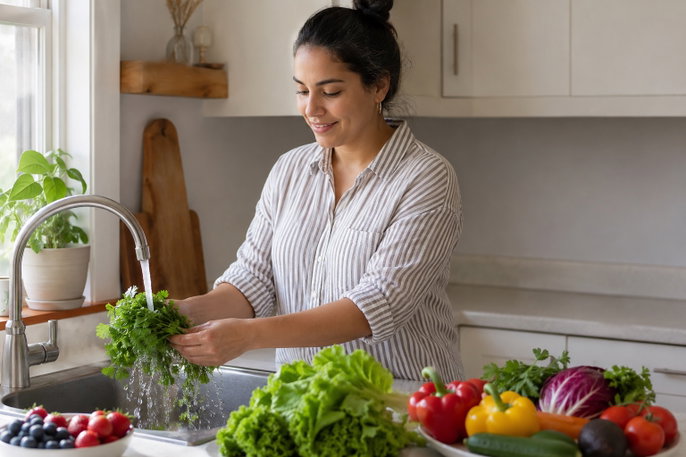
Fruits and vegetables linked to Cyclospora outbreaks
Cyclospora outbreaks have most often been connected to fresh produce that is usually eaten raw.
Fther fruits, vegetables and herbs linked to outbreaks include:
-
Cilantro
-
Lettuce
-
Mesclun and other salad mixes
-
Bagged salads
-
Raspberries
-
Blackberries
-
Fresh basil
-
Parsley
-
Green onions
-
Snow peas
-
Watercress
-
Vegetable trays
Tomatoes, carrots, celery, zucchini and other types of fresh produce have also been reported in some investigations. However, a past link does not mean that these foods are always contaminated.
The level of risk can change depending on where the food was grown, the water used during production, how it was handled and whether a current outbreak is occurring. Official recall and outbreak notices are therefore more useful than permanently avoiding a specific type of produce.
How to wash and prepare produce safely
Safe food preparation can lower the risk of cyclosporiasis and other foodborne infections. However, washing may not remove all Cyclospora parasites from contaminated produce, especially from leafy vegetables, berries and herbs with uneven surfaces.
Produce can be prepared more safely by:
-
Washing the hands with soap and water before and after handling fruits and vegetables
-
Rinsing produce thoroughly under clean running water
-
Washing produce before peeling or cutting it
-
Scrubbing firm produce, such as melons or cucumbers, with a clean produce brush
-
Removing damaged or bruised areas
-
Discarding the outer leaves of lettuce and cabbage
-
Drying produce with a clean cloth or paper towel
-
Keeping knives, cutting boards, counters and storage containers clean
-
Separating fresh produce from raw meat, poultry and seafood
-
Refrigerating cut or cooked produce promptly
Soap, bleach and household cleaning products should not be applied directly to fruits or vegetables. Clean running water is recommended for routine washing.
Cooking is a stronger protective measure because heating food to at least 158°F, or 70°C, can kill Cyclospora. Cooking may be especially useful when there is concern about the safety of a fresh product that is not included in a recall.
Foods that are generally safe to eat
Cyclospora outbreaks have mainly involved raw fresh produce. Foods that are cooked, frozen, canned or protected by a peel are generally considered lower-risk options when they have been handled and stored correctly.
Lower-risk choices may include:
-
Thoroughly cooked vegetables
-
Canned fruits and vegetables
-
Frozen fruits and vegetables that will be cooked
-
Pasteurized foods and beverages
-
Packaged foods that do not contain raw produce
-
Fruits with a peel or rind that is removed before eating
-
Foods prepared with safe drinking water
Examples of fruits with removable peels or rinds include bananas, oranges, kiwis and melons. The outside should still be rinsed before the fruit is cut or peeled because a knife or the hands can transfer contamination from the surface to the edible part.
Prewashed or ready-to-eat produce is not completely free from risk. It should not be eaten when it is included in a recall or outbreak warning.
What to eat during recovery
Cyclosporiasis can cause frequent diarrhea that may continue for several days or weeks without effective treatment. Maintaining fluid intake is therefore one of the main priorities during recovery.
Helpful options may include:
-
Water
-
Oral rehydration solutions
-
Clear soups or broths
-
Small, simple meals
-
Cooked rice
-
Toast or plain crackers
-
Bananas
-
Cooked potatoes
-
Cooked vegetables
-
Other foods that are easy to tolerate
Meals can be eaten in small amounts when nausea, cramps or loss of appetite are present. Food does not need to be completely restricted unless eating makes symptoms significantly worse or a doctor gives different instructions.
Alcohol and large amounts of caffeine may worsen fluid loss or digestive discomfort and are best avoided while diarrhea continues. Very fatty, heavily seasoned or high-sugar foods may also be harder to tolerate.
Food and fluids do not eliminate the parasite. The preferred treatment for cyclosporiasis is usually trimethoprim-sulfamethoxazole, which must be prescribed by a healthcare professional.
When to seek medical care
Medical advice is recommended when watery diarrhea continues for more than a few days, particularly after eating recalled produce or traveling to an area where the infection may occur.
Medical care is also important when symptoms include:
-
Severe or very frequent diarrhea
-
Difficulty drinking or keeping fluids down due to ongoing vomiting
-
Very little or dark urination
-
Dry mouth
-
Dizziness, weakness or faintness
-
Severe abdominal pain
-
Symptoms that improve and then return
-
Unexplained weight loss
Infants, older adults and people with weakened immune systems may have a greater risk of dehydration or prolonged illness and should be evaluated sooner.
