


Human cryonics is the process of freezing a body at -196°C immediately following legal death. This ultra-low temperature stops cellular decay, effectively preserving the body and brain for many years.
This technique is often chosen by patients with terminal illnesses, such as cancer, who hope for future resuscitation. However, cryonics is an option available to any individual after they are pronounced dead.
While human cryonics is also known as cryogenic freezing, it is currently unavailable as a service within Brazil. Most major facilities providing this procedure are located in the United States and serve an international clientele.
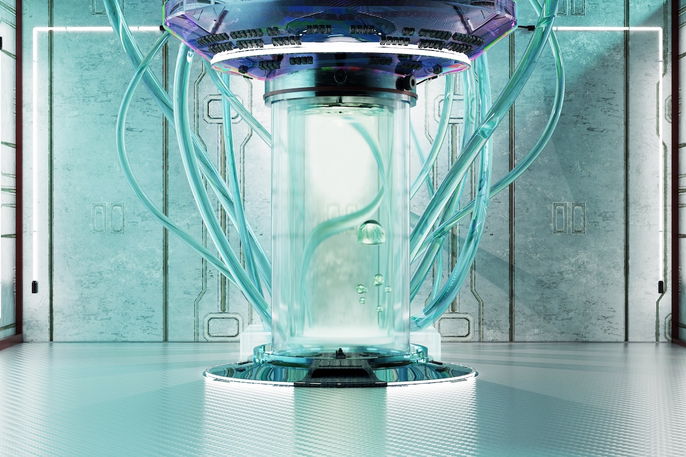
What it is for
Human cryonics is designed to keep the body and the brain in peak condition by preventing biological deterioration. By maintaining extremely low temperatures, the process seeks to pause the clock on cellular aging and damage.
The ultimate goal of this technology is to eventually revive the individual with their brain functions fully intact. This relies on the hope that future medical science will develop cures for the diseases that originally caused the person's death.
When it is indicated
Cryonics is typically indicated for individuals facing terminal conditions where modern medicine currently lacks a cure. For example, patients with advanced cancer may choose this path in hopes of a second chance at life in the future.
However, the procedure is not indicated for those who have suffered brain death. Since the objective is to restore life with an intact personality and memory, the brain must be preserved before irreversible damage occurs.
How it works
The process works by rapidly lowering the body temperature and initiating vitrification. During vitrification, body fluids are transformed into a glass-like state that is neither a true solid nor a liquid.
Standard freezing is avoided because it causes the formation of ice crystals, which can tear through cell membranes. Vitrification prevents this damage, making it theoretically possible to restore the cells later.
Essentially, cryopreservation halts the metabolism and stops the chemical changes that naturally follow death. The practice is based on the belief that "legal death" is a transition rather than an immediate, irreversible end.
How cryonics is performed
Although many people call it "freezing," the procedure is technically a sophisticated form of vitrification. To reach this state, a specialized medical team must follow a precise series of steps:
-
The body is cooled with ice and specialized cooling agents immediately after clinical death is declared. This must happen quickly to protect sensitive tissues, particularly the brain.
-
Anticoagulants are administered to the body to ensure that the blood does not clot during the initial stages.
-
The body is transported to a specialized cryonics facility while the team uses chest compressions or mechanical devices. These tools mimic a heartbeat to keep blood and oxygen circulating to the organs.
-
The blood is completely replaced with a cryoprotectant solution. This "antifreeze" for the body prevents ice crystals from forming and damaging the internal organs.
-
Finally, the body is placed head-down inside a vacuum-sealed metal tank filled with liquid nitrogen. The temperature is slowly lowered until it reaches -196°C for long-term storage.
For the best results, a standby team is often present at the time of death to begin the process immediately. Those without terminal illnesses who wish to be preserved often wear medical alert bracelets to ensure the team is notified within the first 15 minutes of an emergency.
Barriers for human cryonics
The most significant hurdle facing cryonics today is the process of reanimation. While scientists have successfully revived certain animal organs, there is currently no way to bring a cryopreserved human back to life.
Advocates expect that future breakthroughs in nanotechnology and molecular biology will eventually allow for full resuscitation. However, there is currently no scientific guarantee that this will ever be possible.
There are also significant legal and ethical barriers to cryopreservation, which is why the practice is not yet established in many countries, including Brazil. At this time, the primary facilities capable of long-term preservation are located in the United States and parts of Europe, such as Russia and Germany.
Additionally, some individuals opt for "neuropreservation," where only the head is preserved. This approach assumes that future technology will be able to grow a new body (such as a clone) for the preserved brain.