


Cranberry benefits include helping to prevent urinary tract infections due to antibacterial properties that keep bacteria from adhering to the walls of the bladder and developing into an infection.
Cranberries are also rich in fiber, which increases stool volume, helps control blood sugar levels, and prolongs satiety (feeling of fullness), helping to relieve constipation and prevent diabetes.
Cranberries are sold fresh, dried, or frozen and can be found at supermarkets and farmers' markets. Cranberry supplements can be purchased at pharmacies and health food stores and come in capsule or pill form.
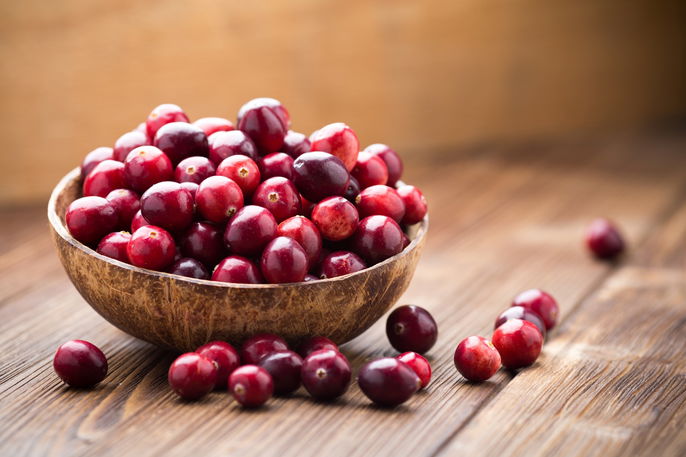
Health benefits
The main cranberry benefits are:
1. Preventing urinary tract infections
Some studies show that cranberries may prevent and help treat urinary tract infections (UTIs). This is because cranberries are rich in proanthocyanidins, which are flavonoids with antibacterial properties that inhibit bacterial growth in the bladder.
Further studies are needed in human subjects to prove the benefits of cranberry for the prevention and treatment of UTIs.
Read more about home remedies for UTI.
2. Preventing diabetes
Cranberries improve insulin function in the body, helping balance blood sugar levels and prevent insulin resistance and diabetes. This is due to high quantities of flavonoids in cranberries that possess antioxidant properties.
The fiber present in cranberries also slow downs the absorption of carbohydrates in the gut to help regulate blood sugar levels.
3. Relieving constipation
Cranberries are a high fiber fruit that stimulates intestinal motility and increases stool volume, helping relieve constipation and make it easier to have a bowel movement.
4. Preventing cardiovascular disease
Cranberries are rich is anthocyanins, proanthocyanidins, and catechins, which are antioxidant and anti-inflammatory compounds that decrease levels of LDL ("bad") cholesterol in the blood while increasing levels of HDL ("good") cholesterol and preventing cardiovascular diseases like atherosclerosis and heart attack.
Cranberries may also help prevent high blood pressure by inhibiting the angiotensin-converting enzyme (ACE), an enzyme responsible for contraction of the blood vessels and associated with high blood pressure.
5. Strengthening the immune system
Cranberries are rich in vitamin C, vitamin A, and flavonoids, which are nutrients and antioxidant compounds that strengthen the immune system to fight bacteria and viruses and help reduce the duration of colds and the flu.
Check out other immune system boosters.
6. Protecting against premature aging
Cranberries prevent premature aging by combating excess free radicals in the body that contribute to the formation of wrinkles, expression lines, and sagging skin.
7. Combating H. pylori
Cranberries are rich in proanthocyanidin, a bioactive compound with bactericidal properties that reduces proliferation and inhibits the growth of bacteria, helping combat H. pylori and treat infections like gastritis and ulcers.
8. Preventing cavities
Cranberries may help prevent cavities by preventing bacteria like Streptococcus mutans from multiplying and sticking to the teeth.
9. Maintaining eye health
Cranberries help maintain good eye health because they contain lutein and zeaxanthin, carotenoids that protect the eyes against UV rays from the run and blue light emitted from electronic devices, helping prevent conditions like cataracts and macular degeneration.
10. Helping prevent cancer
Cranberries are rich in anthocyanins, ursolic acid, and quercetin, which protect healthy cells in the body from damage caused by an excess of free radicals, possibly helping to prevent the development of certain types of cancer, including breast, prostate, and colon cancers.
Can cranberries help you lose weight?
Cranberries can help support weight loss because they are a low calorie fruit with good quantities of fiber that prolongs satiety (feeling of fullness) and decreases hunger.
In order to lose weight, however, it is also necessary to follow a reduced-calorie diet and exercise regularly.
Also recommended: Best Foods for Weight Loss (w/ Meal Plan & Fitness Tips) tuasaude.com/en/best-foods-for-weight-lossNutrition facts
The following table provides nutritional information for a 100 g serving of fresh and dried cranberries:
In order to obtain all of the benefits listed above, it is important to also maintain a healthy, well-balanced diet combined with regular physical exercise.
How to consume
Cranberries can be consumed fresh or dried. The recommended amount of cranberries is 1 to 2 Tbsp per day, which can be eaten on their own or added to yogurt, juice, or smoothies.
Cranberry tea and cranberry supplements are other ways to consume cranberries.
1. Cranberry juice
Ingredients:
- 3 Tbsp dried cranberries or 1 cup fresh cranberries;
- 600 mL (20 oz) filtered water.
Directions:
If using dried cranberries, place the cranberries in the water to soften for a few minutes, then add the cranberries and water to a blender and blend for 3 minutes, or until well-combined. Transfer to a glass and drink, up to 3 cups per day, preferably without adding sugar.
2. Cranberry supplements
Cranberry pills should be taken with a full glass of water. The typical recommended dose is between 120 and 160 mg per day for up to 12 weeks.
3. Cranberry tea
Ingredients:
- 1 cup water;
- ½ tsp dried cranberries.
Directions:
Add water and cranberries to a pot over medium heat and let boil for 3 minutes. Cover for 5 minutes then serve. After drinking, the cranberries can be eaten.
Side effects
Consuming too much cranberry can cause diarrhea, stomachache, nausea, and vomiting.
Cranberries can increase the risk of kidney stones because they are high in oxalic acid. When consumed in excess, oxalic acid increases the concentration of oxalate in the urine and can lead to the formation of kidney stones.
Contraindications
People with an enlarged prostate (benign prostatic hyperplasia, or BPH), urinary tract obstruction, or an increased risk for kidney stones should only consume cranberries or cranberry supplements if approved by a doctor.
Cranberries in the form of tea or capsules are not indicated for children or people who are pregnant or breastfeeding.
Anyone taking medications regularly, such as warfarin, atorvastatin, diclofenac, nifedipine, and others, should talk to their doctor or primary care provider before consuming cranberries or cranberry supplements.