


A CPAP machine is used during sleep to help reduce episodes of sleep apnea. It can also prevent nighttime snoring and reduce daytime fatigue.
The machine creates positive pressure in the airway to keep it from closing. This allows air to flow continuously from the nose or mouth to the lungs, which does not happen normally during episodes of sleep apnea.
A CPAP machine should be recommended by a doctor. It is generally used when simpler measures, such as losing weight or using nasal strips, have not been enough to improve breathing during sleep.
What it is used for
A CPAP machine is mainly used to treat sleep apnea, which can cause signs and symptoms such as nighttime snoring and unexplained daytime fatigue.
In most cases, a CPAP machine is not the first treatment recommended for sleep apnea. A doctor may first recommend other options, such as losing weight, using nasal strips, or using nasal sprays.
Schedule an appointment with a doctor to determine whether a CPAP machine is necessary.
How the machine works
A CPAP machine draws in air from the room, passes it through a dust filter, and delivers the filtered air under pressure into the airway to keep it from closing. Although several models and brands are available, all CPAP machines produce a constant stream of air.
Main types of CPAP masks
The main types of CPAP masks include:
-
Nasal CPAP mask: This is generally the least uncomfortable type and delivers air through the nose only;
-
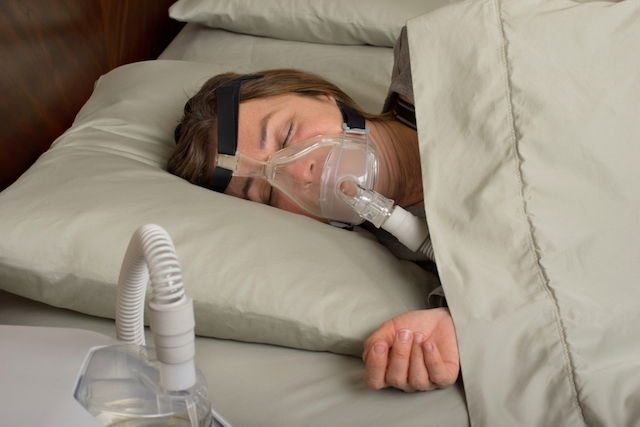
Full-face CPAP mask: This type is used when air also needs to be delivered through the mouth.
Depending on the type of snoring and sleep apnea, a pulmonologist will recommend the most appropriate type of CPAP mask for each person.
How to use a CPAP machine
To use a CPAP machine correctly, place it near the head of the bed and follow these steps:
-
Place the mask over the face while the machine is turned off;
-
Adjust the mask straps so that the mask fits securely;
-
Lie down in bed and readjust the mask if necessary;
-
Turn on the machine and breathe only through the nose.
At first, using a CPAP machine may feel somewhat uncomfortable, especially when trying to breathe air out of the lungs. However, the body should have no difficulty breathing out during sleep, and there is no risk of suddenly stopping breathing.
It is important to keep the mouth closed when using a nasal CPAP mask. Opening the mouth allows pressurized air to escape, which can prevent the machine from effectively directing air into the airway.
When a doctor prescribes a nasal spray to make the initial adjustment to CPAP therapy easier, it should be used as directed for at least two weeks.
Precautions when using a CPAP machine
Minor problems are common when first starting CPAP therapy. These problems can often be managed with a few simple measures and may include:
1. Feeling claustrophobic
Because the mask remains in close contact with the face, some people may experience periods of claustrophobia. One way to reduce this discomfort is to make sure the mouth is properly closed, as air flowing from the nose into the mouth can cause a mild feeling of panic.
2. Frequent sneezing
Sneezing is common during the first few days of CPAP use because the airflow can irritate the lining of the nose. This symptom may improve with nasal sprays that moisturize the nasal lining and reduce inflammation.
These sprays should be recommended by the doctor who prescribed the CPAP machine.
3. Dry throat
A dry throat is also relatively common when first using a CPAP machine. This happens because the machine’s constant airflow can dry out the lining of the nose and mouth.
To relieve this discomfort, the air in the room can be made more humid. For example, a container of warm water can be placed in the room.
How to clean a CPAP machine
To keep the CPAP machine working properly, clean the mask and tubing every day using only water and avoiding soap. Cleaning should ideally be done in the morning so that the equipment has enough time to dry before it is used again.
The CPAP dust filter should also be replaced. It is recommended that the filter be changed whenever it is visibly dirty.
