


Contact dermatitis is an inflammation of the skin that occurs after direct contact with an irritating substance or object. Common triggers include cosmetics, perfumes, soaps, cleaning products, and jewelry.
The irritation leads to uncomfortable symptoms such as itching, intense redness, swelling, dryness, and peeling. It is crucial to identify the root cause to avoid the irritant and prevent these symptoms from returning.
While there is no permanent cure for contact dermatitis, treatments recommended by a dermatologist can effectively relieve symptoms and stop flare-ups. A doctor may suggest using corticosteroid ointments to manage the inflammation and discomfort.
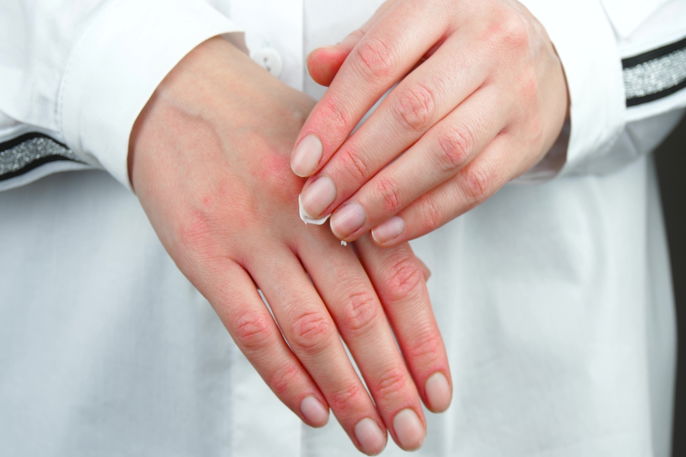
Main symptoms
The primary symptoms of contact dermatitis include:
-
Redness and itching at the contact site
-
Peeling and small bumps or blisters, sometimes fluid-filled
-
Swelling in the affected area
-
Small sores or lesions on the skin
-
Extremely dry skin
Symptoms can appear within minutes to hours of contact with the irritant, or up to six days later in cases of allergic dermatitis.
Additionally, symptoms may appear on different parts of the body depending on the trigger. For example, a reaction might occur on the face due to a makeup allergy, or on the earlobes from an allergy to perfume or jewelry.
Online symptom quiz
Contact dermatitis is a specific type of skin inflammation, similar to atopic or seborrheic dermatitis. To assess the possibility of dermatitis, please select the symptoms you are currently experiencing:
This test is for guidance purposes only and is not intended to provide a diagnosis or replace a consultation with a dermatologist or primary care physician.
Confirming a diagnosis
A dermatologist diagnoses contact dermatitis by evaluating the signs and symptoms presented by the patient.
If the trigger is unknown, the doctor may recommend an allergy test (patch test) to identify the specific substance causing the reaction.
Possible causes
The most common causes of contact dermatitis are:
-
Cosmetics and perfumes
-
Plants (such as poison ivy)
-
Ointments
-
Paints, latex, and plastic resins
-
Food additives, preservatives, or dyes
-
Soaps, detergents, and other cleaning products
-
Solvents
-
Dust
-
Jewelry (often nickel)
-
Feces or urine
Feces and urine are frequent causes of contact dermatitis in babies. Because infants spend prolonged periods in contact with diapers, these substances can easily cause skin irritation (diaper rash).
Types of contact dermatitis
Contact dermatitis is generally classified into two main types:
1. Allergic contact dermatitis
Allergic contact dermatitis is caused by a hypersensitivity reaction to specific allergens and is often discovered during childhood.
Symptoms typically appear 48 to 72 hours after exposure to the allergen. Signs may include swelling, redness, or the formation of small blisters on the skin.
The areas of the body most commonly affected include the scalp, face, eyelids, neck, armpits, torso, hands, and feet, depending on where the allergen touched the skin.
2. Irritant contact dermatitis
Irritant contact dermatitis is usually caused by a direct toxic effect on the skin from mechanical, physical, or chemical irritants. These substances damage the skin's protective barrier, triggering a non-allergic inflammatory reaction.
Symptoms may appear immediately after contact or develop after months of chronic exposure to the substance.
The hands and forearms are the most frequently affected areas, though it can occur anywhere the skin touches the irritant. Symptoms typically include pain, a burning sensation, and, to a lesser extent, itching.
Common irritants include certain cosmetics, alcohol, acetone, latex, wool, and hygiene or cleaning products like soaps, detergents, antibacterial agents, disinfectants, and perfumes.
Treatment options
To relieve symptoms and prevent recurrence, it is important to avoid contact with the trigger substance. Washing the affected area with plenty of cold water and mild soap is also recommended.
Following a dermatologist's guidelines is essential for effectively managing the condition.
The duration of treatment varies based on the severity of symptoms and the type of dermatitis (irritant or allergic), ranging from a few days to several weeks.
Ointments for contact dermatitis
Ointments or lotions containing antihistamines or corticosteroids are commonly indicated for treating this type of allergy. Hydrocortisone is frequently recommended for use on the face.
Ointments are generally preferred when the skin is very dry, while creams or lotions may be better suited for skin that is weeping or moist.