


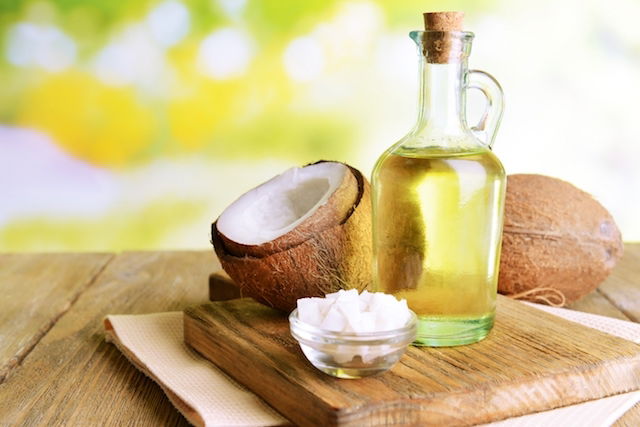
Coconut oil is a plant-based oil commonly used in cooking, skincare, and hair care, and has been studied for several potential health benefits. These may include moisturizing the skin and hair, supporting oral hygiene, and serving as a complementary treatment for candidiasis.
Coconut oil comes in types like extra virgin and refined, which vary in processing, flavor, and ideal uses. Extra virgin retains more natural compounds and has a distinct taste, while refined offers a higher smoke point for high-heat cooking.
Coconut oil comes in several forms, including liquid oil, capsules, and sprays. It can be used as a food ingredient, dietary supplement, or topical moisturizer. Despite its popularity, coconut oil is high in saturated fat, so understanding its benefits, limitations, and proper uses is key to safe and informed consumption.
Main benefits
Potential benefits of coconut oil include:
1. Keeping the skin healthy
Coconut oil has moisturizing properties that help reduce water loss and can improve the look and feel of dry, rough skin. It can be applied directly to the skin as an oil or as part of a cream.
Because it may also have antimicrobial and moisturizing effects, coconut oil may be used to complement medical treatment of atopic dermatitis in infants.
2. Helping with weight loss
Some studies suggest coconut oil may help with weight loss because it contains medium-chain fatty acids.
Medium-chain fatty acids are fat molecules that are less likely to be stored in adipose tissue.
However, more research is still needed to confirm any weight-loss effects, as current scientific evidence is limited.
3. Supporting hair health
Coconut oil may support hair health because it appears to reduce protein loss when used before washing (as a pre-shampoo treatment) or after washing.
This may happen because lauric acid, the main fatty acid in coconut oil, has a stronger affinity for hair proteins and can penetrate the hair shaft, helping with hydration.
4. Helping treat candidiasis
Coconut oil contains lauric acid, a fatty acid with antifungal and antimicrobial properties that may help reduce the development and growth of Candida species.
Coconut oil may be used externally as a complement to antifungal treatment prescribed by a healthcare professional for candidiasis.
However, more human studies are needed to confirm whether coconut oil is effective for treating candidiasis.
5. Maintaining oral health
Some studies suggest coconut oil may help support oral health by reducing the amount of bacteria in saliva.
In this way, coconut oil may complement prevention steps such as brushing and flossing to support oral hygiene.
6. Helping treat Alzheimer’s disease
Coconut oil is sometimes promoted for Alzheimer's disease based on the idea that affected brains struggle to use glucose for energy.
The medium-chain fatty acids in coconut oil could serve as an alternative energy source for the brain and help support cognitive function.
However, more complete studies in humans are still needed to evaluate coconut oil’s effects in Alzheimer’s disease.
Different types
Types of coconut oil include:
1. Extra virgin coconut oil
Extra virgin (or virgin) coconut oil is made by quickly drying and pressing fresh, mature coconut flesh, without added chemicals or heat, which helps preserve its nutrients.
It has a mild flavor and aroma and a smoke point of about 347°F (175°C), so it can be used for sautéing or baking, but it is not recommended for very high-heat cooking, such as deep frying.
2. Flavorless (refined) coconut oil
Flavorless coconut oil is a refined vegetable oil made by pressing the coconut flesh. It is then steamed or heated and filtered through clays to remove impurities and bacteria.
In some cases, chemical solvents may also be used to extract the oil from the coconut flesh.
Refined coconut oil has no noticeable smell or taste and has a smoke point ranging from about 399°F to 450°F (204–232°C), which can make it suitable for frying.
3. Coconut oil spray
Coconut oil spray is a more convenient form of coconut oil and is commonly used for everyday cooking.
To use it, spray it onto a skillet, pot, or baking pan and add ingredients such as vegetables, chicken, meat, or pancakes.
4. Coconut oil capsules
Coconut oil capsules are a supplement made from pressed coconut flesh and are popularly used to support weight loss, immune function, and energy.
How to make coconut oil at home
To make coconut oil at home, you only need 3 fresh, ripe coconuts and 4 cups of coconut water.
Step-by-step instructions to make coconut oil:
-
Remove the brown skin from the coconut and cut it into small cubes;
-
Blend the coconut flesh with the coconut water until the mixture is very smooth;
-
Strain the mixture using a clean, dry cloth or a cloth strainer;
-
Pour the mixture into a glass jar with a lid and leave it in a dark place for 48 hours;
-
Then place the jar in a cool place, away from light, for another 6 hours;
-
After 48 hours, you should notice coconut oil on the top and residue on the bottom;
-
Store the jar upright in the refrigerator until the coconut oil hardens;
-
Discard the water and remove the hardened coconut oil;
-
Store the oil in a covered container.
Coconut oil can be stored in a cool, dry place or in the refrigerator and can be used for up to two years.
Nutrition facts
The following table provides nutritional information for 100 g and 1 Tbsp of coconut oil:
To maximize the potential benefits of coconut oil, use it in small amounts alongside a healthy diet and regular physical exercise.
How to use
Some ways to use coconut oil include:
1. Vaginally
With medical guidance, coconut oil may be used vaginally to help improve lubrication in women with vaginal atrophy, also known as genitourinary syndrome of menopause.
Coconut oil is sometimes used by some people for external comfort, and may be applied to the genital area once daily.
However, it is not an FDA-approved treatment for vaginal candidiasis and should not replace treatment recommended by a healthcare provider.
2. On the hair
Coconut oil can be used on the hair in the following ways:
-
Pre-shampoo treatment: apply to the mid-lengths and ends before your usual wash to help improve shine and reduce friction and protein loss;
-
Daytime oil treatment: apply directly to the scalp and hair, massage in, and leave on for 15 minutes, then wash normally with shampoo and conditioner;
-
Overnight oil treatment: apply to the hair, massage well, cover with a shower cap or towel, and sleep. Wash the next morning with shampoo and conditioner;
-
Moisturizing mask: mix coconut oil into a conditioning mask. Wash with shampoo, apply to damp hair, massage well, leave on for 30 minutes, and rinse;
-
Finishing: helps reduce dryness and frizz and improve shine. Rub a small amount between your hands and apply to the ends of clean hair, wet or dry.
Coconut oil is mainly recommended for normal to dry hair. For oily hair, it may make hair feel heavier and look greasier.
3. On the face
Coconut oil can be applied to the face and may help moisturize normal, dry, or sensitive skin.
Apply a thin layer to clean, dry skin. Avoid the chin, nose, and forehead, since these areas are usually oilier.
Coconut oil can also be used as a lip moisturizer.
4. On the skin
Because it is moisturizing, coconut oil may be used to hydrate dry skin.
Apply a small amount directly to the skin and massage until it is fully absorbed.
5. For cooking
Coconut oil can be used in the kitchen to season salads, sauté foods, and prepare sauces, cakes, breads, and pies.
However, because it is high in saturated fat, coconut oil should be used in moderation.
The World Health Organization (WHO) recommends limiting saturated fat to up to 10% of total daily calories. In a 2,000-calorie diet, this equals up to 22.2 g of saturated fat per day, which is about 2 tablespoons of coconut oil.
Frequently asked questions
Some common questions about coconut oil include:
1. Can coconut oil be used as a lubricant?
Because it is moisturizing, coconut oil may be used as a natural lubricant.
However, according to the Centers for Disease Control and Prevention (CDC), oil-based lubricants can weaken condoms and cause them to break, increasing the risk of sexually transmitted infections (STIs) and unintended pregnancy.
2. Is coconut oil bad for you?
When used in large amounts, coconut oil can be harmful.
This is because coconut oil is high in saturated fat, which can increase total cholesterol and LDL (“bad”) cholesterol in the blood and raise the risk of cardiovascular problems such as stroke and atherosclerosis.