


- Cat scratch disease is caused by Bartonella henselae and can spread through cat scratches, bites, or saliva contacting broken skin.
- Common symptoms include a red bump near the scratch, swollen lymph nodes, fever, and loss of appetite.
- Most uncomplicated cases improve without antibiotics, although some people may need treatment if symptoms are severe.
Cat scratch disease, also called cat scratch fever, is a bacterial infection that can spread to people through a scratch or bite from a cat carrying Bartonella henselae. It can also spread when saliva from an infected cat comes into contact with broken skin.
Not all cats carry the bacteria, and cats that do are often healthy and show no symptoms. Because it is not possible to tell whether a cat is carrying the bacteria just by looking at it, regular veterinary care and flea control are important preventive measures.
Symptoms of cat scratch disease can include a red bump near the scratch, swollen lymph nodes, loss of appetite, and unexplained weight loss. If these symptoms develop, a primary care provider should be consulted to confirm the diagnosis and determine the most appropriate treatment.
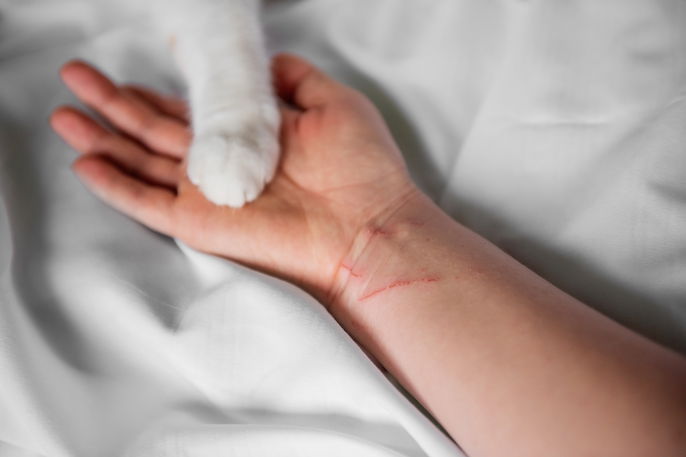
Cat scratch fever symptoms
The main symptoms of cat scratch disease include:
-
A red bump or blister around the site of the scratch
-
Fever, which may sometimes be high
-
Pain or tenderness around the affected area
-
Vision problems, such as blurred vision or eye discomfort
-
Irritability
In more severe cases of cat scratch disease, the liver and spleen may be affected. Neurological complications can also occur, including encephalopathy, myelitis, radiculitis, or neuroretinitis.
A red bump may develop at the site of the scratch within several days, while swollen lymph nodes and other symptoms may appear later. If symptoms of cat scratch disease develop after a cat scratch or bite, a primary care provider should be consulted.
Confirming a diagnosis
Cat scratch disease is diagnosed by a primary care doctor or infectious disease specialist based on the person's signs and symptoms and history of cat exposure. The doctor may also ask whether the person was recently scratched or bitten by a cat and when the exposure occurred.
Blood tests may be ordered to check for antibodies against Bartonella henselae. In some cases, PCR testing of a lymph node or tissue sample may be used to help confirm the diagnosis. A lymph node biopsy is generally reserved for cases in which the diagnosis is unclear or another condition needs to be ruled out.
Main causes
Cat scratch disease occurs when Bartonella henselae enters the body, usually after a scratch or bite from a cat carrying the bacteria. Cats most commonly become infected with Bartonella henselae through fleas.
Most people with healthy immune systems develop a mild, self-limited illness. However, people with weakened immune systems, including those with certain chronic conditions, those taking immunosuppressive medications, or transplant recipients, may be more likely to develop severe or widespread infection.
How to prevent
To help prevent cat scratch disease, wash cat scratches and bites promptly with soap and water. Avoid rough play with cats, particularly kittens, to reduce the risk of scratches and bites.
According to the Centers for Disease Control and Prevention (CDC), flea prevention is an important part of reducing the risk of cat scratch disease, and routine testing of healthy cats for Bartonella henselae is generally not recommended because testing does not reliably show whether a cat can transmit the infection.
Treatment options
Most people with a healthy immune system recover from uncomplicated cat scratch disease without antibiotics. Treatment may include pain relievers and warm compresses to help relieve discomfort from swollen or painful lymph nodes.
According to the CDC, azithromycin may help reduce lymph node swelling more quickly in some otherwise healthy patients.
People with weakened immune systems or those whose infection has spread to other parts of the body may require antibiotic treatment, with the specific medication and treatment duration depending on the severity of the infection and the organs involved.
If a swollen lymph node becomes very painful or fills with fluid, a doctor may drain it with a needle to help relieve pressure and discomfort.
In severe or unusual cases, a lymph node biopsy may be needed, particularly when the diagnosis is unclear or another condition needs to be ruled out. Surgery to remove an affected lymph node is not routinely required for uncomplicated cat scratch disease.
Most people with uncomplicated cat scratch disease recover completely, although swollen lymph nodes may take several weeks or even months to return to normal.
