


- Cardiac catheterization helps diagnose or treat heart problems, such as blocked arteries, arrhythmias or complications after a heart attack.
- The procedure is done in a hospital or cardiac catheterization lab by inserting a thin, flexible tube into a blood vessel.
- Recovery is usually quick, but bleeding, infection, blood clots, allergic reactions, or irregular heartbeat can occur in some cases.
Cardiac catheterization is a medical procedure used to diagnose or treat conditions that affect the heart, such as heart attack, cardiomyopathies, or arrhythmias. It is performed by inserting a thin, flexible tube called a catheter into a blood vessel and guiding it toward the heart.
This procedure allows the doctor to examine the inside of the blood vessels and heart in detail. It can help detect fatty plaque buildup, blockages, or other abnormalities, and may also be used to treat some of these problems.
Cardiac catheterization is usually performed in a hospital or specialized cardiac catheterization lab, and the results should be reviewed by a cardiologist.
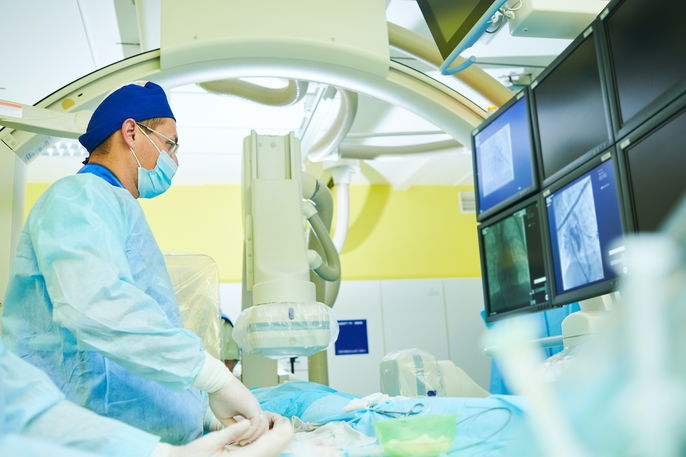
What it is
Cardiac catheterization is indicated to diagnose and/or treat several heart conditions, such as:
-
Heart attack or coronary artery disease
-
Angina, heart arrhythmias, or heart failure
-
Congenital heart defects in newborns and children
-
Narrowing of the aorta or mitral valve regurgitation
Other indications include pulmonary hypertension, blocked arteries and valves due to fatty plaque buildup, or evaluation of pressure, blood flow, and oxygen levels in the heart.
In addition, cardiac catheterization may be recommended by a doctor to evaluate the heart before heart surgery or a heart transplant.
How to prepare
To prepare for cardiac catheterization, some precautions should be taken, such as:
-
Tell the doctor if you are allergic to iodine or any other type of radiology contrast, latex, medications such as penicillins, or foods such as shellfish or seafood
-
Tell the doctor if you take diabetes medications, such as metformin, or blood thinners
-
Tell the doctor if you have health problems, such as hyperthyroidism, kidney failure, or epilepsy
-
Tell the doctor if you are pregnant or planning to become pregnant
-
Take your usual medications normally with a small amount of water, as advised by the doctor
-
Avoid taking any medications that were not recommended by the doctor, including home remedies and teas
You may need to avoid eating or drinking for 4 to 6 hours before the test, as advised by your doctor.
What to bring
On the day of the procedure, it is important to bring a list of all medications, vitamins, and dietary supplements you take regularly.
You should also arrange for someone to accompany you and drive you home after the procedure, especially if you receive sedation. If an overnight stay is expected, bring personal items such as comfortable clothing, toiletries, and slippers.
It is also helpful to bring copies of any previous test results, such as blood tests, an echocardiogram, electrocardiogram (ECG), cardiac scintigraphy, a stress test, X-rays, CT scans, or MRI scans, if your healthcare team has requested them.
If you are already hospitalized or need emergency cardiac catheterization, your healthcare team will order any necessary tests and evaluate the risks of the procedure based on your individual condition.
Cardiac catheterization procedure
According to the National Heart, Lung, and Blood Institute, cardiac catheterization is performed by inserting a long, thin, flexible tube called a catheter into a blood vessel and guiding it to the heart.
Cardiac catheterization is usually performed in a hospital or cardiac catheterization lab by an interventional cardiologist.
To perform cardiac catheterization, the doctor may follow these steps:
-
Placing an IV line to give fluids, medications, mild sedation, or iodinated contrast, as needed
-
Applying local anesthesia to the groin, wrist, or forearm
-
Making a small cut in the skin to insert the catheter
-
Inserting the catheter into a blood vessel and guiding it toward the heart
-
Injecting iodinated contrast so the coronary arteries and any blockages can be seen on X-ray images
-
Removing the catheter and closing the insertion site with manual pressure, a closure device, or, less commonly, stitches before applying a dressing
Diagnostic cardiac catheterization often takes about 30 minutes, although the procedure may take longer if additional treatments, such as angioplasty or stent placement, are performed. Afterward, most people remain under observation for several hours before going home or being admitted if needed.
Is a hospital stay needed?
If there are no problems during or after cardiac catheterization, or if only catheterization is performed without another related procedure, the person may go home the same day.
However, if complications occur, the person should remain hospitalized for 1 to 2 days, or as advised by the doctor.
Additional procedures
During catheterization, the doctor may perform some additional procedures, such as:
1. Angiography
Cardiac catheterization with angiography is used to see the inside of the blood vessels in greater detail and evaluate the arteries and chambers of the heart, aorta, and pulmonary arteries. This helps check for any blockage or abnormality.
In addition, coronary angioplasty may be performed. This may involve placing a stent, which is a small metal mesh tube, or using a balloon to press the plaque against the artery wall and widen the vessel.
2. Percutaneous valvuloplasty
Cardiac catheterization with balloon percutaneous valvuloplasty may be performed to treat heart valve diseases, pulmonary stenosis, aortic stenosis, and mitral stenosis.
3. Intravascular ultrasound
Cardiac catheterization with intravascular ultrasound is performed using a miniature ultrasound probe at the tip of the catheter to produce detailed images of the blood vessels.
This allows the doctor to accurately see fatty plaque buildup or calcifications in the arteries, as well as correctly position the stent.
4. Optical coherence tomography
Cardiac catheterization with optical coherence tomography is performed using a laser, which produces images and records pictures from inside the blood vessels.
5. Cardiac ablation
Cardiac catheterization with cardiac ablation may be performed to restore the heart’s electrical impulses, repair defects in heart valves, replace a heart valve, or take a small tissue sample from the heart, called a cardiac biopsy.
Recovery time
Recovery from cardiac catheterization is usually quick. Drinking plenty of water or other nonalcoholic fluids and urinating regularly can help the body eliminate the remaining contrast dye.
Vigorous exercise and heavy lifting should also be avoided for the first 2 weeks after the procedure.
It is important to follow all medical instructions, take prescribed medications at the correct times, and maintain a healthy diet.
Potential risks
Although cardiac catheterization is generally safe, it can still carry some risks, such as:
-
Bleeding and infection at the catheter insertion site
-
Injury to the blood vessels
-
Allergic reaction to the contrast or anesthetic used
-
Blood clots that can trigger a stroke or heart attack
-
A drop in blood pressure
-
Buildup of blood in the sac that surrounds the heart, which can prevent the heart from beating normally
In addition, an irregular heartbeat, or arrhythmia, may occur. This may go away on its own, but it may require treatment if it does not improve.
These risks are more likely in people with diabetes, kidney failure, or those over 75, as well as in severe cases or during the acute phase of a heart attack.
Contraindications for the procedure
Cardiac catheterization has no absolute contraindications. However, the doctor should evaluate each person’s overall health and any existing medical conditions individually.
This helps the doctor assess the risk of complications and decide whether other heart tests may be more appropriate.
