


- Bunions can cause a visible bump at the base of the big toe, along with pain, redness, swelling, and the toe drifting toward the others.
- Treatment often starts with wide-toe shoes, orthotics, cold compresses, and physical therapy, with medications, injections, or surgery considered for persistent symptoms.
- Ongoing pain, swelling, redness, or numbness that interferes with walking or daily activities should be evaluated by a podiatrist or orthopedic specialist.
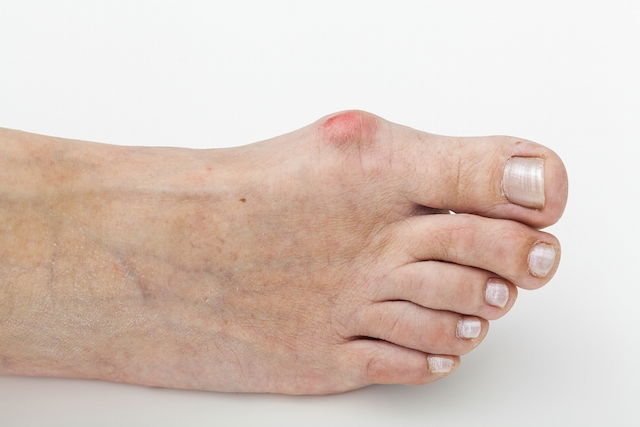
A bunion is a bony bump that most often forms at the base of the big toe. It happens when the joint becomes misaligned over time.
This misalignment may result from regularly wearing tight shoes or high heels. It can also stem from structural issues in the foot or underlying conditions such as rheumatoid arthritis.
A bunion is also called hallux valgus. It can be uncomfortable and may worsen if not addressed.
Main symptoms
Bunion symptoms vary depending on the degree of joint misalignment. The most common symptoms include:
-
A change in foot shape, with a bump along the side of the foot;
-
The affected toe shifting toward the other toes;
-
Redness in the affected toe;
-
Pain in the toe or joint, especially while walking;
-
A burning feeling when trying to bend the toe;
-
Numbness in the affected toe;
-
Swelling in the joint of the affected toe.
In addition, calluses may form over the bunion, and it may become difficult to wear regular shoes.
It is important for a bunion to be evaluated by a podiatrist or an orthopedic surgeon, especially when it causes symptoms, so the most appropriate treatment can be recommended.
Confirming a diagnosis
A bunion is diagnosed by a podiatrist or an orthopedic surgeon based on a physical exam of the foot, a review of personal and family health history, and an X-ray of the foot to assess how severe the joint deformity is.
In most cases, no other tests are needed. However, if the doctor suspects an underlying condition that may be contributing to the bunion, such as rheumatoid arthritis, they may request tests such as a complete blood count (CBC), C-reactive protein (CRP), or an antinuclear antibody (ANA) test.
Possible causes
The exact cause of bunions is not fully understood. However, several factors appear to increase the chance of developing one, including:
-
A family history of bunions;
-
Foot structure differences, such as a shorter first metatarsal bone or flat feet;
-
Excessively flexible foot ligaments;
-
Rheumatoid arthritis, gout, or psoriatic arthritis;
-
Trauma to the big toe, including dislocation or sprain;
-
Connective tissue disorders, such as Marfan syndrome, Ehlers-Danlos syndrome, or Down syndrome;
-
Muscle imbalance in the foot due to stroke, cerebral palsy, or myelomeningocele.
Wearing tight shoes or high heels may also contribute to foot changes over time, which can lead to a bunion developing or getting worse.
Treatment options
Treatment should be guided by a podiatrist or an orthopedic surgeon. The goal is to relieve symptoms and, when possible, help the toe move closer to its original position.
The main treatments that may be recommended include:
1. Wearing comfortable shoes
Comfortable shoes with a wide toe box can reduce pressure on the joint and help relieve pain while walking.
It is also important to avoid tight shoes and high heels, since they can worsen both symptoms and joint deformity.
2. Using orthotics
A podiatrist or orthopedic surgeon may recommend orthotics to try to support the foot and improve alignment. However, they are often not very effective and do not correct the underlying deformity.
Orthotics can be found at pharmacies and drugstores and may be used daily for the length of time recommended by the doctor.
3. Applying cold compresses
Cold compresses can help reduce pain and swelling, especially after standing for long periods. However, cold therapy is not recommended for people with circulation problems in their feet.
Apply a cold compress by placing ice in a cold pack or chilling a gel pack in the freezer, wrapping it in a clean, dry towel, and holding it on the bunion for 15 to 20 minutes, 2 to 3 times daily.
4. Physical therapy
Physical therapy may be recommended to help reduce pain and swelling.
The physical therapist will tailor the plan to the individual and may use modalities such as therapeutic ultrasound to help address soft-tissue restrictions, which can support symptom relief and reduce inflammation.
5. Taking medications
Medications may be recommended to reduce pain, redness, or swelling in the affected joint. A healthcare provider may suggest pain relievers or anti-inflammatory medicines in tablet form, such as acetaminophen or ibuprofen.
A doctor may also recommend an anti-inflammatory topical medicine applied directly to the area, such as diclofenac gel.
6. Corticosteroid injections
In some cases, the doctor may give a corticosteroid injection ("cortisone shot") directly into the affected joint. This option is usually considered when other treatments have not been effective at relieving symptoms.
Corticosteroid injections may be used to help delay or avoid surgery.
7. Surgery
Bunion surgery may be recommended when other treatment options have not worked and pain persists, making it difficult to walk.
Several surgical techniques may be used depending on severity. The procedure may involve removing damaged tissue around the bunion, shaving or removing part of the bone, repositioning and realigning bones, or fusing bones in the affected joint.
Physical therapy after surgery may be used to support recovery.
Prevention strategies
One of the best ways to reduce the chance of developing a bunion is to wear comfortable shoes that allow the toes to move freely.
High heels put extra pressure on the front of the foot and can increase the likelihood of foot problems, including bunions, according to the American Academy of Orthopaedic Surgeons (AAOS). For this reason, wearing shoes or sandals with heels higher than 5 cm (2 in) is not recommended.