


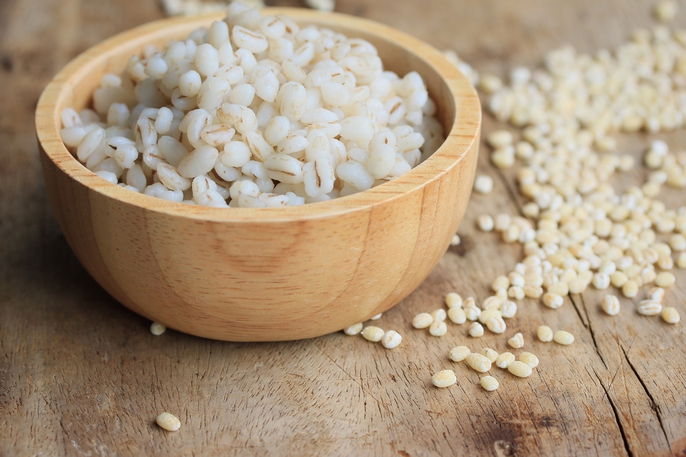
Barley (Hordeum vulgare) is a cereal grain that may offer several health benefits, such as supporting weight loss, lowering “bad” cholesterol, relieving constipation, and helping maintain thyroid health. These effects are linked to its fiber, carotenoids, and minerals.
Barley is considered a functional food because it contains nutrients such as selenium, zinc, and magnesium. These nutrients have antioxidant, appetite-regulating, laxative, and cholesterol-lowering properties.
Barley is sold as whole grains, flakes, or flour, and can be used to make salads, bread, soups, pasta, and risottos. It is also available in a soluble form, known as “barley coffee,” and is used to make beer.
Health benefits
The main health benefits of barley are:
1. Preventing premature aging
Barley may help prevent premature aging because it is rich in zinc and selenium. These antioxidant minerals fight free radicals and help prevent damage to healthy skin cells.
The zinc in barley also helps with collagen production. Collagen is a protein that helps keep the skin firm and elastic.
2. Relieving constipation
Because it contains good amounts of soluble and insoluble fiber, barley helps hydrate stool and increase stool bulk. It also stimulates the natural movements of the intestines, helping to relieve constipation.
3. Lowering “bad” cholesterol
Barley is rich in beta-glucan, a type of fiber that reduces fat absorption in the intestine. For this reason, barley is considered a functional food that can lower “bad” cholesterol, or LDL cholesterol, in the blood.
This may help prevent cardiovascular diseases, such as heart attack, high blood pressure, atherosclerosis, and stroke.
4. Helping with weight loss
Barley may help with weight loss because it is rich in fiber. Fiber forms a gel-like substance in the stomach, which slows digestion and helps control hunger throughout the day.
However, weight loss also requires a healthy diet and regular physical activity. Read more about a weight loss diet and how to get started.
5. Strengthening the immune system
Barley contains good amounts of selenium and zinc, which are minerals with antioxidant action. These minerals help strengthen the immune system by improving the function of interleukins, macrophages, and T and B lymphocytes.
These defense cells help protect the body against diseases caused by viruses, bacteria, and fungi.
6. Maintaining eye health
Barley supports eye health because it contains lutein and zeaxanthin. These carotenoids are found in the retina and help protect the eyes from damage caused by free radicals and blue light emitted by electronic devices.
Therefore, barley may help prevent cataracts and age-related macular degeneration, which is a progressive disease that can lead to vision loss.
7. Preventing diabetes
The fiber in barley slows the absorption of carbohydrates from food. This helps balance blood glucose levels and may help prevent insulin resistance and diabetes.
Barley may also help control blood glucose levels in people who already have diabetes.
8. Strengthening bones
Because it contains magnesium and zinc, barley may help strengthen bones. These minerals help convert vitamin D into its active form, which allows the body to absorb calcium and phosphorus.
Barley also contains very good amounts of potassium. Potassium increases the body’s pH, reducing calcium loss through urine and helping to prevent osteoporosis.
9. Improving mood and sleep
Barley may help improve mood and sleep because it contains magnesium. This mineral plays a role in the production and function of serotonin, a neurotransmitter that supports well-being and happiness.
Barley also contains tryptophan, an amino acid that is important for producing melatonin and serotonin. These compounds help regulate mood, sleep, and well-being.
10. Maintaining thyroid health
Selenium, which is found in very good amounts in barley, is an important mineral for converting the thyroid hormone T4 into T3. This helps regulate thyroid hormone levels in the body and supports thyroid health.
Difference between barley and wheat
Wheat is a cereal grain from the Triticum aestivum species. It has a mild flavor and soft texture, and is mainly consumed as flour.
Barley belongs to the Hordeum vulgare species. It has a stronger flavor and firmer texture, and is usually used as whole grains or flakes.
Nutritional information
The following table shows the nutritional information for 100 g of cooked barley and barley flour:
To obtain all the benefits of barley, it is important to maintain a healthy diet and exercise regularly.
How to consume
Barley can be consumed as whole grains, flakes, or flour, and can be used to prepare salads, bread, soups, pasta, and risottos. This cereal grain is also found in a soluble form, known as “barley coffee,” which can be an option for people who do not consume caffeine.
Barley is also used to produce malt, which is made by germinating barley grains. Malt can be consumed as a drink or used in some preparations, such as malt bread and beer.
Does barley have gluten?
Barley contains gluten and should therefore be avoided by people with gluten intolerance or celiac disease. Celiac disease is an autoimmune disease caused by permanent gluten intolerance, which triggers an immune system response that can lead to inflammation and damage in the intestines.
Healthy recipes
Some healthy recipes with barley include bread and salad:
1. Barley bread
Ingredients:
-
300 g wheat flour;
-
1 egg;
-
100 g barley flour;
-
25 g fresh yeast;
-
250 ml water at room temperature;
-
1 tablespoon olive oil;
-
1 teaspoon salt;
-
1 tablespoon honey.
Preparation method:
In a bowl, mix the flour, salt, and barley, and set aside. Place the egg, honey, water, and olive oil in a blender and blend for 1 minute. Transfer this mixture to the bowl with the flour, add the yeast, and mix well with your hands. Place the dough in a greased pan, cover it with a cloth, and let it rest for 40 minutes in a closed space. Place it in a preheated oven at 350ºF and bake for 30 to 40 minutes. Allow it to cool slightly before serving.
2. Barley salad
Ingredients:
-
1 cup barley grains;
-
2 cups water;
-
1 bay leaf;
-
2 tablespoons butter;
-
⅓ cup chopped almonds;
-
1 small chopped onion;
-
⅓ cup chopped dried apricot;
-
⅓ cup chopped prunes;
-
3 tablespoons chopped parsley;
-
1 tablespoon chopped thyme leaves.
Preparation method:
Place the barley in a bowl and cover it with 3 cups of water. Rub the barley well in the water and drain. Change the water and repeat this process 3 times. Then, place the barley in a colander.
Add the barley, 2 cups of water, and the bay leaf to a pot and bring to a boil over high heat. Then, reduce the heat and cook for 30 minutes or until the barley is tender. Remove the bay leaf, drain the water, and place the barley in a bowl.
Melt 1 tablespoon of butter in a skillet and add the almonds, stirring well for 2 minutes. Transfer the almonds to the bowl with the barley. In a skillet, melt 1 tablespoon of butter and sauté the onion for 3 minutes. Add the onion and the remaining ingredients to the barley, mixing well. This salad can be served warm or cold.
