


- Blurry or distorted vision at any distance may signal astigmatism.
- Frequent headaches, eye strain, or poor night vision can indicate a vision problem.
- Children holding objects very close or struggling in school may have undiagnosed astigmatism.
Astigmatism is a change in the curvature of the eye that makes it harder to see clearly. It can cause symptoms such as blurry or distorted vision, trouble focusing on objects, and difficulty reading or driving.
This condition is usually caused by an abnormal shape of the cornea or lens. As a result, light rays hit the retina at different points and interfere with how images are formed in the eye.
Astigmatism can affect both children and adults. Treatment is guided by an ophthalmologist and usually includes glasses or contact lenses, depending on the degree of astigmatism, and sometimes surgery.

Main symptoms
The main symptoms of astigmatism are:
-
Blurry or distorted vision, both near and far
-
Reduced vision or difficulty focusing on objects
-
Dry eyes or watery eyes
-
Eye pain or a feeling of tiredness or heaviness in the eyes
-
Difficulty seeing at night
-
Discomfort in bright environments
-
Frontal headache
Because it is harder to see clearly, the person may need to hold objects closer to their eyes to see better and may have difficulty with tasks like reading or driving, especially at night or in the rain.
According to the National Eye Institute, common symptoms of astigmatism include blurry vision, headaches, eye strain, and trouble seeing at night.
Symptoms tend to get worse after long periods of reading or using screens, such as on a computer or cell phone.
Astigmatism in children
Astigmatism in children can lead to reading difficulties and may affect learning. Children may also hold objects very close to their eyes and have school problems, such as behavior issues, low grades, or trouble paying attention.
At-home test
An at-home astigmatism test consists of looking at the image below with one eye at a time, keeping one eye closed and the other open.
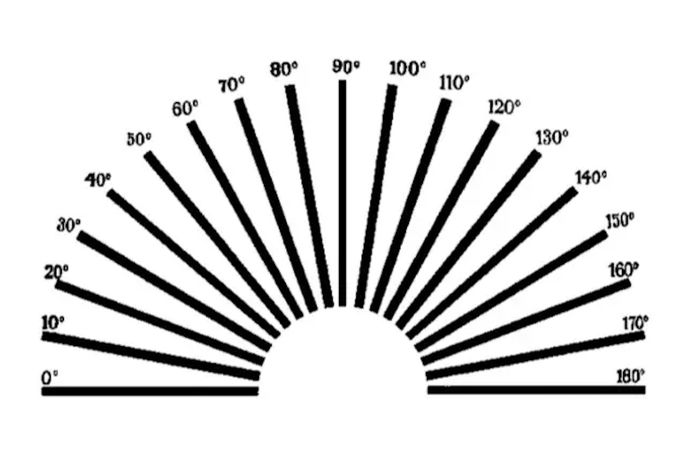
It is also important to do the test at different distances, up to a maximum of 20 feet (6 meters), to identify the distance at which astigmatism affects vision.
If a person has astigmatism, they may notice changes in the image, such as some lines appearing lighter than others or looking crooked. A person with normal vision should see all lines with the same size, color, and spacing between them.
It is important to note that an astigmatism test does not confirm a diagnosis and does not replace an appointment with an ophthalmologist.
Confirming a diagnosis
Astigmatism is diagnosed by an ophthalmologist based on your symptoms, medical history, and a detailed eye exam, which may include tests like visual acuity, refraction, retinoscopy, and keratometry.
These exams help the doctor evaluate how well the person can distinguish objects, letters, numbers, and lines, check the curvature and thickness of the cornea, and determine both the degree and type of astigmatism.
Hyperopia vs myopia vs astigmatism
Astigmatism usually causes blurry vision at any distance. With myopia (nearsightedness), the problem is mainly seeing distant objects clearly, while with hyperopia (farsightedness), the difficulty is more noticeable when looking at things up close.
Myopia with astigmatism
People who have both myopia and astigmatism may have trouble seeing objects even when they are close. In addition, distance vision may be worse compared with people who have only myopia.
Possible causes
Astigmatism is caused by a change in the curvature of the cornea or lens, which may have a more oval shape. This causes light rays to reach the retina at different points, creating overlapping images and leading to symptoms.
This type of refractive problem may be hereditary, meaning it can be passed from parents to children, but it can also happen because of eye trauma, keratoconus, or complications from eye surgery, for example.
Main types
The main types of astigmatism are:
1. Corneal astigmatism
In corneal astigmatism, symptoms happen because of a change in the curvature of the cornea. This is the most common type of astigmatism.
2. Lenticular astigmatism
Lenticular astigmatism occurs due to abnormalities in the curvature of the lens, the transparent structure behind the pupil that helps the eye focus and read.
3. Retinal astigmatism
Retinal astigmatism occurs when there is a change in the position of the macula, which is the central area of the retina. When the macula becomes more tilted, it can cause astigmatism symptoms.
4. Regular astigmatism
In regular astigmatism, the two lines of corneal curvature, called meridians, are perpendicular. This means the cornea is more curved in one direction than the other, similar to a football.
5. Irregular astigmatism
In this type of astigmatism, the cornea is curved in several directions, making it harder to treat and less common than regular astigmatism.
Treatment options
Treatment for astigmatism should be guided by an ophthalmologist, with the goal of correcting the refractive problem and improving vision and other associated symptoms.
The main treatments that may be recommended are:
1. Corrective lenses
The ophthalmologist may recommend corrective lenses, such as glasses or contact lenses, depending on the severity of the astigmatism.
Astigmatism can also change over time, which may require a new prescription or, in some cases, surgery. According to the National Eye Institute, eyeglasses and contact lenses are the most common treatments for astigmatism, and some people may also be candidates for surgical correction.
2. Surgery
Surgery may sometimes be recommended to improve vision, especially in more severe cases or when a more lasting result is desired, and it can be performed using a laser.
Can astigmatism be cured?
Astigmatism does not have a cure. However, it can be treated with corrective lenses, such as glasses and contact lenses.
In some cases, surgery may also be recommended, especially when a more permanent vision correction is desired.