


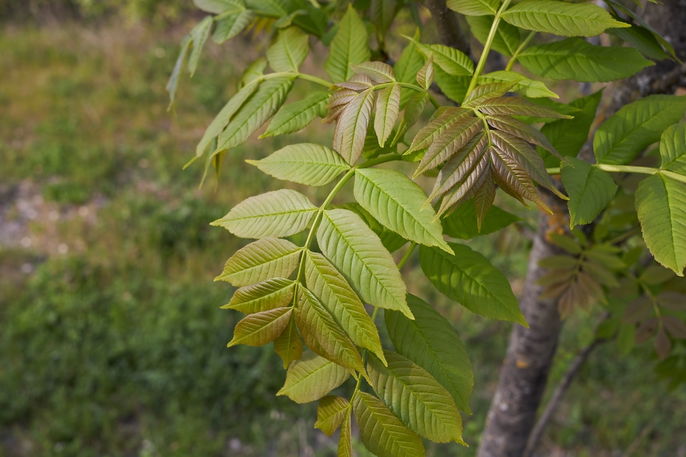
The ash tree (Fraxinus angustifolia) is a medicinal plant commonly used to support the treatment of arthritis, fever, kidney stones, and fluid retention. Its bark and leaves have diuretic, analgesic, and anti-inflammatory properties that can help relieve discomfort and promote overall health.
The leaves and bark are the main parts of the ash tree used for medicinal purposes. They are often prepared as tea, decoctions (boiled extract), tinctures, or capsules to take advantage of the plant’s active compounds. These products can be found in herbal shops and natural health stores, but they should always be used under the guidance of a doctor or herbal medicine specialist.
Also known as the common ash tree, this plant should be used carefully and responsibly, since it contains active compounds that may interact with certain medications or health conditions.
Health benefits
The ash tree may be used to help with:
-
Gout;
-
Arthritis;
-
Kidney stones;
-
Fever;
-
Constipation;
-
Fluid retention or swelling.
The potential health benefits of the ash tree are attributed to its natural compounds such as flavonoids, malic acid, tannins, and coumarins. These substances have analgesic, anti-inflammatory, fever-reducing (antipyretic), diuretic, and mild laxative effects.
Although the ash tree offers several health benefits, it should not replace conventional medical treatment and must always be used under medical supervision.
How to use
The bark and leaves of the ash tree can be used to make tea, decoctions, tinctures, or capsules.
1. Ash tree tea
Ash tree tea may help relieve kidney stones, swelling, fluid retention, gout, or arthritis.
Ingredients
-
10 to 20 g of dried ash tree leaves;
-
1 L of water.
Directions
Bring the water to a boil, remove from the heat, and add the dried leaves. Let steep for about 10 minutes, then strain. Drink 2 to 3 cups per day.
2. Ash tree decoction
Ash tree decoction (boiled extract) is made from the bark of young branches, usually harvested in the spring. It can be used to help reduce fever.
Ingredients
-
50 g of dried ash tree bark;
-
1 L of water.
Directions
Combine the bark and water in a pot and bring to a boil. Let it simmer for 10 minutes, then strain and allow to cool. Drink 1 cup 3 to 4 times a day until the fever subsides.
3. Ash tree capsules
Ash tree capsules are taken by mouth with a full glass of water. They can be used to support treatment for gout, arthritis, fluid retention, or kidney stones.
The dosage may vary depending on the concentration of ash tree extract in each capsule. For 300 mg capsules, the recommended adult dose is 2 capsules, 3 times per day. Always follow your doctor’s or herbalist’s instructions for proper dosing based on your condition.
4. Ash tree tincture
Ash tree tincture can be used to help lower fever.
Ingredients
-
50 drops of ash tree tincture;
-
1 cup of water.
Directions
Dilute the tincture drops in water and drink up to 3 times per day. The duration of treatment should follow your healthcare provider's recommendations.
Side effects
The side effects of the ash tree are not well known. Therefore, it should only be used under the supervision of a healthcare professional experienced in herbal medicine.
Contraindications for use
Ash tree remedies should not be used by children or people who are pregnant or breastfeeding, due to a lack of evidence confirming safety in these groups. It should also be avoided by people taking pain-relieving medications (analgesics).
Individuals being treated for alcohol dependence or using disulfiram should not take ash tree remedies, since ash tree tincture contains alcohol.