


- Activated charcoal is FDA-approved for treating poisoning or overdose and works by binding to toxins in the gastrointestinal tract.
- Some people use activated charcoal for gas and bloating, but this is not an FDA-approved indication and evidence is limited.
- Activated charcoal can interfere with medication absorption, so it should be used cautiously and only as recommended by a healthcare professional.
Activated charcoal is a processed form of charcoal that can bind to toxins and chemicals in the gastrointestinal tract. It is most widely used in emergency settings to help treat poisoning or overdose.
Some people also use activated charcoal for gas and bloating, although this is not an FDA-approved indication. Because it can interfere with the absorption of medications, vitamins, and minerals, its use requires caution.
Activated charcoal may also play a role in addressing food poisoning, supporting filtration systems, and limiting exposure to certain impurities.
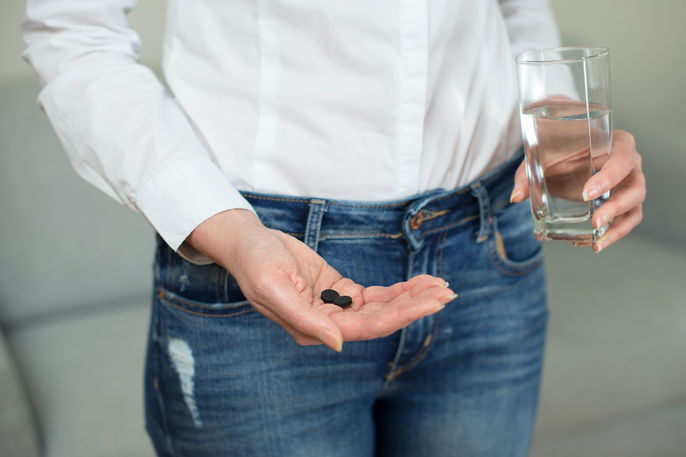
What is activated charcoal taken for?
Activated charcoal can be used for different purposes, but only some of its uses are recognized by the FDA:
FDA-approved indications
Activated charcoal is approved for emergency treatment of poisoning or overdose. Because of its strong absorbing ability, it can be used in situations involving chemical or medication poisoning, and may help absorb high levels of carbamazepine, phenobarbital, quinine, theophylline, and dapsone in the body.
This medication can also be used for food poisoning, as it can easily attach to bacterial toxins.
Also recommended: 7 Effective Food Poisoning Medications (& Home Remedies) tuasaude.com/en/food-poisoning-medicationOther uses
Some people take activated charcoal for gas and bloating, as it may help absorb intestinal gas and reduce discomfort. However, this use is not FDA-approved, and charcoal products sold for gas relief are typically marketed as supplements.
Activated charcoal is also commonly used in water filtration systems, as it can help remove impurities like pesticides, industrial waste remnants, and certain chemicals. This is considered a technical/filtration use, not a medical indication.
Does activated charcoal prevent hangovers?
Activated charcoal does not prevent hangovers. Alcohol is typically absorbed quickly into the bloodstream, leaving little time for activated charcoal to exert any effect. Therefore, activated charcoal is not recommended for preventing or treating hangovers.
Learn more about how to get rid of a hangover with natural remedies.
How to take
Activated charcoal can be taken in different ways depending on its purpose. However, dosing varies widely between emergency poisoning treatment and supplement-type use.
Emergency use for poisoning
For cases of chemical or medication poisoning, activated charcoal must be given in a hospital setting or under guidance from a poison control center.
-
In emergencies, adults typically receive 25 to 100 grams as a single dose, prepared as a liquid suspension.
-
Children are given a weight-based dose, usually 0.5 to 1 g per kg of body weight.
Activated charcoal is most effective when administered as soon as possible, ideally within 1 hour after ingesting the toxic substance. It is not recommended to treat poisoning at home with over-the-counter charcoal tablets or capsules.
When a person is not conscious or cannot protect their airway, activated charcoal is administered by a healthcare professional using a gastric tube.
Supplement-type use (non-FDA-approved)
For non-approved uses like gas and bloating, manufacturers may provide dosing on supplement labels. These products often contain small 250 mg tablets or capsules, and some people take them with water between meals. Because evidence for these uses is limited and charcoal can interfere with medication absorption, it is important to speak with a doctor or pharmacist before taking it.
Important precautions
Activated charcoal can reduce absorption of many medications. When using charcoal outside of emergency care, other medicines should be taken at least 3 hours apart to reduce interactions.
Possible side effects
The main side effects of activated charcoal include dark stools, vomiting, diarrhea, and constipation, particularly when consumed in excess.
Prolonged use of activated charcoal can reduce intestinal absorption of medications taken at the same time. Therefore, if you need to take a medication, it should be taken at least 3 hours before taking the activated charcoal.
Contraindications for use
Activated charcoal should not be used by children under 2 years old, nor by patients with bowel obstructions or gastrointestinal problems. It should not be used by those who have taken caustic corrosive substances or hydrocarbons.
In addition, this medication should not be used by people with an allergy to any of the components of the formula, or by those who have recently undergone intestinal surgery or who have a notable decrease in intestinal flow.
Women who are pregnant or breastfeeding should speak to their doctor before taking activated charcoal.