


- A 6 month old baby begins recognizing familiar faces and starts babbling simple sounds like “ba” and “ma.”
- Around this age, solid foods such as vegetables, fruits, and cereals can be introduced to complement breast milk or formula.
- Most babies sleep about 14 hours a day and enjoy interactive play that supports motor and language development.
By 6 months, most babies can recognize their parents, caregivers, and familiar faces, and can tell when someone is a stranger. They also start communicating more through babbling sounds like “ba,” “ma,” or “da,” especially when they want attention or are responding to voices around them.
Around this age, babies begin exploring new foods, including vegetables, fruits, legumes, cereals, and proteins, while continuing to receive breast milk or infant formula as their main source of nutrition. This transition should always follow a pediatrician’s or nutritionist’s guidance.
Every baby develops at their own pace, with unique growth patterns, sleep cycles, and skill development. If there are any concerns about growth or developmental milestones, it’s important to consult a pediatrician for evaluation.
Baby’s weight at 6 months
The table below shows the average weight, height, and head circumference for a 6-month-old baby, as well as expected monthly weight gain according to World Health Organization (WHO) growth standards.
If your baby’s measurements fall outside these ranges, it doesn’t necessarily indicate a problem. Still, it’s best to discuss it with your pediatrician to ensure development is on track.
Baby’s sleep schedule
A 6 month old baby usually sleeps about 14 hours in a 24-hour period. This includes around 4 hours of daytime sleep divided into two or three naps. Babies at this stage tend to nap less because they are more alert and eager to interact with parents and surroundings.
At night, most babies sleep between 9 and 11 hours. Some may still wake up frequently or have difficulty sleeping for long stretches.
Tips to help your baby sleep better
-
Keep a consistent bedtime routine
-
Place the baby in the crib while still awake to help them learn to fall asleep independently
-
Lower household noise levels at bedtime
-
Keep the nursery dimly lit
-
If the baby wakes too early, try gently rocking them back to sleep
A warm bath or gentle massage before bedtime can also help your baby relax and sleep more soundly.
Feeding a 6 month old baby
According to the Brazilian Society of Pediatrics, solid foods should be introduced at 6 months to complement breast milk or formula.
For lunch or dinner, offer purees made with cereals, tubers, vegetables, proteins, and legumes. Morning and afternoon snacks can include mashed or scraped fresh fruit.
Meals should be mashed with a fork or finely chopped to support chewing development and help the baby explore different flavors and textures. Encourage your baby to hold the spoon or pick up food with their hands, always under supervision, as this promotes fine motor skills and independence.
The Brazilian Society of Pediatrics also recommends offering about 700 mL (roughly 24 ounces) of water per day to prevent constipation and support kidney function, as solid foods introduce more fiber, sodium, and protein into the diet.
Baby development milestones
By 6 months, most babies can sit without support, balance with their hands, and roll from back to front and vice versa. They can also support weight on their feet when held upright.
Your baby’s curiosity increases, and they’ll want to reach for and explore anything nearby, often by putting it in their mouth. Always keep small or unsafe objects out of reach to avoid choking risks.
Babies at this stage are also developing stronger communication skills, responding to their name, and showing joy or frustration through facial expressions and babbling sounds.
Teething at 6 months
Teething usually begins around 6 months. Some babies may become more irritable, sleep less, eat less, or drool more than usual.
To ease discomfort, gently massage the baby’s gums with your fingertips or offer teething toys designed for babies to chew on. These help relieve pressure and soothe sore gums. Check-out other teething remedies you can offer your baby to relieve pain.
Vaccines for a 6 month old baby
At 6 months, the following vaccines are typically given:
-
Third dose of the hepatitis B vaccine
-
Third dose of the Hib vaccine (protects against Haemophilus influenzae infection)
-
Third dose of the IPV (polio) vaccine
-
Third dose of the DTP vaccine (diphtheria, tetanus, and pertussis)
-
Pneumococcal conjugate vaccine (PCV15 or PCV20)
It’s also recommended to start the influenza (flu) vaccine at this age.
In the U.S., DTaP, IPV, Hib (and sometimes HepB) can be given together as a single combination vaccine (e.g., Pentacel® or Vaxelis®). These are used to reduce the number of injections a baby receives.
Play and activities for a 6 month old baby
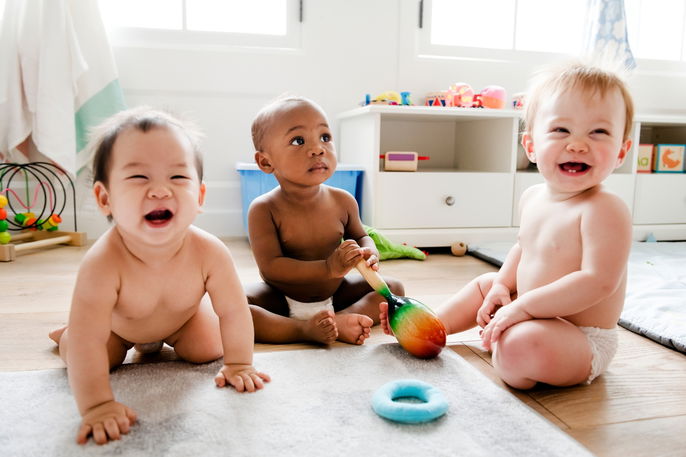
Playtime helps strengthen your baby’s speech, creativity, learning, and emotional bond with parents and caregivers.
Fun and developmental activities
-
Sit with your baby on a soft mat and fill a basket with toys or safe household objects for them to explore while you describe each item or make fun sounds
-
Create a tunnel with a cardboard box by opening both ends, place a toy at one end, and encourage your baby to crawl through the tunnel to reach it
Outdoor walks in parks or other open spaces are also great for stimulation. Try going out before 10 a.m. or after 4 p.m. Apply baby-safe sunscreen 20 to 30 minutes before leaving the house and use a hat or stroller shade for extra protection.