


- Stop using wrinkle creams and talk to a dermatologist if redness, itching, burning, or peeling develops.
- Do not use retinol during pregnancy, and avoid products that irritate the skin or make it more sensitive.
- See a dermatologist if wrinkles worsen early, products cause reactions, or dark spots become more noticeable.
Wrinkle creams work best when they contain ingredients such as hyaluronic acid, retinol, glycolic acid, or vitamin C. These ingredients are commonly used to help hydrate the skin, support cell turnover, and soften the look of fine lines and wrinkles.
Anti-wrinkle creams usually do not cause side effects, but some people may have allergic reactions. If you notice redness, itching, or irritation, you should stop using the product and talk with a dermatologist.
It is also important to see a dermatologist so they can assess your skin type and wrinkle pattern. This helps identify the most suitable wrinkle cream for your age and the specific type of wrinkles you have.
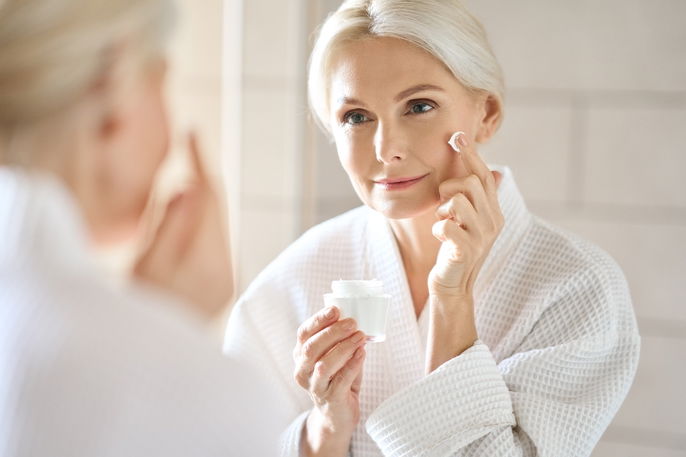
Main ingredients
The most effective wrinkle creams should contain the following ingredients:
1. Hyaluronic acid
A hyaluronic acid cream or serum is an excellent option for improving wrinkles, skin laxity, and overall skin firmness. It helps deeply hydrate the skin, supports cell renewal, stimulates collagen production, and leaves the skin softer and smoother.
This type of cream can help reduce the look of deep wrinkles, restore skin volume, improve the appearance of hollow-looking under-eyes, and soften expression lines. It is generally well tolerated and usually does not cause serious side effects.
How to use: Apply a thin layer to wrinkles or to areas where they commonly appear, such as the forehead, between the eyebrows, around the nose and mouth, and at the corners of the eyes. It should always be applied at night before bed.
Wash your face in the morning and apply sunscreen to help prevent dark spots. According to the FDA, using a broad-spectrum sunscreen with SPF 15 or higher as directed helps protect against sunburn and reduces the risk of early skin aging caused by the sun.
2. Retinol
A wrinkle cream with retinol is an excellent option for fighting wrinkles. Retinol is a form of vitamin A that helps stimulate cell turnover and skin exfoliation, which can reduce fine lines and wrinkles and support collagen production.
Retinol may also help improve overall skin tone and reduce the appearance of marks left by pimples.
Retinol can be found in creams, serums, and face masks.
How to use: Apply a thin layer of retinol cream before bed on alternating days during the first 2 weeks of use. After that, it can be used for 2 days in a row with 1 day off if the skin has not developed irritation such as stinging, burning, dryness, itching, or peeling.
Retinol cream should not be used during pregnancy or while breastfeeding. According to the American Academy of Dermatology, retinoids should not be used during pregnancy.
3. Glycolic acid
Glycolic acid is an alpha hydroxy acid that exfoliates the skin and helps renew its outermost layer by removing dead cells. This can leave the skin smoother, softer, and less visibly wrinkled, making it a good option for wrinkles on the face, chest, and neck.
This acid can be used on all skin types starting at age 20, as long as there are no open pimples and the skin is intact.
How to use: Apply 10 drops of concentrated glycolic acid, spread it on your hands, and then apply it to the face at night before bed. It does not need to be massaged in, just applied gently until fully absorbed.
When using creams with acids, avoid using other facial exfoliants, photosensitizing medications, drying cosmetics, or acne creams that contain benzoyl peroxide, resorcinol, salicylic acid, or sulfur.
4. Vitamin C
Creams that contain vitamin C can also help minimize wrinkles and expression lines because they support collagen production and have antioxidant properties that help protect the skin from sun-related damage.
In addition, this cream or serum can increase skin hydration, reduce redness, and leave the skin looking firmer and healthier. It can be used on all skin types.
How to use: Apply a thin layer to the face every morning and then apply sunscreen.
5. Resveratrol
Resveratrol is a polyphenol that may help support skin renewal and help prevent skin aging related to UV exposure and wrinkle formation.
It may also help support collagen production, which can help reduce the appearance of wrinkles.
How to use: Apply a thin layer to the skin in the morning or at night, depending on whether the product is made for daytime or nighttime use.
6. Bakuchiol
Bakuchiol is a plant-derived ingredient used as a natural alternative to retinol. It helps support cell renewal and collagen production, which can help minimize or prevent wrinkles.
Anti-aging creams with bakuchiol also help hydrate the skin and support the natural skin barrier, which may soften wrinkles and expression lines. They can also be used on more sensitive skin.
How to use: Apply a thin layer of the cream to the face after washing it, in the morning and at night, massaging gently until it is fully absorbed.
7. Matrixyl
Matrixyl is a synthetic peptide that helps support collagen and elastin production, which may help prevent wrinkles from forming or improve the appearance of deeper wrinkles.
Anti-aging creams with matrixyl can also help hydrate the skin and make it look firmer, and effects may be noticed after about 2 months of use.
How to use: Apply the cream to the skin, massaging gently until it is fully absorbed.
How to apply
To apply wrinkle cream correctly, follow these steps:
-
Wash your face with water and a moisturizing cleanser, or clean the skin with a hydrating cleanser and a cotton pad.
-
Apply a facial moisturizer with sun protection to the entire face, neck, and chest.
-
Apply eye cream, starting at the inner corner of the eye and moving toward the end of each eyebrow. Then use spiral motions over the crow’s feet area.
-
Apply the cream directly to wrinkles or expression lines using circular motions along the wrinkle, from bottom to top, and then with an opening motion as if trying to smooth the wrinkle out;
-
Apply a brightening cream to darker areas such as freckles, spots, and dark circles.
The amount of cream used on each area should be small, about one pea-sized drop per area.
If makeup is used, it should be applied over these creams.
Where to apply face creams
Face creams can be used on different areas of the face, and each area may benefit from specific products.
1. Cream around the eyes
The skin around the eyes is thinner and more likely to develop crow’s feet because the muscles in this area contract frequently, such as when squinting in bright light. As a result, it is often one of the first areas to show sagging and wrinkles.
For this area, it is best to use creams specifically formulated for the eye contour that contain sunscreen and growth factors to help maintain skin firmness and elasticity.
2. Cream for expression lines
Expression lines often appear around the smile after laughing and may be easier to notice in the morning after a poor night of sleep.
They also commonly appear between the eyebrows after squinting in the sun without sunglasses, but they go away when the skin is stretched.
The best creams for expression lines are those with sunscreen and hyaluronic acid.
3. Cream for deep wrinkles
Deeper wrinkles, which do not disappear when the skin is stretched, usually appear after age 45. However, they may appear earlier in people who do not use moisturizer and are often exposed to the sun without sunscreen.
In these cases, anti-aging creams with growth factors that can help fill in wrinkles and make the skin look firmer and more even are recommended.
4. Cream for dark circles, dark areas, spots, or freckles
These areas need brightening care and sun protection so they do not become darker.
The most recommended creams are those with sunscreen and ingredients that help brighten the skin, such as vitamin C.
Another important point is to check whether the cream is made for daytime or nighttime use, because nighttime products usually work longer and can act throughout sleep, when there is less facial muscle movement.
Day creams usually contain sun protection.
Other treatments for wrinkles
Other wrinkle treatments include aesthetic physical therapy, which may use techniques such as specific massage, traction, fascia mobilization, and myofascial release.
A dermatologist may also recommend treatments such as laser, radiofrequency, botulinum toxin (Botox) injections, or even surgery.