


What to do if someone is having a stroke starts with staying calm and calling 911 right away. While help is on the way, focus on keeping the person safe and supported.
After calling 911, place the person on their side with their head slightly raised and supported. This can help lower the risk of choking if they vomit or become less alert.
Check whether the person is awake and breathing. If they become unconscious and stop breathing, begin CPR and provide rescue breaths until emergency responders arrive.
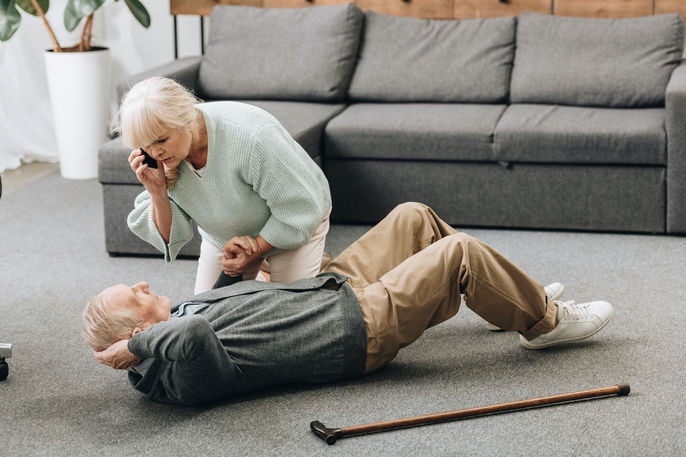
First aid
The following are step-by-step first aid instructions for responding to a stroke:
- Stay calm and help the person who may be having a stroke remain calm;
- Call an ambulance by dialing 911, sharing the person’s symptoms, the exact location, a callback number, and what happened;
- Lay the person on their side, with the head slightly elevated and supported, to help prevent choking if they faint or vomit;
- Cover the person with a blanket, if possible, to keep them warm;
- Do not give the person any food or drinks, to prevent choking;
- Ask about symptoms and medical history, including whether they have any health conditions or take any medications;
- Wait for emergency services to arrive, watching whether the person stays conscious.
If the person becomes unconscious and stops breathing, it is important to:
-
Start chest compressions by placing one hand on top of the other, keeping your arms straight, and using your body weight. According to the American Heart Association, the recommended compression rate is 100 to 120 compressions per minute;
-
Give 2 rescue breaths using a pocket mask after every 30 chest compressions;
-
Keep doing CPR until the ambulance arrives.
Always seek immediate medical attention for the person to help prevent serious complications. These may include paralysis or loss of muscle movement, difficulty speaking or swallowing, and memory problems, for example.
How to identify
To help identify whether someone is having a stroke, you can ask them to:
-
Smile: the person may have a drooping face or uneven smile, with one side of the mouth or lip staying down;
-
Raise one arm: the person may not be able to lift one arm due to weakness, or one arm may drift down;
-
Say a short sentence: the person may have slurred, unclear speech, or speak very softly. For example, ask them to repeat: “The sky is blue,” or to say a short line from a song.
If any of these responses is abnormal, it is possible they are having a stroke. According to the American Stroke Association, a quick way to spot possible stroke is the F.A.S.T. check: face drooping, arm weakness, speech difficulty, time to call 911 (if any of these signs are present).
Other stroke symptoms include numbness on one side of the body, trouble standing, or falling due to muscle weakness. They may also urinate on themselves without noticing.
In some cases, the person may seem confused and not understand simple instructions, such as opening their eyes or picking up a pen. They may also have difficulty seeing and a very severe headache.