


- Wax hair removal pulls hair from the root, so smooth results typically last about 2–3 weeks and may reduce regrowth over time with repeat sessions.
- Hot wax is usually best for smaller areas like underarms and the bikini line, while cold wax is better suited for larger areas like legs, arms, and back.
- Avoid waxing over wounds, burns, or irritated/sensitive skin, and skip waxing if isotretinoin was used within the last 6 months to help prevent skin injury.
Wax hair removal can be done with hot or cold wax. Hot wax works best for small, precise areas like the bikini line and underarms. Cold wax suits larger areas such as the back, legs, and arms better.
Waxing pulls hair out from the root, delivering smoother skin that lasts much longer than shaving. Repeated sessions may progressively reduce hair regrowth over time. Results typically last 2-3 weeks.
Waxing can be done at home or by professionals in a salon or studio and is suitable for all genders.
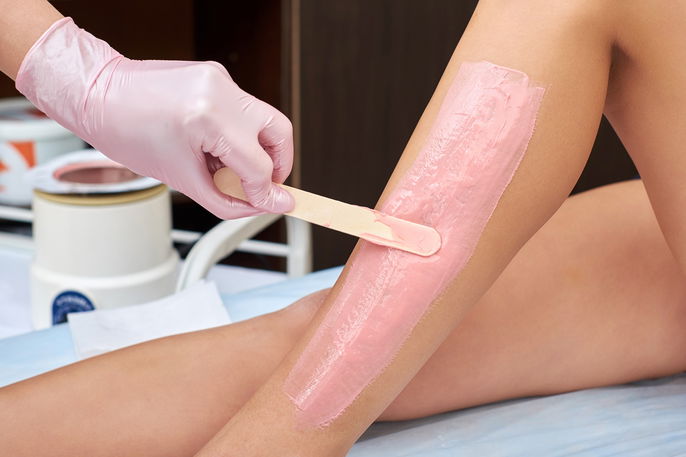
Hot wax
Hot wax hair removal can be done by following these steps:
-
Heat the wax until it becomes liquid;
-
Apply a small amount of wax to the inside of your wrist to test the texture and temperature, which should feel warm but should not hurt or burn;
-
Apply the wax with a roll-on applicator or a spatula in the direction of hair growth;
-
Place the waxing strip over the wax and press it firmly with your hand for 5 to 10 seconds so it adheres well;
-
Hold the skin taut with one hand and, with the other, quickly pull the strip off in the opposite direction of hair growth;
-
Try not to wax the same spot more than 1 to 2 times to help prevent irritation;
-
Remove leftover wax from the skin with a cotton pad soaked in vegetable oil.
Hot wax is generally recommended for smaller areas or areas with thicker hair, such as the underarms, bikini line, and anus. The heat can help open the pores, which may make hair removal easier.
Cold wax
Cold wax hair removal is recommended for people with varicose veins or sensitivity to heat. It should be used when the hair is longer and only on larger areas, such as the arms, back, and legs.
To do this, separate the wax strips and place them on clean, dry skin in the direction of hair growth, rubbing a few times so they stick well.
Then, quickly pull the strip off in the opposite direction of hair growth and repeat until all hair is removed.
Waxing for men
Men can use waxing for hair removal on the chest, abdomen, back, arms, and legs. It can also be done carefully on the face (avoiding sensitive areas like near the eyes).
Waxing works the same way for all genders: apply a thin layer of melted wax in the direction of hair growth, then remove it quickly in the opposite direction.
Bikini wax
Bikini wax hair removal includes removing hair along the bikini line and is typically done with hot wax, because heat can make removal easier.
To do a bikini wax, apply the wax to dry skin in the direction of hair growth and then remove it in the opposite direction.
Genital wax
Waxing the genital area typically includes the vulva (or penis and scrotum) and the anus.
Here's the step-by-step process for safe at-home genital waxing:
-
Warm the wax using a double boiler;
-
Start from the outer edges of the genital area and work inward and from top to bottom;
-
Apply the wax in the direction of hair growth;
-
Remove the wax quickly in the opposite direction of hair growth and discard it;
-
Finish by applying a soothing post-wax cream to the area.
Finish by applying a soothing post-wax cream to the area.
Brazilian wax
A Brazilian wax involves removing all hair from the bikini area, including the labia majora, labia minora, and anus.
Care tips
Some important care tips for wax hair removal include:
-
If hair is longer than 0.5 inches (about 1.2 cm), trim it with scissors to help reduce pain during waxing;
-
Clean and dry the skin thoroughly before waxing;
-
Apply a soothing cream right after waxing;
-
Avoid very hot showers and sun exposure for 24 hours afterward;
-
Exfoliate the skin once a week to help make hair removal more effective and less painful;
-
Use a moisturizer daily in the days after waxing;
-
Apply sunscreen to the waxed area to help prevent burns and dark spots.
In addition, avoid using topical retinoid creams for 5 days before waxing to help prevent skin from lifting along with the hair.
Benefits of waxing
Wax hair removal can remove hair completely, including larger amounts at once.
With repeated waxing, damage to hair follicles may contribute to a longer-term reduction in hair growth. Results typically last about 2 to 3 weeks.
Contraindications for waxing
Wax hair removal should not be done on people with wounds, burns, skin lesions, or very sensitive skin.
According to the American Academy of Dermatology, waxing should be avoided during isotretinoin use and for 6 months after stopping it due to the risk of skin injury and scarring.
Also recommended: 3 Sugar Wax Recipes (for Natural Hair Removal at Home) tuasaude.com/en/sugar-wax-recipe