


A wart on a finger is a small, noncancerous skin growth that usually develops after infection with certain types of human papillomavirus, or HPV. These warts are most often rough, raised, and firm, and they may appear on the fingers, around the nails, or on the back of the hands.
Finger warts are common and can spread through direct skin contact or by touching objects that have the virus on them. Small cuts, hangnails, nail biting, or irritated skin around the fingers can make it easier for HPV to enter the skin.
Many finger warts go away on their own over time, but treatment may be recommended when they are painful, spreading, bothersome, or difficult to clear. A dermatologist or primary care doctor can confirm the diagnosis and suggest options such as salicylic acid, cryotherapy, or other treatments for stubborn warts.
Main symptoms
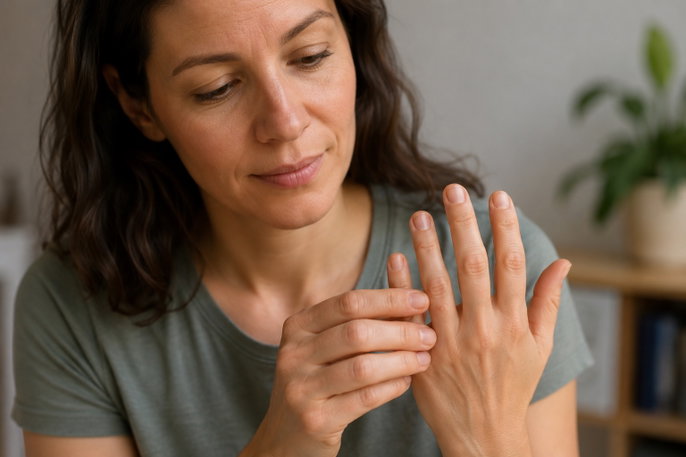
The main symptom of a wart on a finger is a small skin growth with a rough or thickened surface. Common signs include:
-
A raised, firm bump on the finger
-
Rough or grainy skin texture
-
A round or irregular shape
-
Small black dots on the surface
-
Skin-colored, white, pink, or brownish appearance
-
One wart or several warts close together
-
Growth around or under the nail
-
Mild pain or tenderness, especially if the wart is pressed or irritated
Finger warts are usually harmless, but they can become uncomfortable when they grow near the nail, crack, bleed, or interfere with daily activities.
Common causes
A wart on a finger is caused by HPV infection in the outer layer of the skin. The virus causes extra skin cells to grow, forming a thick, rough bump.
The types of HPV that cause common hand and finger warts are usually considered low-risk types. These are different from the types more strongly linked to genital cancers. However, warts may be more persistent or harder to treat in people with weakened immune systems.
How it is transmitted
Finger warts can spread through direct contact with another wart or with HPV-contaminated surfaces. The virus can also spread from one area of the body to another, especially when a wart is scratched, picked, shaved, or bitten.
Small breaks in the skin make infection more likely. This can happen from hangnails, cuts, dry cracked skin, nail biting, or biting the skin around the nails. Sharing towels, nail clippers, or other personal items may also increase the risk.
Confirming a diagnosis
A wart on a finger is usually diagnosed with a physical exam. A doctor often looks for a rough, thickened bump, small black dots, and changes in the normal skin lines over the lesion.
Dermoscopy may be used to look more closely at the wart. This tool can help show features such as a papillomatous surface, dotted or linear blood vessels, and small dark dots caused by tiny clotted blood vessels.
A biopsy is not usually needed. It may be considered when the lesion looks unusual, does not respond to treatment, grows quickly, bleeds easily, or needs to be distinguished from other skin conditions, such as a callus, molluscum contagiosum, or certain skin cancers.
Treatment options
Treatment for a wart on a finger depends on the size, location, symptoms, number of warts, and whether previous treatments have worked. Some warts disappear without treatment, while others may take months or years to clear.
1. Watchful waiting
Many common warts can go away on their own as the immune system responds to the virus. This approach may be reasonable when the wart is small, painless, and not spreading.
Watchful waiting may not be ideal if the wart is painful, located around the nail, spreading to other fingers, or causing embarrassment. Treatment may also be preferred when the wart interferes with writing, typing, handwork, or daily activities.
2. Salicylic acid
Salicylic acid is a common first-line treatment for finger warts. It works by slowly removing layers of thickened skin and may also help the immune system react to the wart.
This treatment is usually applied regularly for several weeks. The wart may need to be soaked and gently filed before applying the medicine, but healthy surrounding skin should be protected to reduce irritation. Salicylic acid should not be used on irritated, infected, or broken skin unless recommended by a doctor.
3. Cryotherapy
Cryotherapy is a treatment done in a medical office using liquid nitrogen to freeze the wart. It can be useful for common warts on the hands and fingers, especially when home treatment has not worked.
The treated area may become painful, red, swollen, or blistered after freezing. More than one session may be needed. Cryotherapy may work similarly to salicylic acid for common warts, but it can cause more discomfort.
4. Combination treatment
Some cases may be treated with more than one approach, such as cryotherapy followed by topical medicine. This may be considered for warts that are difficult to treat or that keep coming back.
Combination treatment should be guided by a healthcare professional. This is especially important for warts near the nail, since aggressive treatment can irritate the skin or affect the nail area.
4. Other medical treatments
Other treatments may be considered for stubborn or recurrent finger warts. These can include cantharidin, immunotherapy, laser treatment, or minor surgical removal.
These options are usually reserved for warts that do not respond to simpler treatments. A dermatologist can help choose the safest option based on the wart’s location, depth, and previous treatment history.
When to see a doctor
Medical evaluation is recommended when a finger wart is painful, bleeding, spreading quickly, or changing in appearance. A doctor should also assess warts that grow around or under the nail, as these may be harder to treat and can sometimes affect nail growth.
A healthcare professional should also be consulted when the diagnosis is unclear, the wart does not improve after treatment, or the person has a weakened immune system. People with diabetes, poor circulation, or immune suppression should avoid aggressive home treatments unless advised by a doctor.