


Tiny bumps on baby skin can be caused by heat rash, neonatal acne, or milia, which often appear due to excess heat and sweating. These small bumps are very common in infants and usually harmless, resolving on their own without treatment.
However, tiny bumps on baby skin can also be a sign of infections such as chickenpox or herpes. In these cases, the bumps may be accompanied by other symptoms like fever, irritability, frequent crying, or trouble feeding.
It’s important to see a pediatrician or go to the emergency room if the baby has bumps on the face along with other symptoms. A doctor can determine the cause and recommend the most appropriate treatment to ensure the baby’s comfort and safety.
Common causes
The main causes of tiny bumps on baby skin include:
1. Heat rash
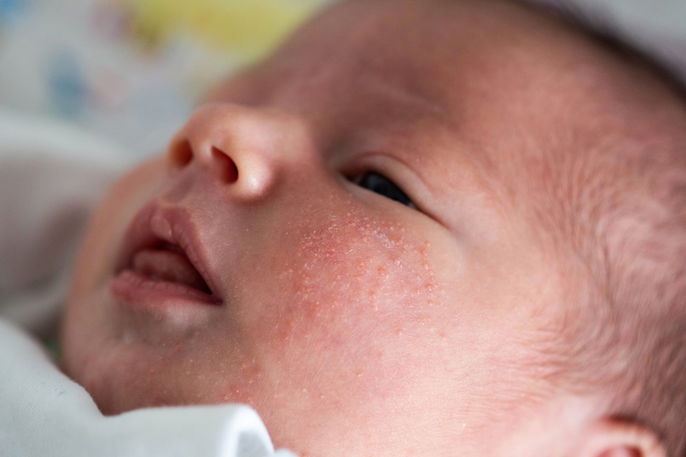
Heat rash is one of the most common causes of tiny bumps on a baby's face. It may also appear on the back, neck, or torso. This condition develops when the baby’s sweat glands become blocked, which prevents proper sweating and causes small red or clear bumps to form. These bumps may cause itching or a burning sensation, making the baby uncomfortable.
What to do: Dress your baby in light, breathable cotton clothing instead of thick or warm layers. Bathe your baby using lukewarm or cool water (depending on the weather) with a gentle, fragrance-free soap. Whenever the weather is warm, let your baby's skin air dry naturally after bathing.
2. Neonatal acne
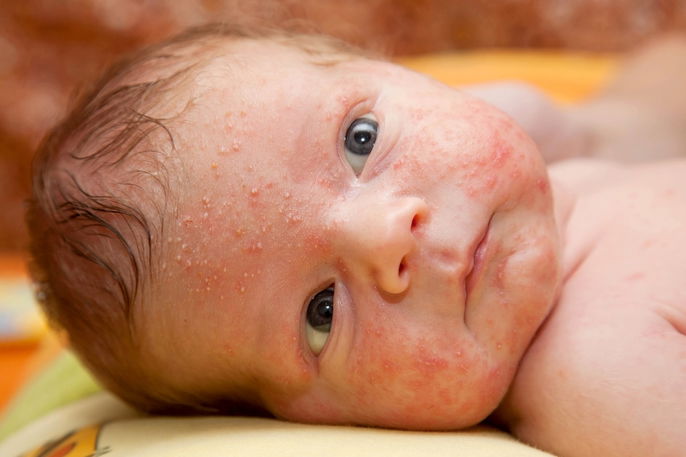
Neonatal acne, or baby acne, occurs due to hormonal transfer between the mother and baby during pregnancy. This can lead to small red or white bumps, usually appearing on the baby’s forehead and scalp within the first month after birth.
What to do: Neonatal acne typically goes away on its own and doesn’t require specific treatment. However, it’s important to have the baby evaluated by a pediatrician, who can recommend the best skincare routine.
Gently wash the baby’s face with a mild, pH-neutral cleanser and dress the baby in loose cotton clothing, as heat and sweat can worsen both acne and heat rash.
3. Milia
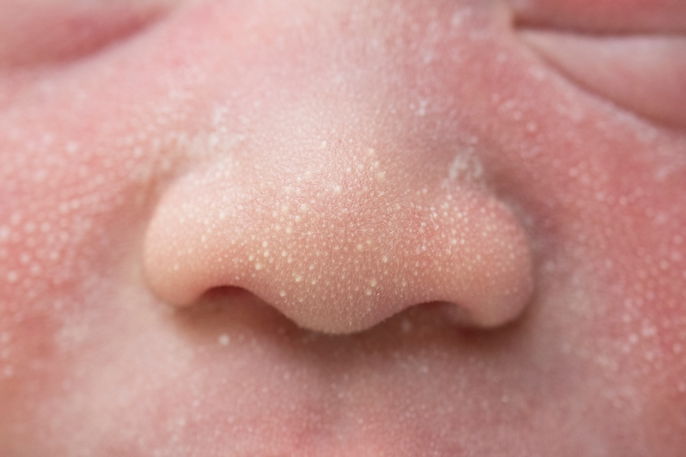
Milia, also called neonatal milia, are tiny white or yellowish bumps that appear on the baby’s face, especially around the nose and cheeks. They develop when keratin or sebum becomes trapped under the skin’s surface.
Milia may also appear after a fever or as a result of sun exposure.
What to do: Milia usually clear up on their own within a few days without the need for treatment. In some cases, a pediatrician may recommend a gentle cream or ointment to help the bumps fade faster.
4. Chickenpox
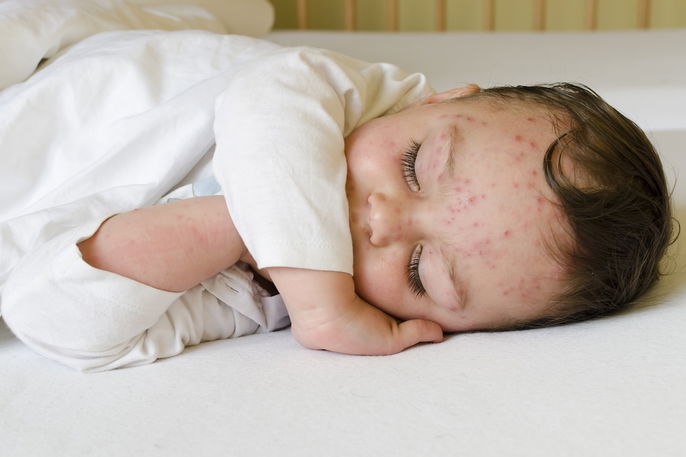
Chickenpox, or varicella, is a contagious infection caused by the varicella-zoster virus. It produces multiple red, itchy bumps or blisters that spread across the face and body. Other symptoms may include fever, irritability, and frequent crying, making the baby very uncomfortable.
What to do: The goal of treatment is to relieve symptoms. A pediatrician may recommend medications to reduce itching and fever. You can also apply a cool, damp cloth to the irritated areas and keep the baby’s nails trimmed to prevent scratching and bursting of the blisters.
5. Herpes infection in babies
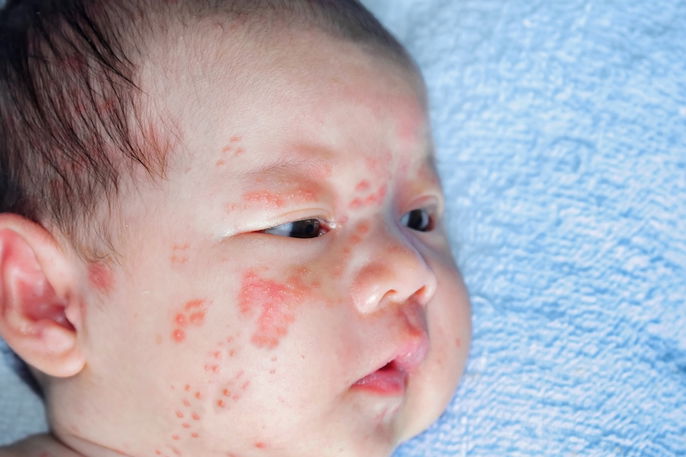
A herpes infection in babies is caused by the herpes simplex virus (HSV), which can be transmitted during vaginal delivery or through contact with someone who has an active cold sore. It causes clusters of small, fluid-filled blisters around the lips, cheeks, eyes, or inside the mouth, often accompanied by redness, fever, irritability, or difficulty feeding.
What to do: Take the baby to the emergency room as soon as possible to begin treatment with antiviral medication, such as acyclovir, prescribed by the doctor. Prompt treatment is essential to prevent the virus from spreading and causing serious complications.