


Tick-borne diseases are illnesses that are transmitted to people through tick bites. Ticks are small insects that can carry bacteria and viruses, and are commonly found on animals, like dogs, cats and rodents.
A tick bite can cause a red, round bump on the skin, as well as a fever, chills, headache and muscle aches. Tick-borne diseases are considered to be serious health conditions that require specific treatment to contain infections and prevent organ failure.
Tick disease diagnosis should be done as early as possible to ensure adequate treatment and resolution.
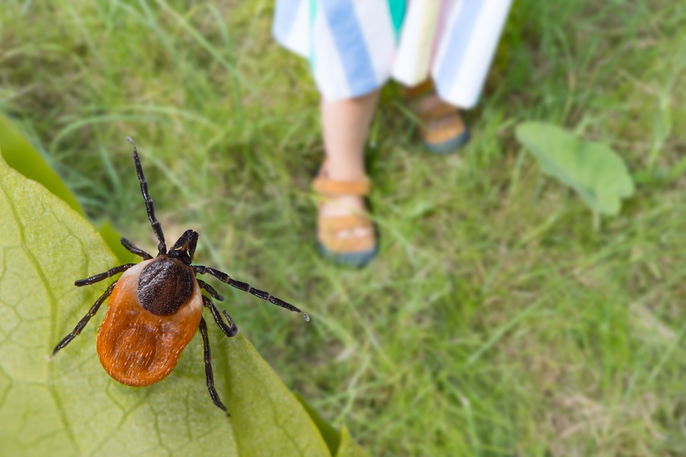
List of tick-borne diseases
The most common diseases caused by ticks include:
1. Lyme disease
Lyme disease is prevalent in the USA and Europe and is caused by the Borrelia burgdorferi bacteria. This bacteria is transmitted to humans through Ixodes species ticks.
Main symptoms: The first signs of Lyme disease can start to manifest up to 30 days after the initial tick bite. Initially, you may notice swelling and redness in the area, followed by a headache, muscle and joint pain, fever, chills, and neck stiffness.
How to treat: It is important for Lyme disease to be initiated as soon as possible to avoid complications, like neurologic symptoms, heart problems and meningitis. The doctor may prescribe doxycycline twice a day for 4 weeks, or as sufficient. In some cases, the doctor may also recommend physiotherapy to manage physical symptoms.
2. Rocky mountain spotted fever
Rocky mountain spotted fever is a disease caused by the Ricketssia rickettsii bacteria that is transmitted to humans by lone star ticks. The bacteria is transmitted through a tick bite and enters the blood to circulate throughout the body. For the illness to be contracted, the tick needs to remain in contact with the person for 6 to 10 hours.
Main symptoms: After the bite, many people will notice red, non-itchy rashes on the wrists and ankles. Other common symptoms include fever over 102ºF, chills, abdominal pain, intense headache and constant muscle pain.
How to treat: Treatment for rocky mountain spotted fever should be initiated as soon the tick bite is noted, or when symptoms start to emerge. Quick intervention will help to prevent complications. Normally, the doctor will prescribe antibiotics, like cloramphenicol or tetracycline. People with serious cases may be admitted to the hospital for closer monitoring.
3. Powassan virus
Powassan virus is a rare disease that is transmitted through ticks infected with this virus. Powassan can be transmitted through the same ticks that carry Lyme disease (the Ixodes species), however it differs from Lyme due to its rapid transmission (within minutes, vs days for Lyme disease).
Main symptoms: Some people may be asymptomatic when infected with the Powassan virus, although others may present with fever, headache, vomiting and weakness. This virus is known to be neuroinvasive, leading to serious signs and symptoms.
Serious cases are characterized by brain swelling (also known as encephalitis), or inflammation of the tissue that lines the brain and spine (also known as meningitis). The presence of this virus in the nervous system can cause a lack of coordination, confusion, difficulty speaking and memory loss.
How to treat: There is no specific treatment for Powassan virus, however is it important for infected people to proceed to the hospital to assess the need for admission. Life-threatening cases may require intubation and interventions to reduce brain swelling.
4. Babesiosis
Babesiosis is an infectious disease that can also be transmitted through ticks that are affected with Babesia spp.
Main symptoms: Most cases of babesiosis are asymptomatic or present with light symptoms, therefore many people do not know they are even infected. People who have symptoms may notice them up to 4 weeks after the initial tick bite. Symptoms may include fever, headache, chills, cold sweat, muscle pain, excessive fatigue and weakness.
People over 60 years of age or with a weakened immune system may experience more intense symptoms, like an enlarged liver, enlarged spleen or hemolytic anemia.
How to treat: Treatment for babesiosis typically involves the use of antiparasitics and/or antibiotics, depending on the present symptoms.
5. Ehrlichiosis
Erlichiosis is a tick disease that is transmitted by ticks infected with Ehrlichia chaffeensis bacteria. This illness affected the blood cells, particularly monocytes and macrophages, and interferes with normal immune system function.
Main symptoms: Symptoms of erlichiosis can emerge up to 12 days after the initial tick bite, leading to fever, headache, chills muscle aches, excessive fatigue, nausea, vomiting and general malaise.
How to treat: Treatment for erlichiosis normally involves the use of doxycycline as prescribed by a doctor.
6. Tularemia
Although it is not common, tularemia is also transmitted by tick bites. The ticks that cause this disease are infected with Francisella tularensis bacteria.
Main symptoms: Symptoms of tularemia can emerge 3 to 14 days after the initial tick bite. It presents with a small skin wound that takes a long time to heal, high grade fever, chills, chest pain, sore throat and general malaise.
How to treat: Treatment for tularemia should be oriented by a doctor, and usually involves the use of antibiotics for up to 21 days to ensure total bacteria elimination. Adequate treatment can prevent the development of complications and hospital admission.
7. Anaplasmosis
Anaplasmosis, also known as human granulocytic anaplasmosis, is a disease caused by the Anaplasma phagocytophilum bacteria. It is transmitted through the bite of Ixodes ticks, the same ticks that spread Lyme disease and Powassan virus.
Main symptoms: Symptoms can appear 5 to 14 days after a tick bite and often include fever, chills, severe headache, muscle aches, nausea, and general malaise. Some people may also experience low white blood cell counts, low platelet counts, and elevated liver enzymes.
How to treat: Anaplasmosis is treated with doxycycline as prescribed by a doctor. Early treatment is crucial to prevent serious complications, such as respiratory failure or organ failure.
8. Tick-borne encephalitis (TBE)
Tick-borne encephalitis is caused by the tick-borne encephalitis virus (TBEV) and is mainly transmitted by Ixodes ricinus ticks found in Europe and parts of Asia.
Main symptoms: TBE can present in two phases. The first phase involves flu-like symptoms, such as fever, headache, and muscle pain. After a short improvement, some people progress to a second phase characterized by inflammation of the brain (encephalitis) or the lining of the brain and spinal cord (meningitis). Neurological complications, like difficulty speaking, confusion, and paralysis, can occur.
How to treat: There is no specific treatment for TBE. Management focuses on supportive care and preventing complications. Vaccination is available in endemic regions and is recommended for travelers and people at risk.
9. Southern tick-associated rash illness (STARI)
STARI is a disease transmitted by the lone star tick (Amblyomma americanum). The exact cause is unknown, although it is believed to be related to Borrelia lonestari bacteria.
Main symptoms: The hallmark symptom of STARI is a circular rash that appears at the site of the tick bite, similar to the rash seen in Lyme disease. Other symptoms can include fever, headache, muscle pain, and fatigue.
How to treat: There are no standardized treatment guidelines for STARI, but doctors may prescribe doxycycline to reduce symptoms and prevent complications, especially since the illness can resemble Lyme disease.
10. Borrelia miyamotoi disease
Borrelia miyamotoi disease is caused by the Borrelia miyamotoi bacteria, which is related to the bacteria that cause relapsing fever. It is transmitted by Ixodes ticks, the same ticks that spread Lyme disease and anaplasmosis.
Main symptoms: Symptoms usually include fever, chills, headache, muscle and joint pain, and fatigue. Some patients may experience relapsing episodes of fever, and in severe cases, meningitis or encephalitis can occur, especially in people with weakened immune systems.
How to treat: The first-line treatment is doxycycline or another antibiotic as prescribed by a doctor. Early treatment helps reduce the risk of severe neurological complications.
How to remove a tick
To remove a tick from the skin, you should follow these steps closely:
- Apply ether or chloroform directly on the tick.
- With a fine-tipped tweezer, pull the tick straight up to prevent parts of the tick remaining in the skin.
- Clean the bite area and wash your hands with soap and water.
Removing the tick from the skin is fundamental for preventing a serious inflammatory reaction that causes hemolytic anemia, an enlarged spleen or an enlarged liver. It is important to monitor for symptoms like fever, nausea, vomiting, headache, and red rashes, after the tick is removed. You should see a doctor if you notice these in the meantime.
How to prevent tick bites
To prevent tick bites, you should:
- Avoid wooded areas, like forests
- Use tick repellents with DEET, eucalyptus oil, IR2525 or picaridin, which are effective against these parasites
- Wash your clothes and clean surfaces with products containing permethrin 0.5%.
It is important to inspect pets for ticks periodically. You should wash all clothing in high temperatures following walks in wooded areas.