


A survival kit can help keep you and your family safe during emergencies or disasters, such as earthquakes, when you may need to leave your home quickly. It can also be useful during epidemics, when you may be advised to stay indoors.
This kit should include water, food, medications, and other essential supplies. These items can help ensure the survival and safety of everyone in the household.
Ideally, the survival kit should be stored in a safe, easy-to-reach place. It should also be checked regularly to make sure all supplies are in good condition and have not expired.
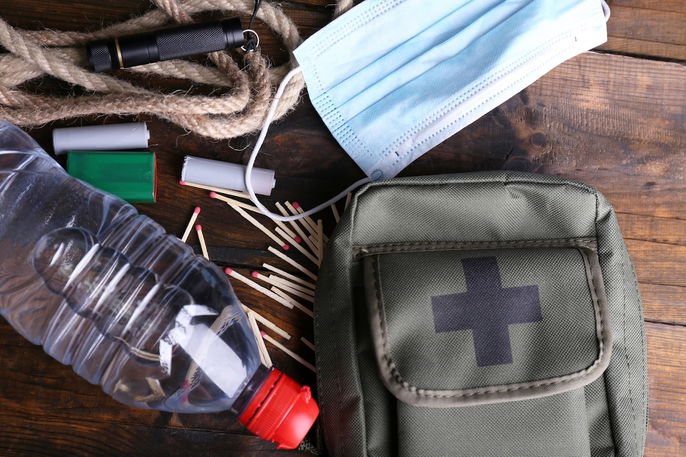
What to include
Each family’s survival kit may vary depending on the age of its members and any existing health conditions, but some essential items should be included in every basic kit, such as:
- 1 liter of water per person per day, at minimum. According to the CDC, emergency water supplies should include at least 1 gallon of water per person per day for drinking and sanitation.
- Dry or canned foods for at least 3 days. Examples include rice, pasta, peanuts, tuna, beans, tomatoes, mushrooms, or corn.
- Basic eating utensils, such as plates, cutlery, or cups.
- First aid kit supplies for wound care.
- One pack of each daily medication, such as medications for high blood pressure, diabetes medications, or corticosteroids.
- One pack of surgical masks or filter masks, such as N95 masks.
- One pack of disposable gloves.
- A multi-tool knife.
- A battery-powered flashlight.
- A battery-powered radio.
- Extra batteries.
- One pack of matches, preferably waterproof.
- A whistle.
- A thermal blanket.
Some of these items, especially food products, have expiration dates. A good tip is to keep a sheet with the kit listing the expiration dates of each item. This sheet should be reviewed every 2 months to make sure products that are close to expiring are used and replaced.
Other important supplies
Depending on each family’s needs, the region where they live, and the type of disaster that may occur, other items can be added to the basic kit, such as water purification tablets, feminine hygiene products, toilet paper, extra clothes, and even a tent.
Based on Ready.gov guidance, households should be prepared to survive on their own for several days after a disaster. Ideally, each family should plan for everything they may need for at least 2 weeks.
If there is a baby in the family, it is important to stock up on all the items the baby uses most, such as diapers, extra bottles, infant formula, and any other necessary food.
If there is a pet, it is also important to include pet food and extra water for the animal.
