


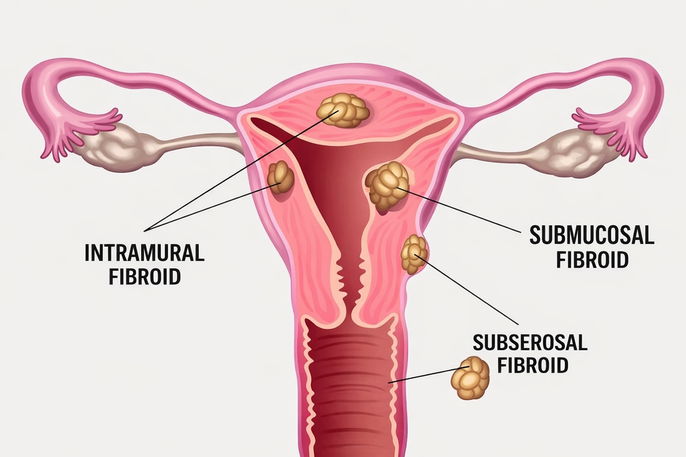
A subserosal fibroid is a type of benign tumor made up of muscle cells that develops on the outer surface of the uterus, called the serosa. This type of fibroid usually causes few or no symptoms, but when it becomes very large it can lead to abdominal pain and bleeding.
The risk of developing uterine fibroids increases with age. It is also more common in people with a family history of uterine fibroids and in women who have never been pregnant.
If a subserosal fibroid is suspected, it is important to see a gynecologist for an evaluation. Although treatment is not always necessary, it may range from medication to surgery, depending on symptoms and the person’s treatment goals.
Main symptoms
The main symptoms of subserosal fibroid are:
-
Vaginal bleeding.
-
A feeling of pressure in the abdomen.
-
Frequent urge to urinate.
-
Constipation.
-
Pain during sexual intercourse (dyspareunia).
According to the Office on Women’s Health, uterine fibroids, including subserosal types, can cause pressure in the lower abdomen, frequent urination, constipation, and pain during sex, although some women may have no symptoms at all.
A subserosal fibroid typically does not interfere with fertility. During pregnancy, symptoms may worsen as the fibroid grows, which can increase the risk of complications such as an unfavorable fetal position or preterm birth.
Confirming a diagnosis
Subserosal fibroid is usually diagnosed by a gynecologist based on the person’s symptoms and medical history.
To confirm the diagnosis, the provider may also order imaging tests such as a transvaginal ultrasound and magnetic resonance imaging.
Possible causes
A subserosal fibroid forms when muscle cells in the uterine wall multiply abnormally, developing on the outer surface of the uterus. Its growth may be influenced by hormones such as estrogen and progesterone.
According to the Eunice Kennedy Shriver National Institute of Child Health and Human Development, the risk of fibroids increases with age and family history. The U.S. Office on Women’s Health adds that early onset of menstruation and not having been pregnant are also linked to a higher likelihood of developing uterine fibroids.
Treatment options
Treatment for fibroids may involve:
1. Medications
Medications such as nonsteroidal anti-inflammatory drugs (NSAIDs) and oral hormonal contraceptives may be recommended for symptoms such as severe pain or frequent bleeding.
Certain medications can help shrink fibroids, though they are usually prescribed before surgery and only in specific cases. Approved combinations include relugolix with estradiol and norethindrone acetate to manage heavy menstrual bleeding caused by uterine fibroids.
2. Surgery
Procedures such as myomectomy, which removes only the fibroid, or hysterectomy, which removes the entire uterus, may be recommended depending on the severity of symptoms, response to previous treatments, and whether future pregnancies are planned.