


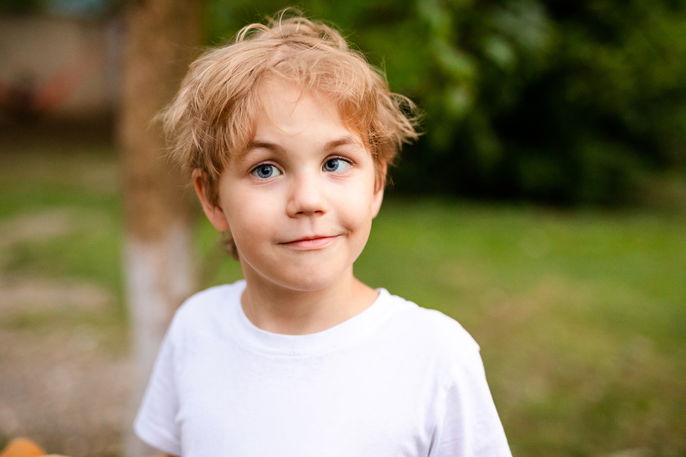
Strabismus is an eye condition in which one eye is misaligned, which can affect a person’s visual coordination. This misalignment may be constant or occur only at certain times.
Diagnosis of strabismus, also known as crossed eyes, is made by an ophthalmologist through eye exams that assess the direction of the eyes and how light is reflected. Once the condition is confirmed, treatment may include eye exercises, corrective lenses, or surgery, depending on the severity and type of deviation.
Strabismus treatment aims to improve eye alignment and prevent vision problems. When properly managed, most people can achieve better visual coordination and reduce symptoms such as eye strain or double vision.
Common symptoms
The main symptom of strabismus is eye deviation, which can be constant or intermittent, and may vary from mild to severe depending on the degree of misalignment.
In most cases, the deviation is the only symptom. However, when the condition is more pronounced, it can cause eye strain, difficulty focusing on objects, and eye pain.
In some cases, vision loss may occur in one eye, a condition known as amblyopia. This happens when the brain suppresses signals from the misaligned eye in an attempt to avoid double vision.
Confirming a diagnosis
Strabismus can be diagnosed in childhood through an eye exam performed by an ophthalmologist. During the exam, the doctor observes how the eyes move and how light reflects from the same point in both eyes.
After determining the diagnosis and degree of strabismus, the doctor can recommend the most appropriate treatment. The goal is to strengthen the eye muscles, align the eyes, and prevent partial or total vision loss.
Different types
Depending on the direction of the deviation, strabismus can be classified into three main types:
-
Divergent strabismus (exotropia): when one eye turns outward, away from the nose;
-
Convergent strabismus (esotropia): when one eye turns inward, toward the nose;
-
Vertical strabismus: when one eye deviates upward (hypertropia) or downward (hypotropia).
It is important for an ophthalmologist to identify the type of strabismus in order to determine the most suitable treatment.
Main causes
Strabismus can be caused by problems in three areas:
-
The eye muscles responsible for movement;
-
The nerves that carry signals from the brain to the eye muscles;
-
The part of the brain that controls eye movement.
In children, strabismus often results from incomplete development of one of these areas and is more common in conditions such as Down syndrome or cerebral palsy. In adults, it can develop after a stroke, head injury, or direct trauma to the eye.
Treatment options
Treatment for strabismus depends on the type and severity of the eye deviation and may include:
1. Eye exercises
Eye exercises are often the first treatment option for strabismus. A common exercise includes:
-
Hold one finger straight about 12 inches (30 cm) from the nose;
-
Place the index finger of the other hand between the nose and the extended finger;
-
Focus on the finger closest to the nose until the farther finger appears doubled;
-
Slowly move the closer finger back and forth between the nose and the extended finger while maintaining focus on the closer one.
These exercises help coordinate the eye muscles and reduce the deviation. They should be performed for 2 to 3 minutes every day. An ophthalmologist may also recommend additional exercises to support treatment at home.
2. Use of corrective glasses or contact lenses
The ophthalmologist may prescribe corrective glasses or contact lenses to correct refractive errors, when needed.
In children, especially when there is reduced vision in one eye, the doctor may recommend covering the stronger eye with an eye patch. This encourages the weaker eye to focus better and helps improve alignment. In some cases, eye drops may also be prescribed.
Regular medical follow-ups are important to assess treatment progress and make adjustments if necessary.
3. Surgery
Surgery for strabismus is recommended when the deviation is significant, when there is considerable loss of visual capacity, or when eye exercises and corrective lenses are not sufficient.
The goal of surgery is to balance the strength of the eye muscles and restore proper alignment. This procedure is performed under general anesthesia in an operating room.