


- Persistent foot odor that does not improve with drying, clean socks and breathable shoes may need medical evaluation.
- Small pits, redness, scaling, burning or thickened skin on the soles can indicate a bacterial infection or another skin condition.
- Excessive sweating that keeps the feet constantly damp or disrupts daily activities should be assessed by a healthcare professional.
Stinky feet refers to a strong or unpleasant odor coming from the feet, usually when sweat, moisture and bacteria build up on the skin. The smell may become more noticeable after wearing closed shoes, sweating heavily or keeping the feet damp for long periods.
Common causes of stinky feet include prolonged moisture, poorly ventilated shoes, changes in the normal bacteria on the skin and excessive sweating. Bacterial infections and certain inherited skin conditions can also lead to persistent foot odor.
Treatment depends on the cause and may involve drying the feet thoroughly, changing socks regularly, rotating shoes, using antiperspirants or applying antibacterial medication. Medical attention may be needed when the odor does not improve, when pits or thickened skin appear, or when sweating significantly affects daily life.
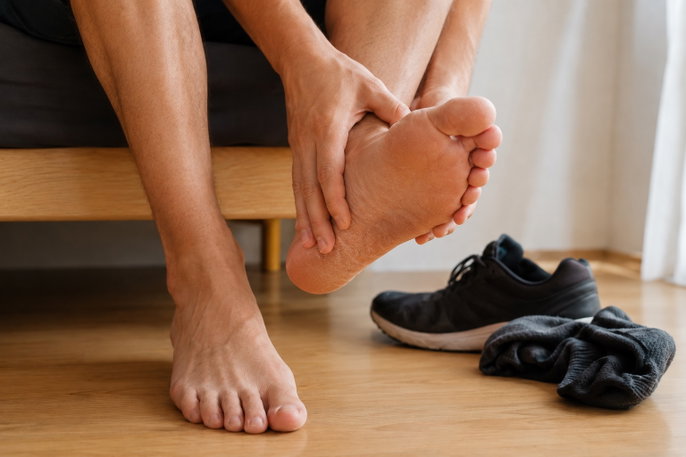
Why do my feet smell so bad?
The main causes of stinky feet are:
1. Feet that stay damp for too long
Prolonged moisture allows sweat and bacteria to remain on the skin, which can increase foot odor. This may happen after repeated exposure to water, heavy sweating or wearing wet socks for long periods.
The skin may become soft, pale or wrinkled when it remains damp. Moisture can also lead to scaling, discomfort and a greater chance of developing bacterial skin changes.
How to treat: The feet should be dried thoroughly, especially between the toes, after bathing or sweating. Damp socks should be replaced with clean, dry ones as soon as possible. Shoes should also be allowed to dry completely before they are worn again.
2. Closed or poorly ventilated shoes
Shoes that trap heat and moisture can create an environment where odor-producing bacteria grow more easily. This is especially common with tight, occlusive or nonbreathable footwear worn for many hours.
Socks and shoes may remain damp, and the skin can become softened from excess moisture. The odor may be strongest after removing the shoes and may return quickly when the same pair is worn repeatedly.
How to treat: Breathable shoes can help air circulate around the feet and reduce moisture buildup. Shoes should be rotated instead of wearing the same pair every day, allowing each pair enough time to dry. Moisture-wicking socks and regular sock changes may provide additional odor control.
3. Changes in the normal bacteria on the feet
The feet naturally contain bacteria that live on the skin without causing problems. When moisture, sweat or certain skin conditions change the balance of these bacteria, some types may multiply and produce stronger-smelling substances.
In addition to odor, the skin may appear moist, softened, thickened or irritated, depending on the underlying cause. In Nagashima-type palmoplantar keratosis, increased levels of bacteria such as Corynebacterium have been linked to a distinctive foot odor.
How to treat: Keeping the feet clean and dry can help restore a healthier environment on the skin. Benzoyl peroxide or prescribed topical antibiotics may be used when bacterial overgrowth or infection is present. Persistent odor accompanied by pits, redness or thickened skin should be assessed by a healthcare professional.
4. Excessive foot sweating
Plantar hyperhidrosis is excessive sweating that affects the soles of the feet. When bacteria on the skin break down this sweat, they can produce bromhidrosis, which is a strong and unpleasant odor.
The feet may remain visibly sweaty even when the weather is not hot, causing socks and shoes to become damp. Ongoing moisture may soften the skin and can cause discomfort, embarrassment or difficulty with everyday activities.
How to treat: Strong antiperspirants can be applied to the feet to reduce sweating. Moisture-wicking socks, breathable shoes, good foot hygiene and shoe rotation may also help control odor. Persistent cases may be treated with iontophoresis, botulinum toxin injections or treatment of an underlying cause of the sweating.
5. Bacterial infection on the soles
Pitted keratolysis is a superficial bacterial infection that affects the soles of the feet. It is an important medical cause of strong foot odor and is more likely to develop when the feet stay sweaty or damp for long periods.
Small, crater-like pits may appear on areas that carry body weight, such as the heels and the front of the soles. The skin may also look moist, softened or scaly, and itching or a burning feeling while walking can occur.
How to treat: Treatment involves keeping the feet dry, wearing breathable shoes and changing damp socks regularly. A doctor may prescribe topical antibiotics such as clindamycin or erythromycin to reduce the bacteria. Benzoyl peroxide and antiperspirants may also be recommended to control bacteria and moisture.
6. Inherited thick skin on the hands and feet
Nagashima-type palmoplantar keratosis is an inherited condition that causes redness and thickened skin on the palms and soles. A noticeable foot odor can be an important feature because the condition may change the balance of bacteria living on the feet.
The skin may appear clearly red, firm or thickened. These changes can sometimes spread beyond the palms and soles to nearby parts of the hands or feet.
How to treat: Treatment focuses on controlling the skin changes, bacteria and odor because the inherited condition cannot currently be cured. Topical benzoyl peroxide may help lower the amount of bacteria and reduce foot odor. Keratolytic products and other skin treatments may also be used to soften thickened skin.
