


Spina bifida occulta is a congenital malformation (birth defect) that occurs when the spine does not form properly in the fetus during the first month of pregnancy. It is characterized by incomplete closure of the spine and usually does not cause any symptoms.
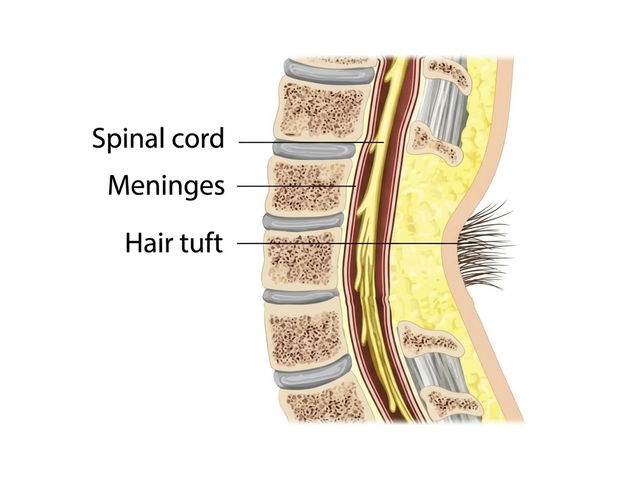
Even though most people do not have symptoms, some may have a patch of hair or a darker spot on the lower back. This is usually seen around the L5 and S1 vertebrae and may suggest spina bifida occulta.
Spina bifida occulta cannot be cured, but treatment may be recommended depending on the child’s symptoms. In rare cases, when the spinal cord is affected, surgery may be necessary.
Main symptoms
The main symptoms of spina bifida occulta are:
-
A darker or lighter patch on the lower back
-
A tuft of hair on the back
-
A slight indentation in the back, like a dimple
-
A small bulge caused by fat buildup
In addition, when there is spinal cord involvement, which is uncommon, other signs and symptoms may appear, such as scoliosis, weakness and pain in the legs and arms, and loss of bladder and bowel control.
According to the CDC and the National Institute of Neurological Disorders and Stroke, spina bifida occulta usually does not cause any signs or symptoms and often goes unnoticed throughout life because it does not affect the spinal cord or the meninges, the protective coverings of the brain.
Confirming a diagnosis
Spina bifida occulta may be diagnosed during pregnancy with tests such as ultrasound and amniocentesis, which measures the level of alpha‑fetoprotein (AFP) in the amniotic fluid. High AFP levels can suggest the presence of spina bifida.
Spina bifida occulta can also be diagnosed after birth based on signs and symptoms and imaging tests such as X‑rays and MRI scans. These tests help confirm the condition and check for spinal cord involvement.
Possible causes
The exact cause of spina bifida occulta remains unclear. However, insufficient folic acid intake is believed to play a role by disrupting the normal closure of the spine. According to the WHO and CDC, taking folic acid before and during early pregnancy helps prevent neural tube defects such as spina bifida.
Treatment options
Because spina bifida occulta usually does not affect the spinal cord or meninges, most people do not need treatment. If symptoms do occur, treatment should follow the doctor’s advice and focuses on relieving them.
When the spinal cord is involved, surgery may be recommended to correct the abnormality and reduce related symptoms.