


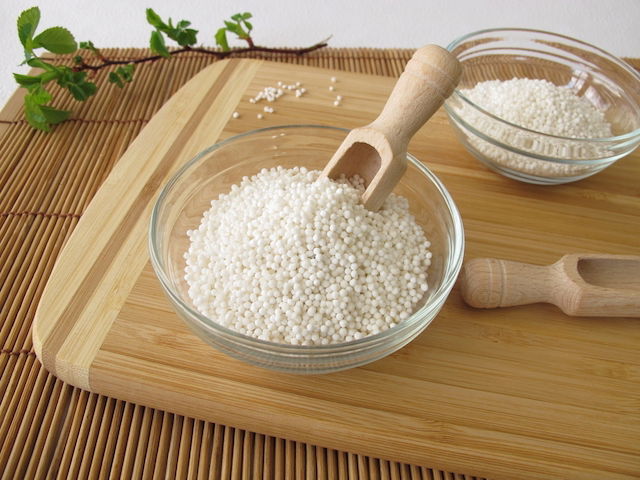
Sago is traditionally made from the starch extracted from certain palm trees native to parts of Asia. It provides energy and may also help prevent anemia and support bone health.
In the US, “sago” is most often found as cassava-based pearls (similar to tapioca pearls) rather than true palm-based sago. This version can generally be used for the same purposes as traditional sago in cooking and beverages.
Sago pearls are sold in many grocery stores, international markets, and online, and preparation depends on the recipe. They are often cooked until the pearls turn translucent, but they can also be used in other preparations.
Health benefits
The main benefits of sago include:
-
Providing energy for physical activity, since sago is rich in carbohydrates;
-
Helping prevent iron-deficiency anemia due to the iron content in its composition;
-
Supporting bone health because it contains minerals such as calcium and phosphorus;
-
Helping control blood glucose levels, especially true palm-based sago, which has a low glycemic index;
-
Contributing to reduced food intake, since carbohydrates can promote a feeling of fullness.
According to the National Institute of Diabetes and Digestive and Kidney Diseases (NIDDK), foods made from cassava are naturally gluten-free and can be safely included in a gluten-free diet.
Nutrition facts
The table below shows nutritional information for raw cassava-based sago in 30 g and 100 g servings:
To get all its benefits, cassava-based sago food should be part of a healthy, balanced diet combined with regular physical activity.
How to consume
Sago is most commonly eaten cooked. Depending on the recipe, it can also be baked, popped, or fried.
True sago comes from specific palm trees in Asia and may be harder to find in the US. More commonly, “sago” sold in US stores is made from cassava, which produces a similar product.
No matter the source, sago can be used in savory or sweet recipes with wine, milk, and other ingredients. It is also used in cream- or paste-like recipes and in drinks such as bubble tea.
Sample recipes
Some examples of sago recipes include:
1. Sago with wine
Ingredients:
-
2 cups cassava sago;
-
9 cups water;
-
10 tablespoons sugar;
-
10 whole cloves;
-
2 cinnamon sticks;
-
4 cups red wine.
Directions:
To make sago with wine, start by boiling the water with the cloves and cinnamon. Remove the cloves after about 3 minutes of boiling, then add the sago and stir often, cooking for about 30 minutes or until the pearls turn transparent.
Add the red wine and cook a little longer, stirring regularly. Then add the sugar and keep the mixture over low heat for about 5 more minutes, turn off the heat, and let it cool naturally.
2. Milk sago
Ingredients:
-
500 mL water;
-
1 liter milk;
-
1 tsp sago;
-
1 can light sweetened condensed milk;
-
Ground cinnamon to taste.
Directions:
To make milk sago, soak the sago in water until it swells. Warm the milk in a saucepan, add the sago, and cook while stirring until the pearls become transparent.
Add the sweetened condensed milk and stir for another 5 to 10 minutes. Turn off the heat, then mix in the ground cinnamon; this recipe can be served hot or cold and, because it is high in sugar, should be consumed in small amounts.
3. Sago popcorn
Ingredients:
-
½ cup sago;
-
A drizzle of olive oil;
-
Salt to taste.
Directions:
Mix the olive oil with the sago in a pan and heat over low heat. Stir until the grains start to pop, then cover the pan for about 3 minutes.
When ready, sprinkle with salt and serve. Sago popcorn has a softer texture and may be easier for children to eat.
Also recommended: Is Popcorn Healthy? (Calorie Count & How to Prepare) tuasaude.com/en/is-popcorn-healthy