


Radish can offer health benefits like helping maintain regular bowel movements, lower cancer risk, support weight loss, and prevent anemia.
These benefits are linked to the fact that radish is a cruciferous vegetable that provides fiber, vitamin C, and glucosinolates. These nutrients and bioactive compounds can have antioxidant effects and may support fullness and digestive regularity.
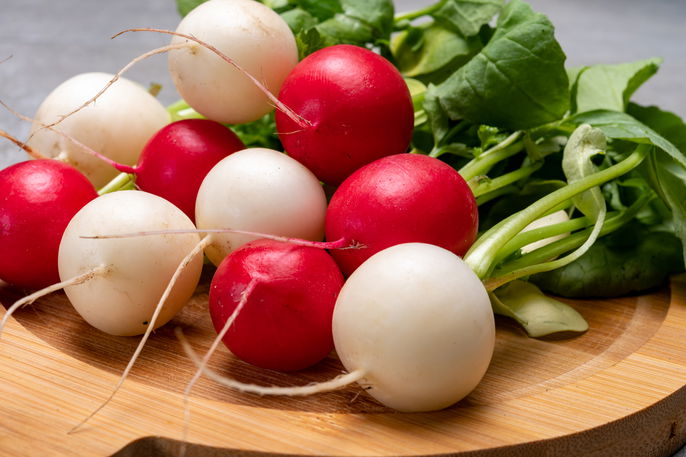
There are different types of radish, including red and white varieties that mainly differ in skin color and shape. Radish can be eaten raw or cooked in recipes like salads, juices, stews, and pickles.
Health benefits
The main benefits of radish include:
1. Supporting regular bowel function
Because it’s rich in fiber, which promotes intestinal movement and adds bulk to stool, radish can help support regular and easier bowel movements.
2. Reducing cancer risk
Cruciferous vegetables, such as radish, may help lower the risk of certain cancers, including colorectal, breast, prostate, stomach, lung, and ovarian cancer.
This may be related to glucosinolates, bioactive compounds that can be converted into antioxidant isothiocyanates.
In laboratory and animal studies, isothiocyanates helped protect cellular DNA from damage, inhibited enzymes that activate carcinogens, supported enzymes that help deactivate them, promoted the self-destruction of abnormal cells, and slowed cell growth.
3. Supporting weight loss
Radish can support weight loss because its fiber may slow digestion, helping you feel full longer and reducing hunger.
Even so, no single food causes weight loss on its own. For weight loss, it is also important to maintain a balanced diet and exercise regularly.
4. Helping prevent anemia
Radish may help prevent anemia because it contains vitamin C, which improves the absorption of non-heme iron from plant-based foods, according to the NIH Office of Dietary Supplements.
Also recommended: Anemia Diet: What to Eat (w/ Meal Plan) tuasaude.com/en/anemia-diet5. Lowering the risk of diabetes
Because it contains fiber that can slow how quickly carbohydrates are absorbed, radish may help support healthy blood sugar levels and lower the risk of diabetes.
6. Supporting heart health
Radish may support heart health because its fiber and antioxidants can help maintain healthy blood cholesterol levels.
It also contains potassium, which, according to the American Heart Association, helps control blood pressure by blunting some of sodium’s effects in the body.
Different types
The main types of this vegetable are white radish, which is elongated and has both white skin and flesh, and red radish, which may be round, elongated, or semi-elongated and has white flesh.
Nutrition facts
The table below lists nutrition information for 100 g of raw and cooked radish:
To get the benefits of radish, it is also important to maintain a healthy, varied diet and exercise regularly.
How to consume
Radish can be eaten raw with the skin, such as in salads and juices. It can also be roasted, pickled, or added to soups and stews, which can make its flavor less pungent.
Radishes can also be prepared as healthier snacks with fillings and sauces.
The recommended intake of vegetables in general, including radish, is 2 to 3 servings, which is about 160 to 240 g, for example.
Important precautions
People with hypothyroidism should avoid eating cruciferous vegetables, including radish, in excessive amounts.
Eating these vegetables in typical portions (for example, in salads a few times a week) is generally safe. However, very large quantities may interfere with the thyroid gland’s ability to absorb iodine.
In addition, eating large amounts of cruciferous vegetables may cause gas and bloating in some people.
Healthy recipes
Some healthy recipes using radish include:
1. Radish and lettuce salad
Ingredients
-
5 radishes;
-
1 bunch of lettuce;
-
Juice of 1 lemon;
-
Salt, olive oil, and black pepper to taste.
Directions
Wash and thoroughly clean the lettuce and radishes, then let them dry. Slice the radishes very thinly and place them on a serving dish.
Tear the lettuce leaves and mix them with the radishes. Season with olive oil, lemon juice, salt, and black pepper, then serve right away.
2. Pickled radish
Ingredients
-
1 cup apple cider vinegar;
-
1 cup filtered or boiled water;
-
Black peppercorns to taste;
-
300 g radishes;
-
2 tablespoons honey;
-
2 teaspoons salt;
-
1 glass jar.
Directions
Wash, sanitize, and slice the radishes very thinly, then place them into the glass jar. In a saucepan, bring the vinegar, water, salt, honey, and peppercorns to a boil.
Pour the hot liquid over the radish slices in the jar and let it cool to room temperature.
Seal the jar and refrigerate for 24 hours before eating. The pickles can be stored in the refrigerator and eaten for up to 2 months.