


Pterygium is the growth of conjunctival tissue (the clear membrane that covers the white part of the eye) toward the cornea. This can cause symptoms such as blurry vision, burning, increased sensitivity to light, and trouble seeing clearly, especially when the tissue grows a lot and ends up covering the pupil.
This condition occurs more frequently in men over the age of 20 and may develop as a result of genetic factors, or from frequent exposure to sunlight, dust, and wind.
Pterygium treatment is managed by an ophthalmologist and may include artificial tears, decongestant or anti-inflammatory eye drops to relieve symptoms, or, in some cases, surgery.
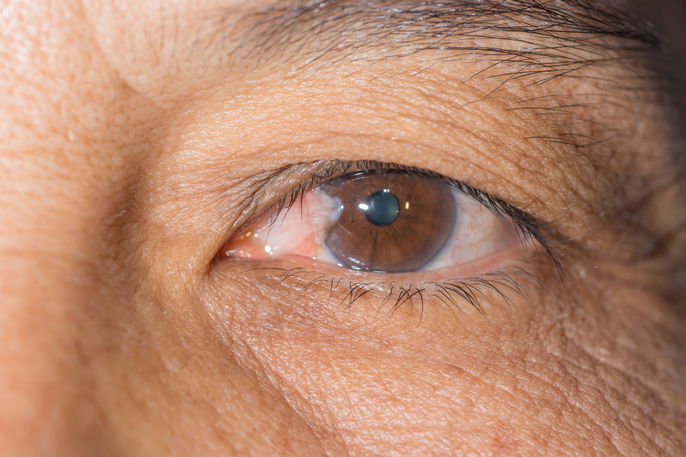
Common symptoms
The main symptoms of pterygium are:
-
Visible tissue covering the pupil;
-
Eye irritation and excessive tearing;
-
A gritty feeling, like sand or a foreign body in the eye;
-
Trouble seeing clearly;
-
Itching, dryness, burning, and redness in the eye;
-
Discomfort when opening and closing the eyes;
-
Increased sensitivity to light;
-
Blurry or double vision in more advanced cases.
In most cases, the tissue appears pink, though in some people it may look more yellow and grow slowly over time. It can create cosmetic concerns and make wearing contact lenses uncomfortable or difficult.
A pterygium typically develops on the nasal side of the eye, the area between the eyelids that’s exposed to air. It grows from the inner corner of the eye toward the cornea and may eventually extend over the pupil.
Confirming a diagnosis
Pterygium is diagnosed by an ophthalmologist based on symptoms, health history, and an eye exam that evaluates the characteristics of the tissue, including size, location, visible blood vessels, and how much of the cornea is affected.
The doctor may also perform other tests, such as visual acuity testing, eye movement evaluation, and refraction tests, along with an exam using a slit lamp or an ophthalmoscope. A Schirmer test may also be done to assess tear production and tear quality.
Possible causes
The exact cause of pterygium is not fully known, but some factors may contribute to its development, such as:
-
Age (more common between ages 20 and 40);
-
Family history of pterygium;
-
Frequent exposure to dust and wind;
-
Chronic eye irritation;
-
Living in hot, dry climates.
Another very common cause of pterygium is frequent, long-term exposure of the eyes to ultraviolet (UV) radiation. It is common in surfers, which is why it is also known as “surfer’s eye.”
Treatment options
Pterygium treatment should be guided by an ophthalmologist and varies depending on symptoms and severity. Treatment options may include:
1. Sunglasses with UV protection
Wearing sunglasses with UV protection, along with a hat or cap, is recommended in all cases of pterygium, especially when it is still small and not causing symptoms. Protecting the eyes from UV rays helps prevent pterygium from growing further.
2. Artificial tears
Preservative-free artificial tears may be recommended by an ophthalmologist to help relieve dry eyes and reduce discomfort caused by pterygium.
3. Eye drops
Eye drops that contain decongestants, anti-allergy medications, corticosteroids, or anti-inflammatory agents may be recommended to relieve irritation, burning, itching, or redness.
4. Pterygium surgery
Pterygium surgery may be recommended when the tissue grows excessively and begins to affect vision, in addition to causing cosmetic concerns.
This procedure is performed under local anesthesia, lasts about 30 minutes, and involves removing the excess tissue, followed by a conjunctival graft to cover the affected area.
Even after successful removal, it is important to protect the eyes (for example, by wearing a cap and sunglasses), because pterygium can come back.