


Phimosis creams, such as betamethasone or hydrocortisone creams, contain corticosteroids that have anti-inflammatory properties. These medications help make the foreskin thinner and easier to stretch, which can assist in treating phimosis and allowing better foreskin retraction.
The use of phimosis cream is generally recommended for children over 1 year of age when the foreskin does not retract naturally. These creams help reduce fibrosis, relieve discomfort, and speed up the treatment process by making it easier to expose the glans.
Phimosis creams should always be used under medical supervision from a pediatrician or urologist, depending on the child’s age and the severity of the condition. It is also important that the doctor monitors progress throughout treatment. If there is no improvement, surgery may be recommended.
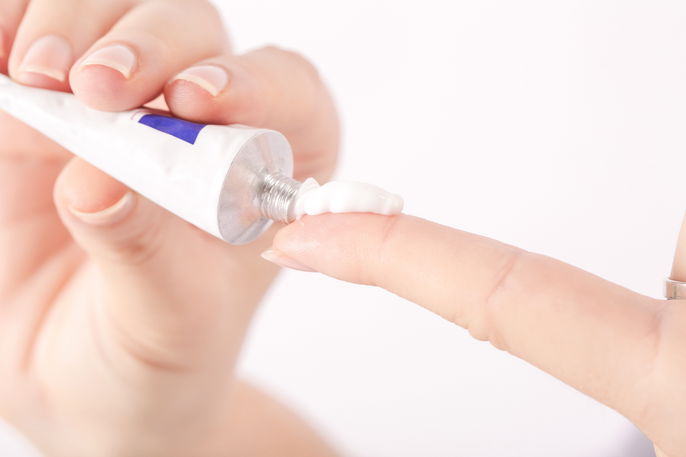
Main phimosis creams
Some of the most commonly prescribed phimosis creams include:
1. Betamethasone valerate cream
Betamethasone valerate cream is a corticosteroid with anti-inflammatory action that helps make the foreskin thinner and easier to stretch. It is often prescribed to treat congenital phimosis in children older than 1 year and in adults up to about 30 years of age.
How to use: Apply a thin layer of the cream directly to the foreskin twice a day (every 12 hours) for 3 consecutive weeks, or as directed by your doctor. After completing the treatment, a follow-up appointment is necessary.
Contraindications: This cream should not be used in children under 1 year of age or in people allergic to corticosteroids or any ingredients in the formula. It should also not be applied to infected skin.
2. Hydrocortisone cream
Hydrocortisone acetate is a low-potency corticosteroid that can also be prescribed to make the foreskin thinner and more flexible. It is often recommended for mild cases of phimosis.
This cream is available in its generic form as “hydrocortisone acetate” or under brand names such as Cortizone-10 or Cortaid in the United States. It should be used only under medical supervision.
How to use: Apply a thin layer of the cream to the foreskin 2 to 3 times per day, as instructed by your doctor. For infants and children under 4 years old, treatment should not exceed 3 weeks. A follow-up evaluation should be done afterward.
Contraindications: Do not use if allergic to hydrocortisone or any other corticosteroid.
3. Mometasone furoate cream
Mometasone furoate is a medium-potency corticosteroid that may also be prescribed by doctors for the treatment of phimosis.
This cream is available in its generic form containing 1 mg/g of mometasone furoate or under brand names such as Elocon in the United States.
How to use: Apply a thin layer of mometasone furoate cream to the foreskin once daily for up to 4 weeks, or as directed by your doctor.
Contraindications: Not recommended for children under 2 years old or for people with allergies to corticosteroids.
4. Clobetasol propionate cream
Clobetasol propionate is a high-potency corticosteroid that may be prescribed for severe cases of phimosis.
This cream is available as a generic product containing 0.05% clobetasol propionate and should only be used under medical supervision.
How to use: Apply a thin layer directly to the foreskin 1 to 2 times daily for up to 4 weeks, following your doctor’s instructions.
Contraindications: This cream should not be used in children under 1 year old or on untreated skin infections, genital itching, or in people with corticosteroid allergies.
Precautions during treatment
Some important precautions when using phimosis creams include:
-
Urinate, then wash and dry the genital area before applying the cream
-
Gently pull the foreskin back without causing pain
-
Apply the cream around the entire foreskin, covering from the tip of the penis to the lower shaft area
-
Massage gently to help the cream absorb completely
-
Return the foreskin over the glans after applying the cream
-
Use only the cream prescribed by the doctor, at the recommended times and for the prescribed duration
-
Schedule a follow-up appointment after 3 or 4 weeks to assess treatment effectiveness. In some cases, another treatment cycle may be advised
After applying the phimosis cream, the doctor may also recommend gentle stretching exercises to help retract the foreskin and potentially resolve phimosis without surgery.
However, more severe cases, such as grade I or II on the Kayaba scale, may not respond fully to topical treatment alone, and surgery may be necessary.