


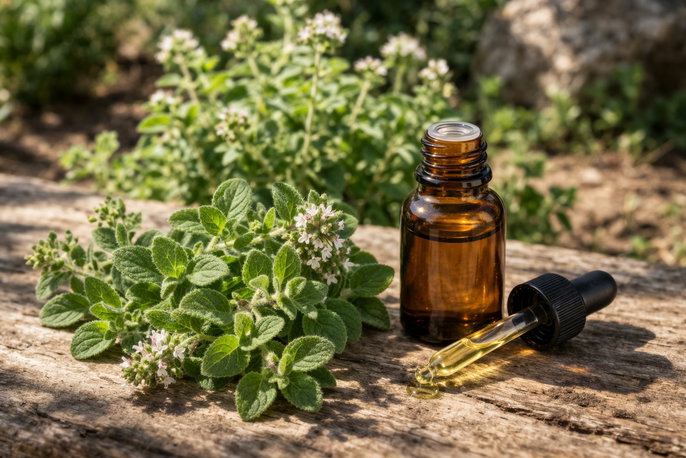
Oregano essential oil is a concentrated extract made from the leaves of the Origanum vulgare plant. It contains natural compounds such as carvacrol and thymol, which are responsible for many of its biological effects .
This oil has been studied for its antimicrobial, anti-inflammatory, and antioxidant properties in both laboratory and human studies. Although research is still developing, it is commonly used as a complementary option for general health support.
Oregano essential oil is available in different forms, including capsules, diluted liquid extracts, and topical preparations. Its use requires caution because it is highly concentrated and may cause side effects if not used properly.
Health benefits
Oregano essential oil has been studied for several potential health effects, mainly related to its natural active compounds.
1. Antimicrobial action
Oregano essential oil has shown activity against a wide range of microorganisms, including bacteria, fungi, and some parasites. These effects are largely linked to compounds such as carvacrol and thymol, which can disrupt microbial cell membranes and reduce their growth.
2. Anti-inflammatory effects
Research suggests that oregano essential oil may help reduce inflammation by influencing immune responses and inflammatory pathways. Experimental models have shown that it can support tissue repair and reduce markers associated with chronic inflammation.
3. Support for respiratory conditions
Clinical studies have evaluated oregano essential oil in conditions such as chronic rhinosinusitis and allergic rhinitis. Results suggest that it may help reduce symptoms like nasal congestion and irritation, possibly due to its antimicrobial and anti-inflammatory properties.
4. Oral health support
Oregano essential oil has been used in mouthwash formulations studied for reducing halitosis. Its antimicrobial action may help decrease bacteria in the oral cavity that contribute to bad breath and poor oral hygiene.
5. Antioxidant properties
The oil contains phenolic compounds that act as antioxidants, helping to neutralize free radicals in the body. This effect may contribute to protecting cells from oxidative stress and supporting overall cellular function.
Difference between oregano oil and oregano essential oil
Oregano oil and oregano essential oil are often confused, but they are not the same and have different uses and concentrations.
Oregano essential oil is a highly concentrated extract obtained through steam distillation of the oregano plant. It contains active compounds like carvacrol and thymol in high amounts, which are responsible for its strong antimicrobial and biological effects. Because of this concentration, it must be diluted before use and is typically used in small doses or specific formulations .
Oregano oil, on the other hand, usually refers to a diluted product made by mixing oregano essential oil with a carrier oil, such as olive oil. This form is less concentrated and is more commonly used for oral or topical applications, as it is generally easier to tolerate.
Due to these differences, oregano essential oil is considered more potent and requires greater caution, while oregano oil is typically used in a more diluted and practical form for everyday use.
Recommended daily dose
There is no universally established dose for oregano essential oil. However, one human study used about 600 mg per day of emulsified oregano oil for 6 weeks and reported good tolerance.
Because of variability in formulations, doses may differ depending on the product and concentration. Conservative dosing is generally recommended.
How to take it
Oregano essential oil can be used in different ways depending on the formulation and intended purpose.
1. Capsules
Capsules are commonly used for oral supplementation because they provide a measured dose and are easier to tolerate than liquid forms. In clinical research, encapsulated or emulsified oregano oil has been used to support digestive and antimicrobial effects.
2. Diluted liquid
Liquid oregano essential oil is highly concentrated and should always be diluted before use. It may be mixed with water or another carrier, but improper dilution can increase the risk of irritation to the digestive tract or mucous membranes.
3. Mouthwash
Oregano essential oil has been used in diluted mouthwash solutions in clinical studies for short-term use. This method allows direct contact with oral bacteria and may help reduce bad breath when used appropriately.
4. Topical use
For skin application, oregano essential oil must be diluted in a carrier oil to avoid irritation or burning. Topical use is generally limited to short-term application due to its potency and potential to cause sensitivity reactions.
Possible side effects
Oregano essential oil is generally well tolerated in small amounts, but it can cause side effects such as:
-
Stomach discomfort
-
Nausea
-
Heartburn
-
Skin irritation when applied without dilution
-
Rare allergic reactions
Because it is highly concentrated, improper use may increase the risk of toxicity.
Contraindications for use
Oregano essential oil is not recommended in certain situations:
-
Pregnancy and breastfeeding, due to lack of safety data and potential risks
-
People with allergies to plants in the Lamiaceae family
-
Individuals taking medications that affect blood clotting, as it may increase bleeding risk
-
People with diabetes, as it may influence blood sugar levels
Careful use and guidance from a healthcare professional can help reduce potential risks associated with oregano essential oil.
Quality and safety considerations
The quality of oregano essential oil can vary depending on how it is produced and processed. Some studies highlight the importance of checking for contaminants, such as heavy metals, and ensuring the product comes from a reliable source.
Long-term safety data in humans is still limited, so use is generally recommended for short periods unless guided by a healthcare professional.